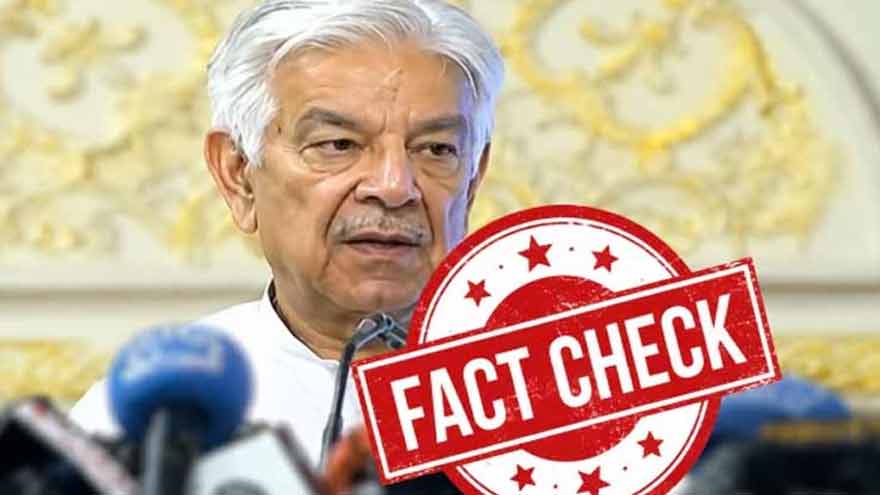
LAHORE — A widely circulated video purportedly showing Defence Minister Khawaja Asif drawing stark comparisons between Pakistan’s development and India’s has been officially declared fraudulent, with authorities confirming the clip was manufactured using artificial intelligence and audio cloning technology.
The nearly one-minute video, which spread rapidly across social media platforms, appeared to show the minister addressing a press conference while an audio track played in the background suggested he was making critical remarks about Pakistan’s economic and political trajectory relative to India since both nations gained independence.
Government Fact-Check Confirms Fabrication
The Ministry of Information and Broadcasting issued a formal rebuttal through its official social media channels, categorically stating the video is “fake” and that the voice heard in the recording does not belong to Khawaja Asif.
According to the ministry’s fact-check, the audio was produced using sophisticated computer software and voice-cloning techniques, layered over footage extracted from an older press conference. No such statement was ever made by the defence minister, and no press conference featuring the remarks attributed to him ever took place.
How the Deepfake Was Constructed
Digital forensics experts consulted on the matter explained that the video represents a classic example of a shallowfake or deepfake hybrid, where genuine visual footage is paired with synthetically generated audio. The technique involves training an AI model on samples of a target’s voice, then generating new sentences that the person never actually spoke.
The fabricated audio in this instance allegedly claimed that India had advanced significantly in technology, infrastructure, and economic growth, while Pakistan had fallen behind, and urged the public to question the country’s current situation.
Rising Threat of AI Misinformation in Pakistan
This incident highlights a growing challenge for Pakistani authorities as AI-generated content becomes increasingly difficult to distinguish from genuine recordings. Government agencies have urged citizens to verify information through official sources before sharing content online.
The Ministry of Information has been actively countering misinformation campaigns, particularly those targeting senior government officials. The rapid spread of this particular video underscores the need for enhanced digital literacy and robust verification mechanisms among social media users.
Officials have not yet announced whether an investigation has been launched to identify the creators of the deepfake, but cybersecurity experts warn that such incidents are likely to increase as AI tools become more accessible to malicious actors.