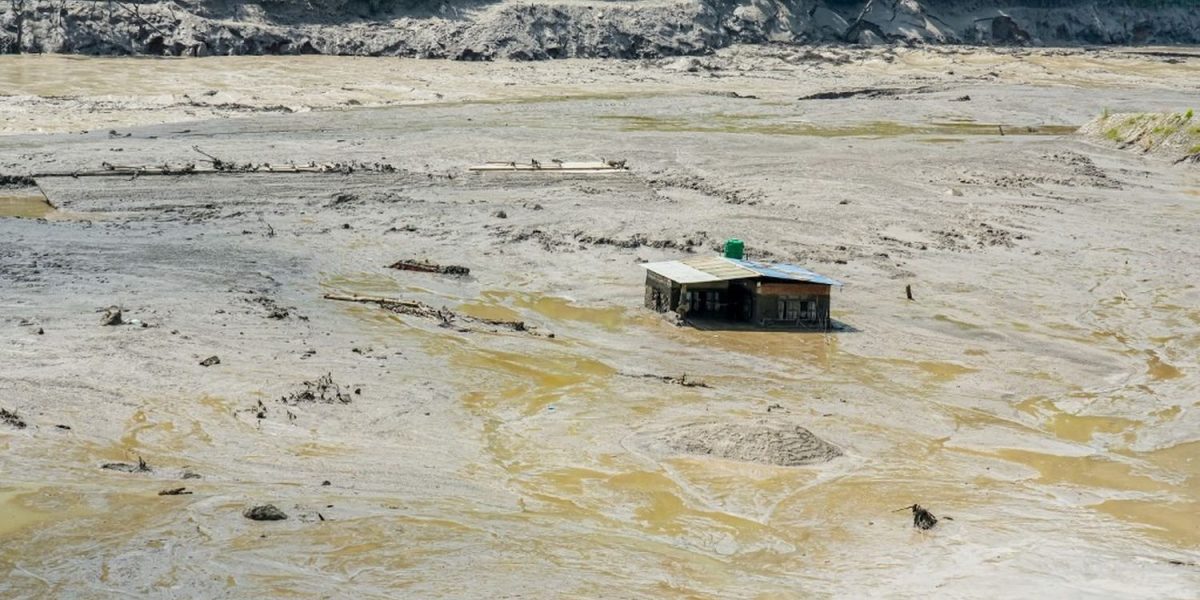
The death toll from devastating mudslides along the Nepal-Tibet border has climbed to at least 270 in Nepal alone, according to a revised provisional count released by Nepalese police on Thursday morning. Chinese authorities have confirmed three additional deaths on their side of the border in Tibet, bringing the total confirmed fatalities to at least 273, with more than 1,300 people still unaccounted for.
Glacial Collapse Triggers Catastrophic Flooding
The disaster unfolded on Wednesday, August 26, when a powerful torrent of water, mud, and debris swept down both sides of the mountainous border region at high speed. The United States Geological Survey (USGS) recorded a magnitude 5.2 seismic event and determined that “this seismic event was due to a glacial collapse and debris flow that resulted in catastrophic downstream consequences.”
Surveillance footage captured on the Chinese side shows a wall of water several meters high submerging and engulfing a six-story building within seconds. The floods also struck the border post at Giyrong, causing widespread destruction across the region.
International Victims Among the Missing
The Nepal Tourism Board has identified 644 people as missing, including at least four French nationals. Chinese authorities report that approximately 100 Chinese citizens are missing in disaster-affected areas on the Nepalese side. State media in China have reported 558 people missing on their territory, including 260 foreigners whose nationalities have not been disclosed.
More than 1,000 rescue workers, equipped with search dogs and drones, have been mobilized to locate survivors. Some northern areas remain accessible only by helicopter due to destroyed bridges and roads, according to David Fisher of the International Federation of Red Cross and Red Crescent Societies in Nepal.
Emergency Response and Official Reactions
Nepalese Prime Minister Balendra Shah visited Bidur in the Nuwakot district, one of the hardest-hit areas, ordering local administration and relevant agencies to provide immediate aid to displaced families, reopen blocked roads and infrastructure, and accelerate long-term rehabilitation efforts.
Chinese Premier Li Qiang has arrived in the affected Tibetan region to oversee rescue operations, meet with mobilized teams, and visit relocated residents, according to the Xinhua News Agency.
The Dalai Lama offered his sympathies and sincere condolences to all those grieving and affected by the tragedy, expressing hope that measures will be taken to prevent such disasters from recurring.
Safety Advisories for Travelers
The Nepal Tourism Board continues to issue safety guidance following the deadly floods. Hikers are advised to avoid the route leading to Dhunche pending more detailed safety information and to use an alternative route through Talu to return to Kathmandu. Travelers are urged to avoid riverbanks and sites potentially affected by the recent flooding.
Families desperate for news of their loved ones have gathered at Kathmandu airport since morning, hoping for information as rescue operations continue across the devastated region.