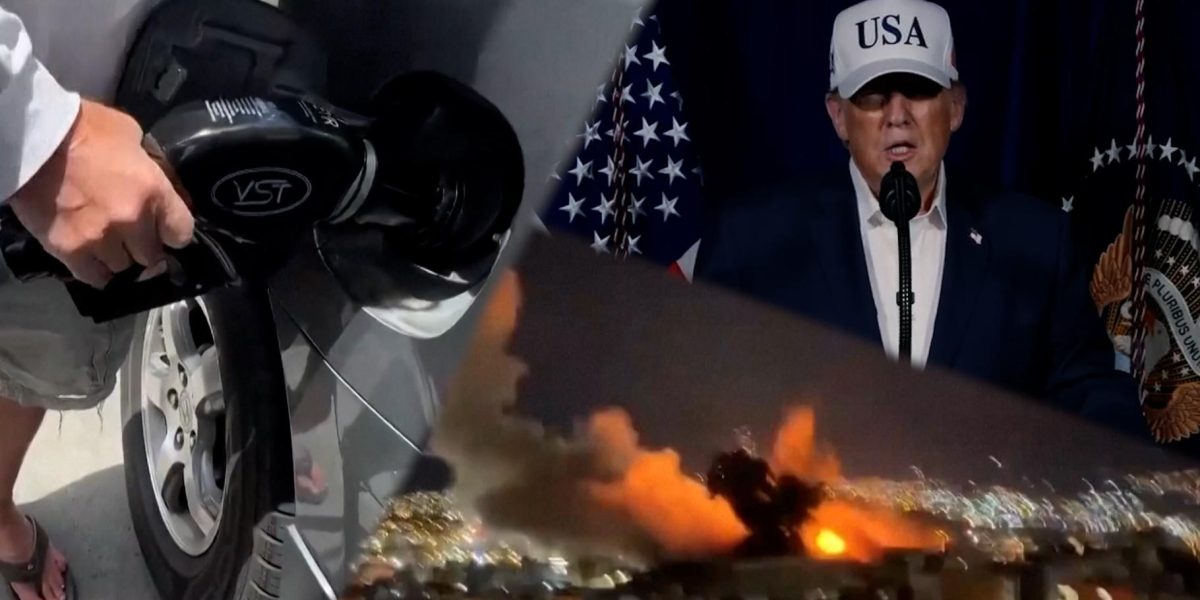
Six months ago, on February 28, 2026, Donald Trump announced “large-scale operations” against the Islamic Republic of Iran, vowing to “defend the American people by eliminating the imminent threats posed by the Iranian regime.” That day, the United States and Israel jointly launched Operation Epic Fury, a massive assault initially justified as a bid to bury Iran’s nuclear ambitions and crush its government. In retaliation, Iran closed the strategically vital Strait of Hormuz.
Half a year later, the United States is mired in a conflict with no end in sight—a predicament that is politically alarming for Republicans just weeks before the midterm elections. And that anxiety has been fueled directly by Trump himself, who has repeatedly contradicted himself on the war in Iran.
A “Short-Lived” Incursion That Wasn’t
The confusion began on March 9, roughly ten days after the American invasion. Speaking in Doral, Florida, Trump praised his “formidable military” and insisted the intervention would be “only a short-lived incursion.” Instead, the conflict bogged down. Trump then oscillated wildly on the prospect of a deal with Iran. On March 25, the U.S. proposed a 15-point plan to Tehran, kicking off negotiations. Less than a week later, on March 31, he declared from the Oval Office that “the United States will be done with this war in two weeks.”
Yet the very next day, his tone shifted completely. The president who claimed he wanted out of Iran now threatened to strike even harder. “We are going to bring them back to the Stone Age, where they belong,” he said.
An Impossible Accord and an Ultimatum
Trump’s bellicose rhetoric stems from a problem of his own making: reopening the Strait of Hormuz. Stuck in a deadlock, he issued an ultimatum—either the strait reopens or he would “annihilate Iran.” On April 8, he celebrated a two-week ceasefire. On his social network Truth, he announced the suspension of bombings and attacks on Iran, “subject to an agreement for the complete, immediate, and secure opening of the Strait of Hormuz.”
On April 21, Trump extended the ceasefire. Since then, the American president has had a single word on his lips: deal. He wants an exit from the conflict, on his terms, even as more than 60% of Americans now believe the use of force against Iran was “a mistake.” His contradictory statements about this elusive agreement suggest negotiations remain at a standstill. Between June and August, his public remarks on the subject resembled a rollercoaster.
The “Economic D-Day” Gamble
Six months after the first missiles flew, Trump is stuck in a situation with no apparent way out. The conflict has cost the United States more than $37.5 billion, according to Defense Secretary Pete Hegseth, and remains a financial sinkhole.
To force an outcome, the president has pivoted to a different strategy. On Truth Social, he announced an “economic D-Day,” defined by the implementation of “economic warfare and isolation on an unprecedented scale.” The U.S. government now aims to suffocate Iran by cutting off its economic resources, threatening similar sanctions against any country that continues to support Tehran. “It is no longer acceptable to operate in the gray zones of this conflict,” said Treasury Secretary Scott Bessent, without specifying when these sanctions would take effect or which countries might be targeted.
Pressure at the Pump and Political Panic
With this new strategy, the Trump administration hopes to end the Iran conflict as quickly as possible, because it could soon have severe political consequences for Republicans. Across the United States, the war’s fallout is visible at the gas pump, where prices have hovered around $4 per gallon for months. Before the war, the price was $2.98. This spike has become a central theme of the November midterm elections, and Democratic candidates have seized on it.
In Michigan, Abdul El-Sayed directly targeted “Donald Trump’s $200 billion war” in a campaign ad, while Georgia Senator Jon Ossoff, the opposition’s rising star, argued the president “has made the United States weaker and less safe.” Republicans, meanwhile, fear that soaring prices will be punished at the ballot box. If Trump fails to provide an answer, he could lose his congressional majority—a blow that would profoundly shape the remainder of his term.