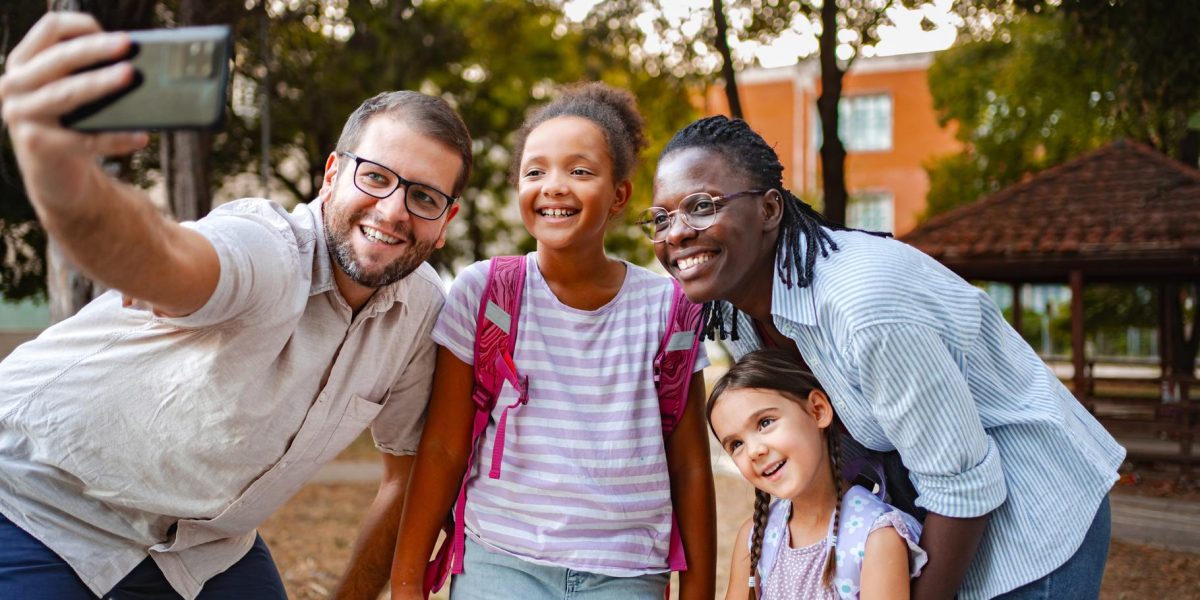
Your daughter looks thrilled with her brand-new backpack as she heads off to school, and your son is adorable clutching his lunchbox with a wide grin. But before you upload that first-day-of-school snapshot to your Instagram story or Facebook feed, experts say you should pause and consider the hidden dangers of “sharenting” — the practice of parents sharing their children’s images online.
While it may feel like a harmless way to celebrate a milestone, publishing photos of your kids on social platforms carries significant risks that many parents overlook.
The Dark Side of Public Photos
Once you post an image online, “it no longer truly belongs to you,” warns e-Enfance, a French child protection association. In guidance released ahead of the school year, the group explains that photos shared publicly can be reused without consent to create fake profiles or to feed image databases — some of which serve pedocriminal networks.
The scale of the problem is alarming. According to a report by the Fondation pour l’Enfance cited by e-Enfance, 50% of images or videos of children exchanged on pedocriminal forums were originally posted by their own parents on social media.
Even setting your profile to private isn’t a foolproof defense. France’s data protection authority, the Cnil, cautions that malicious users can still obtain photos if one of your contacts has shared them publicly or with other “friends.”
Emojis and AI: New Layers of Risk
Some parents try to mitigate risk by covering their child’s face with an emoji. But cybersecurity specialist Lisa Ventura warns that this approach is insufficient. “Even with a covered face, you’re sharing a massive amount of information,” she told The Independent. That includes the child’s approximate age, school location, daily schedule, and personal interests. When combined with other photos and details on your profile, these fragments can expose your family’s private life.
The rise of artificial intelligence adds another troubling dimension. The Cnil notes that AI has made it easier to create deepfakes — digitally altered images that can, for example, undress minors using photos found on social networks. Such content is extremely difficult, if not impossible, to remove once it circulates.
Practical Precautions Before You Post
Before hitting “send,” experts recommend a series of safeguards. The Cnil advises against sharing your child’s images with all your followers when you can send them privately to close family and friends instead — via a WhatsApp group, a Messenger conversation, or a shared cloud album. e-Enfance even suggests returning to printed photo albums as a secure alternative.
If you do choose to share digitally, e-Enfance urges parents to avoid photos showing the child’s face, name, school uniform, or identifiable locations. Additionally, never post images where a child appears embarrassed, vulnerable, or intimate. A tearful moment at the school gate might seem touching now, but it could become a source of shame later. The same caution applies to swimsuit pictures in your vacation recap.
Respecting Your Child’s Rights
French law now reinforces the need for consent. The Cnil emphasizes that before publishing a photo or video of your child, you should talk with them and obtain their agreement, depending on their maturity level. A law passed on February 19, 2024, aimed at protecting children’s image rights, enshrines this principle. It also reaffirms that parents must safeguard their child’s privacy, including their right to control their own image. In cases of parental disagreement, a family court judge can intervene.
Even after photos are posted, it’s not too late to reduce exposure. The Cnil recommends regularly reviewing your followers to avoid being tracked by strangers and using apps that allow restricted groups for more intimate sharing.
For a simple rule of thumb, Lisa Ventura offers a striking comparison: “If you wouldn’t hand a physical copy of that photo to a stranger on the street, don’t post it online.”