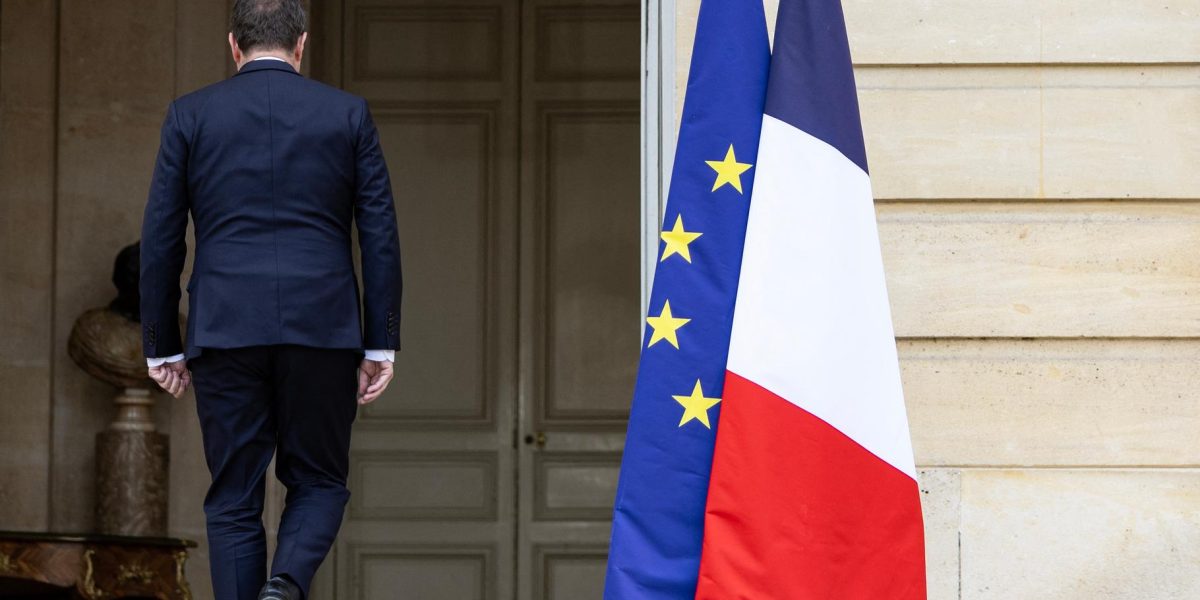
Sébastien Lecornu is navigating treacherous waters. The French Prime Minister convened a government seminar on Thursday, September 17, to finalize the contours of the state and social security budgets he intends to present to the Council of Ministers by the end of the month. It is a major step before what are certain to be stormy parliamentary debates.
Economic Headwinds and Political Peril
The Prime Minister faces a dual crisis. On the economic front, the indicators are flashing red. Growth for the previous year is projected to be lower than anticipated at 0.4%, down from an expected 0.7% of GDP. Meanwhile, the national debt continues to spiral, with the deficit stubbornly remaining above the 5% threshold. These stark realities constrain Lecornu’s ability to find the €30 billion in savings he has promised.
On the political front, the road ahead is even more perilous. The equation for the coming months appears insoluble, more so than last year when the government’s budget was validated in February after a significant delay. The primary culprit is the impending presidential election campaign.
The Unpopular Choices
Lecornu has little choice. To achieve the desired savings and reach his fiscal targets, he must endorse unpopular measures. Beyond reducing state spending—a convenient strategy for most parties—the government is moving toward requiring retirees to contribute approximately €6 billion. The Ministry of Economy is reportedly weighing two options: freezing pensions (by not indexing them to inflation) or eliminating the 10% tax allowance for professional expenses that retirees currently benefit from.
This is where the first gales will hit. Without a majority in the National Assembly, the Prime Minister must find allies in the opposition to support his roadmap or at least refrain from toppling the government via a motion of censure. This is a complex task just five months before the first round of the presidential election, a time when every candidate will seek to distance themselves as much as possible from a “Macronism” that has become widely reviled after 10 years in power.
In short, few political parties engaged in the campaign will have an interest in supporting unpopular proposals. This holds true for pensions as well as for any tangible savings measure, as evidenced by the fiery reactions to recent trial balloons—whether on pension de-indexation, reduced reimbursement for medications, or the quickly abandoned idea of tapping into employee savings.
No Favors from the Left
Some have already made their positions clear: no favors should be expected. La France Insoumise and Les Écologistes have long announced their intention to oppose the Prime Minister’s project, even to the point of censure. The same goes for Socialist Party First Secretary Olivier Faure, who is himself campaigning and eager to steer his party leftward to win its primary and carry its colors.
Following this logic, current events are likely to collide with the debates in the coming months. During a presidential campaign, every resounding event can inspire candidates and give rise to new proposals. This has been the case in recent months with the Lyhanna affair, repeated heatwaves, and, more recently, the cost-of-living crisis. It is difficult, then, to imagine any camp supporting a government budget whose orientations could contradict their own program or current ideas. Unless…
A Silver Lining in the Calendar?
To escape this predicament, Lecornu still has a few cards to play. Beyond appeals to responsibility—which opposition parties have heard to varying degrees—the Prime Minister believes they would be wise to let a budget pass, even an imperfect one, in order to dismantle it later. “Candidates who seek to block any budget this autumn would take the responsibility of condemning their own first year in office,” he explained this summer in the pages of Paris Match.
The argument here hinges on the calendar. If the current government fails to pass its roadmap—whether through a vote, Article 49.3 of the Constitution, or ordinances—France would fall under a special law regime. The next occupant of the Élysée would then have to start from a blank page and follow the long (and highly regulated) budget procedure to implement their own policy. Paradoxically, this would be slower than if a finance bill had been properly adopted.
This message appears to have been received by part of the political class. François Hollande believes that “if there is no budget for next year, it would put the victorious candidate (…) in an extremely difficult position.” More significantly, the Rassemblement National seems to share this view. “An imperfect but operational budget before the elections is preferable this time to a special law,” Marine Le Pen declared in mid-September for her political comeback. Is this enough to clear the Prime Minister’s horizon?
Arithmetically, Lecornu could advance if he benefits from the benevolence of Les Républicains and the RN. However, he would be placing himself in the hands of an unreliable formation—one that had dangled the same fate before Michel Barnier before giving a thumbs-down and causing his fall in the winter of 2024. Or the difficulty of relying on a weathervane party when a storm is brewing.