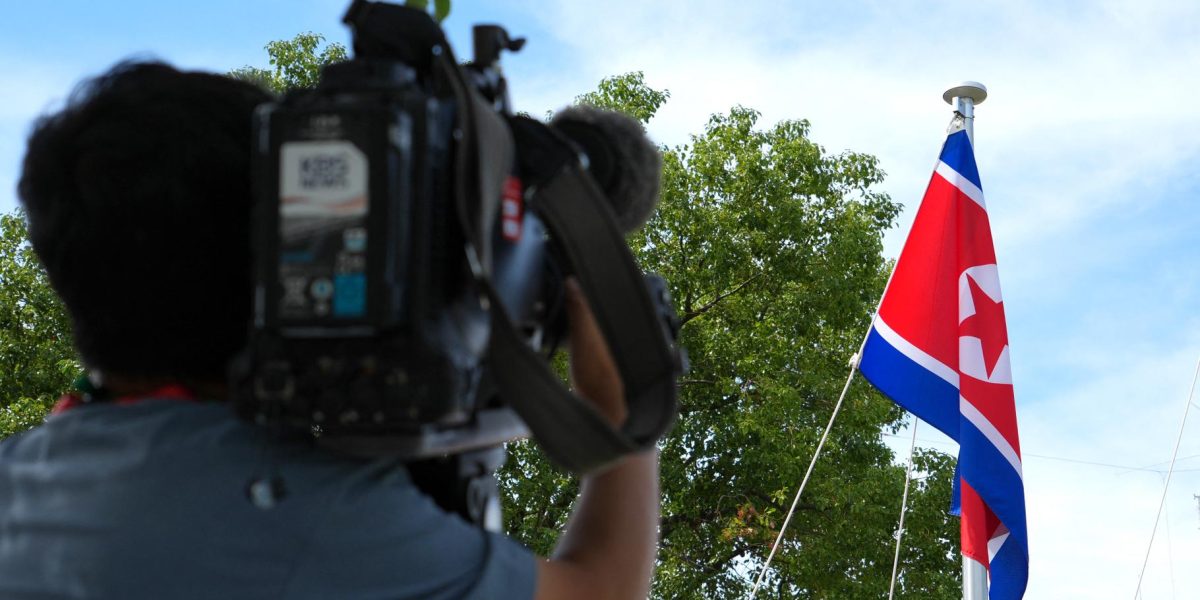
Japanese organizers of the Asian Games were forced to apologize Friday after playing North Korea’s national anthem for the South Korean men’s field hockey team, a diplomatic gaffe that has inflamed tensions on the eve of the tournament’s opening ceremony.
The incident occurred before South Korea’s 5-0 victory over Bangladesh in Nagoya, when the North Korean anthem rang out over the stadium speakers instead of South Korea’s. The two Koreas remain technically at war, having signed only an armistice—not a peace treaty—to end their 1950-1953 conflict.
Players Left Perplexed as Wrong Anthem Plays
South Korean players, who had lined up in formation expecting to hear their own anthem, exchanged confused glances as the wrong music played, according to South Korea’s Yonhap news agency.
Organizers then played Bangladesh’s anthem before realizing their mistake and finally airing South Korea’s—but by then, the referee had already ordered players from both teams to shake hands and begin preparations for the match before the anthem finished, Yonhap reported.
A stadium announcer issued an apology for the error, but South Korea’s head coach Min Tae-seok was far from satisfied.
“This is a really serious problem,” Min said. “When we protested, they responded: ‘We are sorry. It’s not that it wasn’t prepared, but there was an error by the people in charge of the broadcast.’ But this is something that should simply never happen.”
South Korean Officials Demand Answers
An official from the South Korean Olympic Committee said the organization was working to clarify what had transpired.
“We are currently investigating this case to verify the exact facts,” the official told AFP.
The anthem blunder adds to a growing list of complaints that have overshadowed preparations for the regional sporting event. Numerous teams have raised concerns about the quality and quantity of housing provided for athletes. Some delegations were also stranded at the airport for nearly six hours upon arriving in Japan earlier this week.
The incident comes amid heightened sensitivity over inter-Korean relations, with the peninsula remaining divided since the Korean War ended in a ceasefire more than seven decades ago.