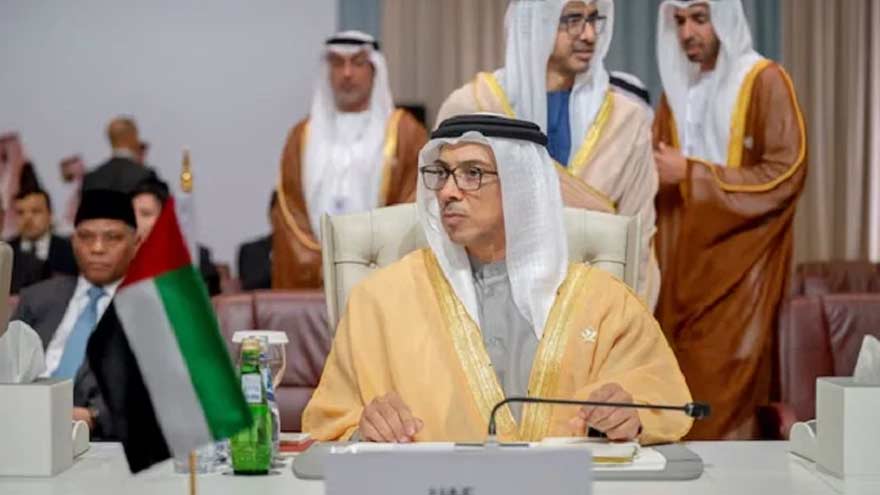
Saudi Arabia’s defence minister has extended a public invitation to the United Arab Emirates’ Vice President, Sheikh Mansour bin Zayed Al Nahyan, to visit the kingdom, marking the first such face-to-face overture since a bitter rift between the two Gulf allies over Yemen.
The invitation was announced on Tuesday in a statement posted on X by the Saudi defence ministry, which described the UAE as a “sisterly” nation and referred to Sheikh Mansour as a “brother.”
Weeks of Quiet Diplomacy
The gesture follows months of signals suggesting a rapprochement between Riyadh and Abu Dhabi, whose once-close partnership fractured publicly in December. During a July detente, senior officials and ministers in both countries took to social media to post messages about friendship and unity.
Among those efforts, Turki Alalshikh, chairman of Saudi Arabia’s General Entertainment Authority, shared a photograph of Saudi Defence Minister Prince Khalid bin Salman alongside Sheikh Mansour, saying it had been taken a few days earlier.
Pressure Mounts Over Houthi Attacks
The Saudi olive branch comes as the kingdom struggles with weeks of Houthi attacks targeting its tankers, oil facilities, airports and even its capital. The Iran-backed group has seized control of Yemen’s Red Sea coast from forces loyal to the Saudi-backed government.
Riyadh has spent weeks appealing to international allies for assistance in Yemen. A source from the Yemeni leader’s office told AFP earlier this week that he had requested American support in a call with US President Donald Trump to counter the Houthis.
The New York Times reported that the Saudi crown prince called Trump on Sunday “to implore him, again” to help halt the group’s advances, while Axios has previously reported that Trump rebuffed a similar request last week.
On Friday, the military chiefs of staff of Saudi Arabia, Turkey and Pakistan held talks on how to support Riyadh as the Houthis intensify attacks on the world’s top crude exporter.
A Partnership Under Strain
Saudi Arabia and the UAE fell out publicly in December, when the kingdom accused Abu Dhabi of threatening its national security by backing southern Yemeni separatists who launched a brief offensive.
The two countries have diverged on foreign policy across multiple arenas, from Yemen and Sudan to the Horn of Africa, where they have thrown their weight behind rival forces. Tuesday’s invitation, if accepted, would represent the most concrete step yet toward repairing one of the Gulf’s most consequential partnerships.