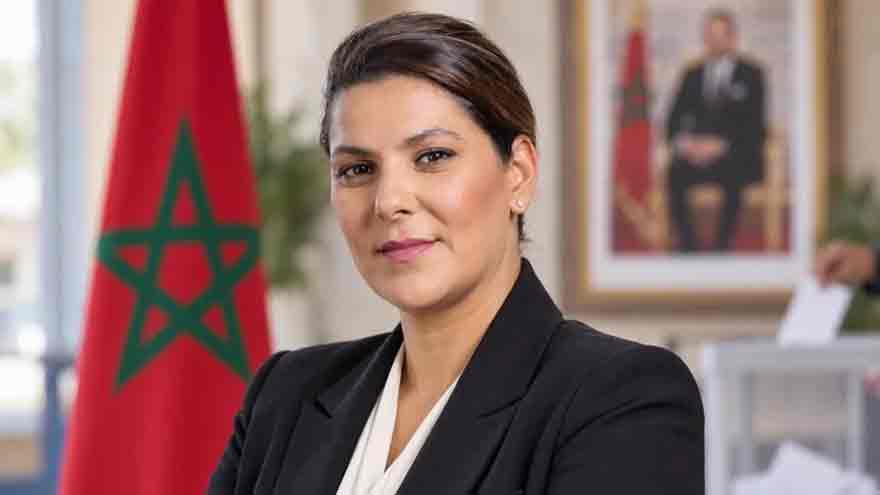
King Mohammed VI appointed Fatima Ezzahra El Mansouri on Tuesday as Morocco’s first woman prime minister, following her liberal-centrist party’s victory in the September 23 parliamentary election, the royal palace announced.
The king has asked El Mansouri to form a new government, according to a palace statement. Her appointment marks a historic first for the North African kingdom, where the head of government is selected from the party holding the largest number of seats in the House of Representatives.
A Historic Appointment
El Mansouri, a lawyer who served as housing minister in the outgoing government and as mayor of Marrakech, will now lead coalition negotiations and submit a cabinet list for the king’s approval. Her party, the Authenticity and Modernity Party (PAM), was created in 2008 by an adviser to the king and has positioned itself as a counterweight to the Islamist Justice and Development Party (PJD) by advocating social modernisation and secular-leaning views.
Morocco operates as a constitutional monarchy in which the king retains sweeping powers over foreign policy, defence and other key portfolios.
Election Results and Coalition Talks
PAM secured 97 seats, rising from its previous position as the second-largest member of the outgoing coalition. The party was bolstered by the recruitment of Fouzi Lekjaa, Morocco’s football federation chief and a two-time government budget manager, who joined weeks before the vote.
The party’s partners in the outgoing government followed, with the liberal-centrist National Rally of Independents (RNI) winning 66 seats and the conservative nationalist Istiqlal taking 65. The PJD, which led the previous government for a decade, won 54 seats. Three leftist parties captured smaller shares.
During the campaign, PAM had ruled out remaining in a coalition with the RNI, with the two parties trading blame over policy shortcomings including a failure to halt rises in food prices. However, El Mansouri signalled flexibility on Thursday, stating she would have no “red lines” in negotiations. “We have turned the page,” she said.
Abdelilah Benkirane, former prime minister and leader of the PJD, said his party would remain in opposition.
Challenges Ahead
The incoming government faces significant tasks, including overseeing the final stages of a $20-billion push to prepare for the 2030 World Cup, which Morocco will co-host with Portugal and Spain.
It must also implement economic policies aimed at addressing widespread youth discontent, an issue highlighted by a mass border rush on the Spanish enclave of Ceuta in July and deadly Gen-Z-led protests last year.
Voter turnout, closely watched as an indicator of trust in elected institutions, fell to approximately 38% from around 50% in the previous elections five years ago, when the moderate Islamist PJD suffered a crushing defeat after a decade in power.
In recent years, King Mohammed VI had appointed a female adviser, and Morocco has had women in senior institutional roles. The outgoing government included four women ministers.