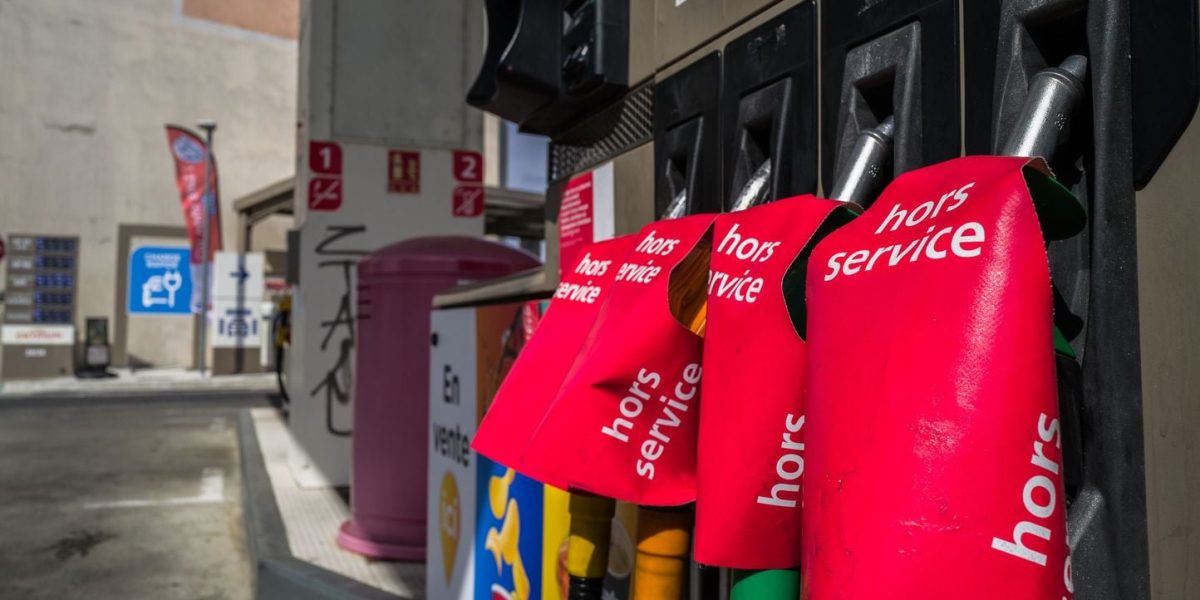
Born in the aftermath of the 1973 oil shock, France’s strategic petroleum reserves were designed as a shield against supply disruptions. Now, for the first time in their five-decade history, they are being deployed as a weapon against inflation at the pump.
Origins of the Strategic Reserve System
The International Energy Agency established the strategic stock system in 1973, the year of the first oil crisis. “It must allow member countries to cope with a major supply disruption,” explained Blandine Ruty, secretary-general of Ufip Énergie et Mobilités, the French petroleum industry association.
Today, 32 countries adhere to the system, including most European nations and G7 members. Each state must maintain the equivalent of 90 days — three months — of national consumption.
France’s Reserves in Numbers
For France, this represents approximately 120 million barrels. These reserves include crude oil as well as refined products: diesel, gasoline, domestic heating oil, and kerosene.
According to France Info, France holds roughly 100 million barrels of oil in its strategic reserves, half of which is diesel. The 10 million barrels released by the state on 7 October will yield approximately 1.6 billion litres of diesel, covering about 20% of national diesel consumption over three months, according to Ruty.
Who Stores the Fuel?
The stocks are financed and owned by private operators, but their use is governed by public authorities. Every company distributing fuel in France must set aside and permanently store the equivalent of 30% of its previous year’s sales. Distributors cannot use these stocks without government authorisation.
However, companies do not hold all these reserves individually. A portion is pooled and managed by Sagess (Société Anonyme de Gestion des Stocks de Sécurité), a private company owned by petroleum operators including TotalEnergies, Shell France, and Siplec, a subsidiary of retailer Leclerc. The entire system is overseen by the CPSSP, the Professional Committee for Strategic Petroleum Stocks, which operates under state control.
A Network of 89 Storage Sites
All strategic reserves are distributed across approximately 89 petroleum depots throughout France. For national security reasons, their precise locations and stock distribution remain confidential.
“This detail is not shared; it is truly the reserved domain of the state and the government,” the petroleum industry spokesperson emphasised.
Among the infrastructure are 80 commercial depots, eight refineries, and one underground salt cavern site at Manosque in the Alpes-de-Haute-Provence region. Operated by the company Géosel, hydrocarbons are stored in about 30 cavities carved into a salt layer between 350 and 1,000 metres deep, beneath the Luberon Regional Natural Park. To extract them, highly saline water is injected into the cavities to push the fuel to the surface.
According to La Tribune, the Manosque site alone can hold up to 53% of France’s reserves.
How the State Can Use These Reserves
Normally, these reserves are used during supply crises. When coordinated action is decided by the IEA — as at the start of the war in Ukraine — the Energy Ministry orders the CPSSP to release volumes. Distributors are exceptionally authorised to draw on their reserves to restock.
This release of Sagess stocks takes the form of a loan, and the volumes must subsequently be returned within one month. Once the situation normalises, distributors must purchase new volumes on the market at their own expense to restore the reserves identically, ensuring this national safety net remains intact.
An Unprecedented Mechanism to Lower Prices
The French government’s decision to release 10 million barrels of diesel over three months — roughly two to three weeks of national consumption — changes the usual logic.
Under normal circumstances, stocks are made available as loans. If a distributor receives 100 barrels to address a shortage, it must later restore those 100 barrels to the reserves.
This time, the mechanism is different: Sagess will sell the 10 million barrels of diesel to distributors at the price purchased before the crisis. For example, if a barrel was bought at 50 euros but is now worth 80 euros on the market, it will be sold at 50 euros. The objective is for distributors to pass this advantage on to their selling prices, allowing motorists to benefit from a pump price reduction estimated between 12 and 18 cents per litre.
Unlike the usual operation where stocks are lent and returned within a month, “these stocks will be progressively reconstituted after the current crisis ends, depending on market conditions,” the government’s press release stated.
“For the first time, the state is not acting to address a physical fuel shortage, but to combat inflation and rising pump prices,” Ruty explained.
To prevent distributors from buying this discounted fuel while maintaining pump prices to inflate their margins, the state has promised weekly checks to ensure the 15-cent reduction reaches consumers’ pockets.
Implementation Questions Remain
How this operation will be organised remains unclear. “We haven’t yet worked with the government to know how all this will be put in place,” Ruty cautioned. “How will it happen? How will they distribute these 10 million barrels to distributors? For now, we know nothing. It’s extremely difficult to comment.”
The move represents a significant departure from the reserve system’s original purpose. Created as a buffer against geopolitical supply shocks, France’s strategic petroleum reserves are now being repurposed as an economic tool — a shift that raises questions about how the safety net will be rebuilt and whether such interventions could become a recurring feature of French energy policy.