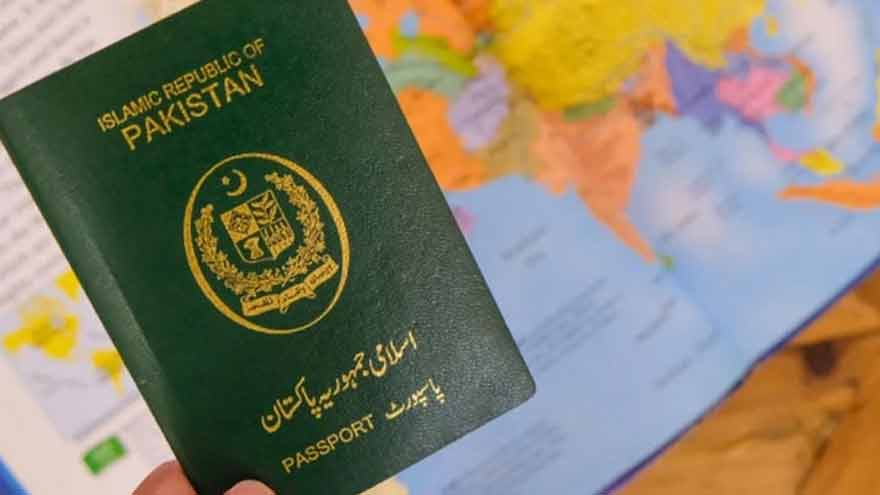
The government has decided to discontinue the issuance of machine-readable passports and roll out electronic passports (e-passports) across the country, with implementation expected within a month, the National Assembly was told.
According to media reports, the Ministry of Interior informed the lower house that machine-readable passports would no longer be issued within a month. After the transition, only e-passports would be issued at passport offices across the country and at Pakistani embassies abroad. Existing machine-readable passports, however, will remain valid until their expiry dates.
Security and Anti-Forgery Benefits
Responding to a question by Member of the National Assembly Malik Shakir Bashir Awan during question hour, Minister of State for Parliamentary Affairs Dr Tariq Fazal Chaudhry said Pakistan was moving towards e-passports in line with technological changes in the global immigration system.
He said the electronic chip embedded in the new passports would help prevent forgery, adding that the government was making efforts to introduce the system as soon as possible.
Administrative Hurdles Acknowledged
Dr Tariq Fazal Chaudhry explained that the country’s large population and the administrative challenges faced by passport offices could cause some delays in the project. However, he said the government remained committed to launching the system within a month.
It was also agreed in the National Assembly that modernising the existing passport system was necessary in view of international travel requirements. The chip in e-passports will help verify travellers’ identities and travel information.
Key Points of the Transition
- Machine-readable passports will cease to be issued within one month.
- Only e-passports will be issued at domestic passport offices and Pakistani embassies abroad.
- Existing machine-readable passports remain valid until their expiry dates.
- The embedded electronic chip is intended to curb forgery and strengthen identity verification.
- The government acknowledges possible delays due to population size and administrative constraints.