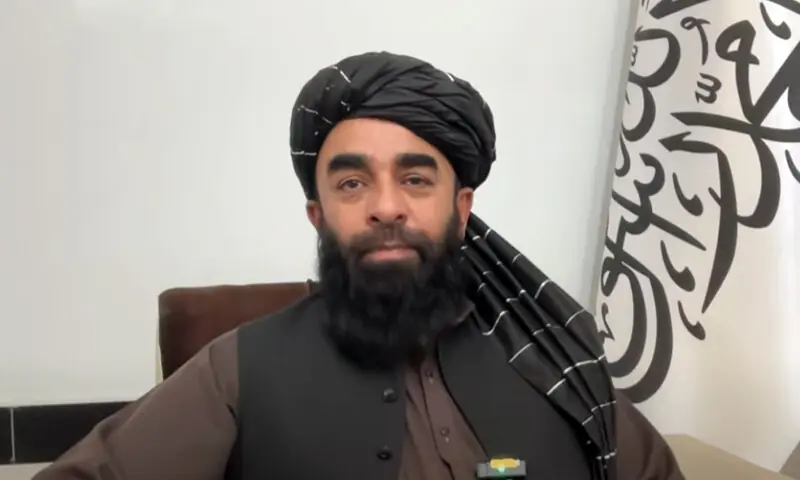
**KABUL, Afghanistan – September 21, 2025** – Zabiullah Mujahid, spokesperson for Afghanistan’s Taliban government, has urged leaders to refrain from “provocative” statements and emphasized the critical need for dialogue, while simultaneously rejecting responsibility for recent terrorist attacks within Pakistan.
Mujahid’s remarks come amidst escalating tensions, as Pakistan continues to express alarm over militant outfits, particularly the banned Tehreek-i-Taliban Pakistan (TTP), allegedly using Afghan soil to launch cross-border assaults. Islamabad has repeatedly pressed Kabul to choose between maintaining neighbourly ties or harbouring terrorists, allegations that Afghan authorities consistently deny.
The spokesperson made his comments during a Pashto-language interview with Imtiaz Gul, executive director of the Islamabad-based Centre for Research and Security Studies (CRSS). The interview was recorded during Gul’s recent visit to Afghanistan’s Kandahar province, where he sought proposals to address recurring problems like the TTP issue and “negative propaganda” harming bilateral relations.
In his response, Mujahid underscored that leaders should avoid “provocative” or “threatening” statements, which he claimed could not stop others. He further asserted that “giving statements to the media, spoiling the environment and taking military action is unwise.” Instead, he stressed that talks should be held, suggesting more visits could foster trust between the two nations. Mujahid also voiced his government’s unhappiness with the current “environment and propaganda,” deeming it detrimental to both Pakistan and Afghanistan.
Mujahid highlighted that militant attacks in Pakistan are not a new phenomenon, having occurred since 2003. He urged Islamabad to enhance its own security measures and share intelligence with Kabul to facilitate joint efforts against these threats. However, he firmly maintained that Afghanistan could not be held responsible for incidents like bomb blasts in Bannu or any other part of Pakistan, stating, “Pakistan should ensure its own security.” He recommended that both capitals engage in talks to discuss the root causes of terrorism.
These statements follow a stern message from Pakistani Prime Minister Shehbaz Sharif, who recently demanded that Kabul clarify its stance between Pakistan and the TTP. The Prime Minister’s remarks came after he attended the funeral of 12 soldiers killed during an exchange of fire with terrorists in South Waziristan. The issue of militants using Afghan territory against Pakistan, alongside frequent border skirmishes, has long strained ties between the two countries.
When confronted by Gul about Pakistan viewing the TTP’s presence in Afghanistan as a “red line,” Mujahid insisted that the TTP was Pakistan’s “internal issue.” He advised Islamabad to find a solution to this problem without jeopardizing its relationship with Kabul.
Mujahid assured that Afghanistan is actively working to ensure “no one uses its soil against any other country,” acknowledging that difficult terrain in some areas might be exploited. He reiterated that a solution should be found through negotiations and that Afghanistan should not be blamed, emphasizing a desire to avoid “fighting, bloodshed and difficulties in Pakistan.”
Earlier in the interview, Mujahid conveyed a message to Pakistani leaders and officials, expressing Afghanistan’s desire for “brotherly ties” and the resolution of all issues through negotiations. He warned that “levelling allegations and making threats spoil the environment, which further complicates matters.” The spokesperson also called for policy reforms and urged religious scholars in Pakistan to play a constructive role in maintaining good relations.
Finally, Mujahid extended a message to the people of Pakistan, assuring them that Afghans do not wish for lawlessness or difficulties in Pakistan, and that Afghanistan seeks a normalisation of ties with its neighbour.