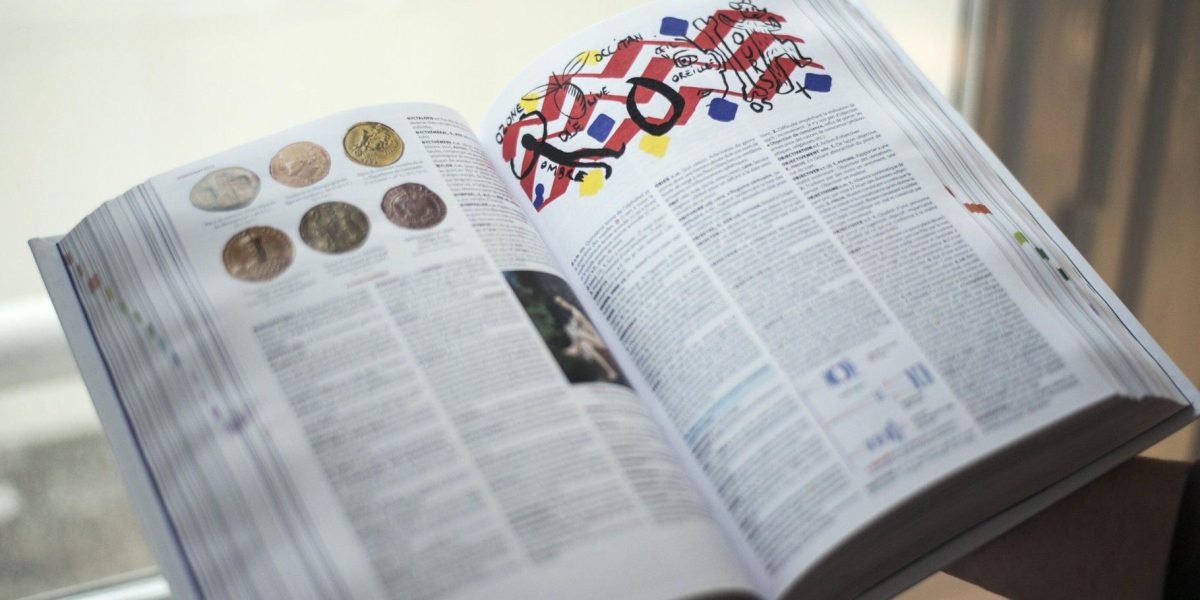
The Cambridge Dictionary has revealed its Word of the Year for 2026, and the choice is a striking one that speaks volumes about our unease with artificial intelligence.
The British dictionary could have opted for a technical term, a neologism, or an expression born on the internet. Instead, to capture the spirit of 2026, it chose a word everyone knows: “human.”
A Familiar Word in an Unfamiliar Age
It is precisely because of the rise of AI that this everyday term caught the attention of the dictionary’s editorial team. As machines become capable of writing, generating images, and performing certain daily tasks on our behalf, the boundary between what belongs to humans and what belongs to technology appears increasingly blurred.
Cambridge defines the term as “having the qualities, faults, and emotions that are typical of people, as opposed to gods, animals, or machines.”
Word Associations That Capture the Moment
To select its Word of the Year, the Cambridge Dictionary examines searches conducted on its website and the ways in which words are used together. This year, lexicographers noticed that “human” appeared increasingly in combination with other terms.
Jessica Rundell, the dictionary’s editorial director, cited expressions such as “human governance,” “human written,” and “human need” in an interview with The New York Times. The use of “human-made” and “human-author” has also grown noticeably.
For Francesca Woodward, a lexicographer at the Cambridge Dictionary, “human” reflects “the zeitgeist of 2026.” Internet users have been “genuinely questioning what it means to be human,” she told AFP, particularly amid concerns about jobs that could be replaced by AI.
“FOBO”: The Fear of Becoming Obsolete
The dictionary is also considering adding “FOBO” — fear of becoming obsolete — an acronym that captures the anxiety of losing one’s job to artificial intelligence.
- The choice of “human” reflects growing public debate over AI’s role in daily life and the workplace.
- Word pairings such as “human governance” and “human written” signal a desire to distinguish human contributions from machine output.
- “FOBO” could soon join the dictionary as a formal entry, underscoring fears of AI-driven job displacement.