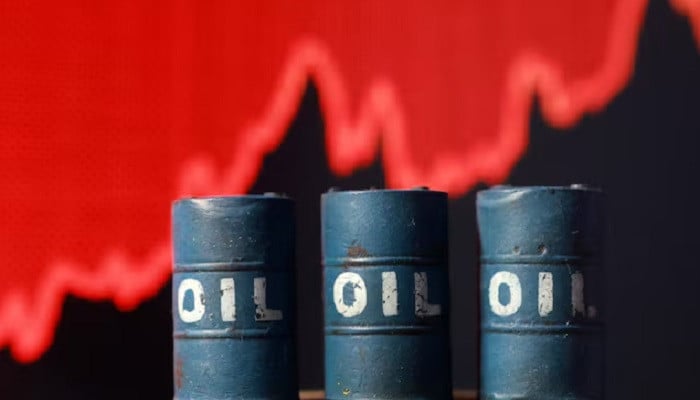
Global oil markets slumped on Friday after Iran announced it would allow commercial shipping to resume through the strategic Strait of Hormuz, draining a major source of geopolitical risk that had driven prices to near $120 a barrel earlier this year.
Ceasefire Triggers Key Decision
The decision, linked to the ongoing ceasefire between Israel and Lebanon, was announced by Iranian Foreign Minister Abbas Araghchi. “In line with the ceasefire in Lebanon, the passage for all commercial vessels through Strait of Hormuz is declared completely open for the remaining period of ceasefire,” Araghchi stated.
The strait, a chokepoint for roughly one-fifth of the world’s seaborne crude oil, had been disrupted by Iran since a US-Israeli offensive began on February 28. That blockade sent shockwaves through the global economy and propelled oil prices to multi-year highs.
Immediate Market Impact
The reopening had an instant effect. International benchmark Brent crude settled at $90.38 a barrel, down 9.1% for the day. Its U.S. counterpart, West Texas Intermediate (WTI), also fell below the $90 mark.
“This news is having an immediate impact on markets,” said Kathleen Brooks, research director at XTB. The move also electrified equity markets, extending a rally on Wall Street where major indices hit new records. The S&P 500 closed at 7,126.06, up 1.2%.
Analysts noted the shift allows investors to focus on strong economic fundamentals. “Geopolitical developments are moving in the right direction, and at the same time, the earning strength is hard to ignore,” said Angelo Kourkafas of Edward Jones.
Political Reactions and Cautions
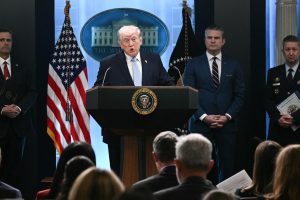
U.S. President Donald Trump welcomed the development, telling AFP in an interview, “We’re very close to having a deal,” and adding there were “no sticking points at all” left with Tehran. However, Iran’s foreign ministry quickly contradicted one of Trump’s claims, stating its stockpile of enriched uranium would not be transferred “anywhere.”
The shipping industry offered a cautious welcome. A spokesman for German giant Hapag-Lloyd called it “in general… good news,” but highlighted practical concerns. “One thousand ships cannot just go now to the entrance of the strait, that will be chaos. They (the Iranians) need to give clear orders,” said spokesman Nils Haupt, citing unresolved safety details like potential mine clearance.
The market’s dramatic response underscores how deeply the Hormuz blockade had embedded a geopolitical risk premium into oil prices, a premium that is now rapidly unwinding.