The US dollar held close to a 1-1/2-year high against the euro and a seven-month peak versus the Australian dollar on Monday, after surging by the most in nearly six months as robust American jobs data reinforced expectations of higher interest rates.
Greenback Extends Friday’s Rally
The dollar index, which measures the currency against six major rivals including the euro, was steady at 102.20 in early trading, following a jump of around 0.7% on Friday when data showed US job growth accelerated in October while the unemployment rate fell.
The euro edged up 0.1% to $1.11485, after slumping 0.7% on Friday and touching a low of $1.1132 — not far from the previous week’s trough of $1.1105, its weakest level since May 2025.
The Australian dollar added 0.3% to $0.6875, recovering modestly after tumbling more than 1% on Friday to its lowest since March 31 at $0.6855. The dollar eased 0.2% to 158.185 yen, following Friday’s 0.6% jump.
Rate Hike Odds Climb
Futures now imply around 79% odds that the Federal Reserve will raise rates on December 9, up from 71% a week earlier, according to CME Group’s FedWatch tool.
Bets on Fed tightening had been receding amid a rout in global technology stocks, as investors worried about the outlook for AI investment, profitability and regulation — particularly after Democrats swept the US midterm elections earlier this month.
“The Blue Sweep has put the AI trade to the test given risks for heavier AI regulation and a slow down in the CAPEX cycle. At the same time, however, economic realities continue to surprise to the upside — data momentum remains very strong across indicators,” Barclays strategists wrote in a report. “This combination is yet to dent the dollar’s appeal.”
Fed Officials Back Tightening Case
Comments from Fed officials on Friday supported the case for a rate hike. New York Fed President John Williams said US economic growth has remained remarkably resilient in the face of successive shocks, but inflation is too high and it is essential to bring it back to 2%.
St. Louis Fed President Alberto Musalem said inflation remains a top concern in conversations with businesses in his Midwestern district, while San Francisco Fed President Mary Daly said the central bank will likely still need to hike rates further even with the “painful” technology stock selloff.
In Japan, Bank of Japan Governor Kazuo Ueda said on Friday the central bank expects underlying inflation to stay around its 2% target but recognises there are “some upside risks.”
Kiwi Rebounds After Inconclusive Election
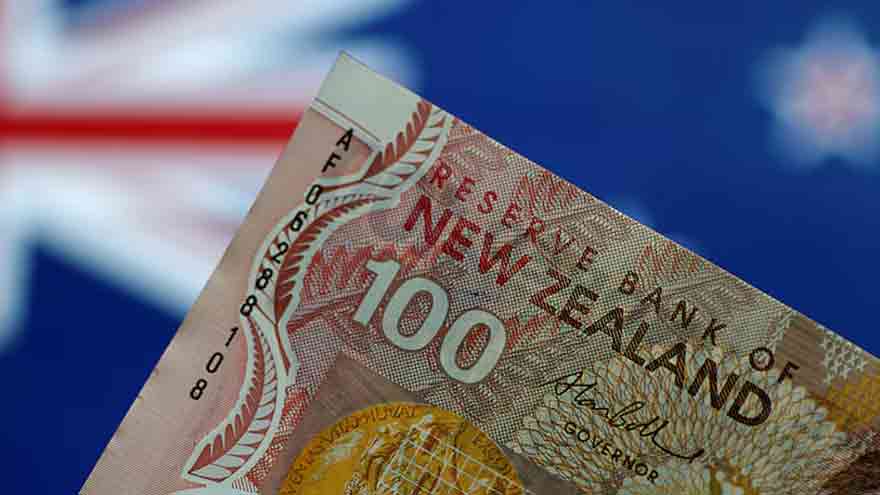
The New Zealand dollar climbed 0.4% to $0.5557, bouncing back after hitting a low of $0.5529 at the end of last week, as investors digested too-close-to-call weekend elections that weakened the government.
Preliminary results gave Prime Minister Christopher Luxon’s National Party, ACT New Zealand and New Zealand First 67 seats in the 131-seat parliament — one more than the 66 required for a majority.
However, almost 400,000 votes, or nearly 15% of the total, have yet to be counted, and official results are not due until November 27. Both Luxon and Labour leader Chris Hipkins have said they will wait for final results before entering formal coalition negotiations.
Other Major Currencies
- Sterling edged up 0.1% to $1.3360.
- The greenback eased 0.1% to C$1.4119, after surging 1.1% against the Canadian dollar on Friday when Canadian data showed surprise job losses.