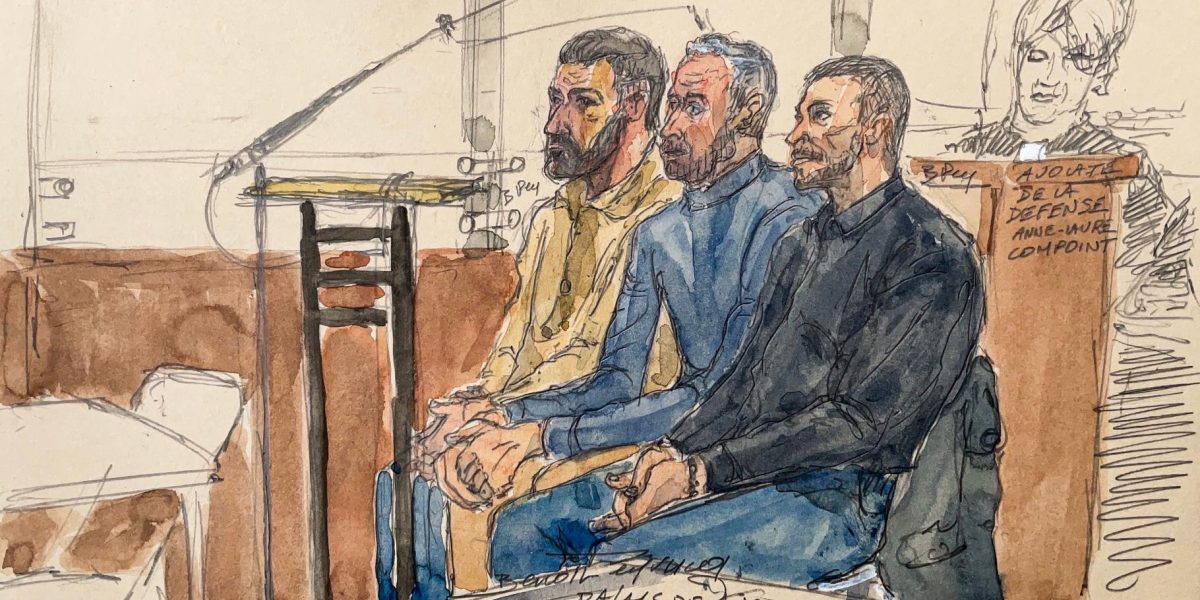
Six years after the events that shocked France, the Paris criminal court on Friday handed down sentences ranging from one year under electronic monitoring to two years’ firm imprisonment to three police officers convicted of assaulting music producer Michel Zecler, and recognized racism as an aggravating circumstance.
Aurélien Lapersonne, 29, Philippe Tondeux, 50, and Pierre Plantier, 37, stood trial for voluntary violence and falsification of public documents. The penalties fell well short of the four to six years of firm prison sought by the advocate general.
Sentences Below Prosecutors’ Requests
In detail, Lapersonne received five years, three of them suspended; Tondeux five years with three and a half suspended; and Plantier five years with four suspended, his firm term to be served under electronic monitoring. Deferred committal warrants were ordered for the first two officers.
The court found all three guilty of every charge, including group violence and falsification of public documents by a person holding public authority—offenses that carry a maximum of 15 years. The three were also permanently barred from serving as police officers, effective immediately.
Racism Recognized as Aggravating Factor
On the racist aggravating circumstance—not retained during the investigation for lack of evidence but omnipresent throughout the hearings—the court cited “the consistency” of Zecler’s statements. The producer has always maintained he was called a “dirty nigger” during the assault, which the officers categorically denied.
The court noted that Zecler told a Black officer handcuffing him after the beating that he had been subjected to racist insults, repeated the account at the police station and during transport to hospital, and confided it to those close to him. Conversely, it found that the false arrest report—accusing the producer of violence, which surveillance footage contradicted—followed by “insincere statements,” “discredits their denials.”
The court said it nevertheless took into account the defendants’ admission of the facts, their social integration and their lack of prior records in departing from the prosecution’s sentencing requests.
Video Evidence Averted a ‘Miscarriage of Justice’
In their final words to the court Friday morning, the three defendants—one in tears—again apologized to Zecler and the civil parties. “I would like to apologize to the justice system, for the image I gave of the police,” one of them said.
On November 21, 2020, Zecler was beaten with rare violence in the entrance of his music studio by the three officers, who initially wanted to check him for not wearing a mask during the Covid period. After a disproportionate police operation—30 officers in reinforcement—and a tear gas grenade thrown into the studio, nine young people present were brutally arrested along with Zecler, who was again beaten in the street.
The officers then drew up a false report accusing the producer of violence against them and filed a complaint for rebellion. Surveillance footage from the studio, showing them raining blows on Zecler as he did not fight back, completely invalidated their account and, in the advocate general’s words, saved the producer from a “miscarriage of justice.”