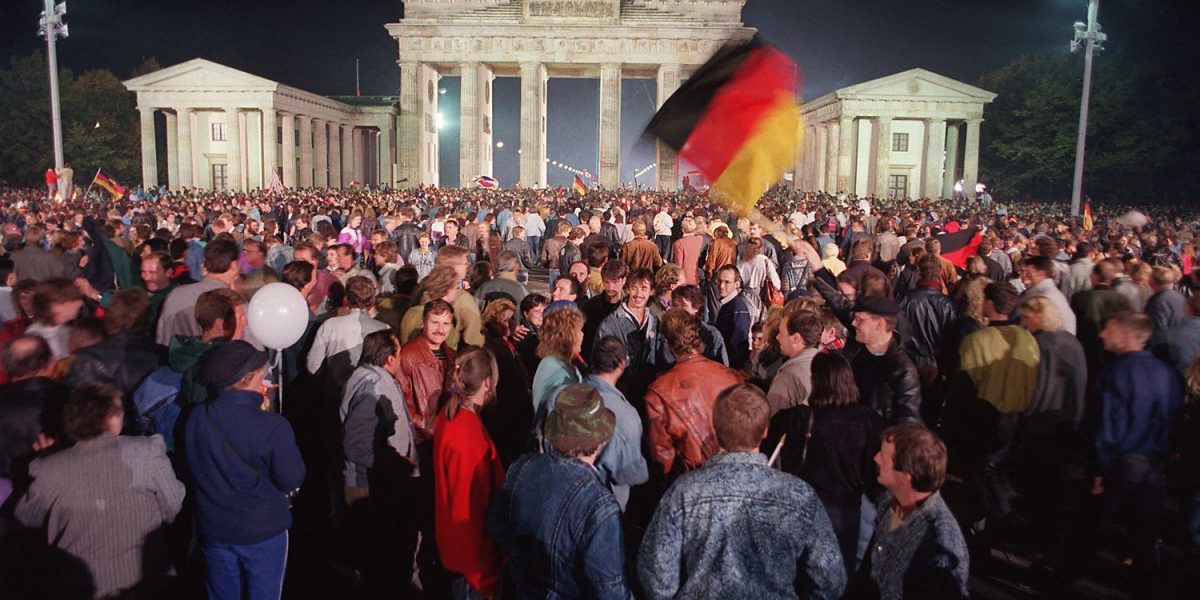
On October 3, Germany observes its national holiday, known as German Unity Day, commemorating the country’s reunification in 1990. But more than three decades later, significant disparities between the former West Germany and the former East Germany remain, with East Germans comprising roughly 20% of the population. The annual report from the federal commissioner for East Germany, published last week, underscores these persistent gaps.
Economic and Social Gaps Persist
These disparities have become a political rallying point for the Alternative for Germany (AfD), the far-right party that enjoys strong support in the eastern states. “Only the AfD takes our problems seriously,” said Thomas, a boat builder encountered near Rostock at a party rally. He pointed to lower wages in the East, noting that “here in the East, we earn less than in the West, so in the end, fuel costs us more. It’s the same with electricity.”
The socio-economic divide remains evident 36 years after reunification. East Germans are still underrepresented in senior positions within the federal administration. The federal government allocates between €4 billion and €5 billion annually to support struggling regions, with more than half of that funding going to eastern territories in 2022. Additional federal programs further supplement this support.
Wolfgang Muno, a political science professor at the University of Rostock, offered a nuanced perspective: “If we look at reality, we see that in terms of infrastructure—cities, roads, train stations—the East is sometimes better equipped than many older infrastructure sites in the West.”
Wealth Gap and Subjective Perceptions
The most striking divide lies in accumulated wealth. Four decades of communism meant that very few East Germans were able to become property owners or build substantial savings. But Professor Muno also highlighted the subjective perception among East Germans: “The feeling of starting with fewer advantages, or the idea that West Germans benefited more from the fruits of reunification.”
This sentiment, he noted, is one the AfD regularly exploits. “Its rhetoric essentially says: ‘The West betrayed you,’ with the promise of improving their living conditions.” In Saxony-Anhalt, for example, several experts have assessed that the AfD’s economic program—which proposes lower taxes and expanded social benefits—would be difficult to finance.
A Holiday With Political Undertones
German Unity Day serves as both a celebration of reunification and a reminder of the work that remains. As the country marks 36 years since the fall of the Berlin Wall and the formal reunification that followed, the gaps between East and West continue to shape political discourse and voter behavior, particularly in the eastern states where the AfD has gained its strongest foothold.