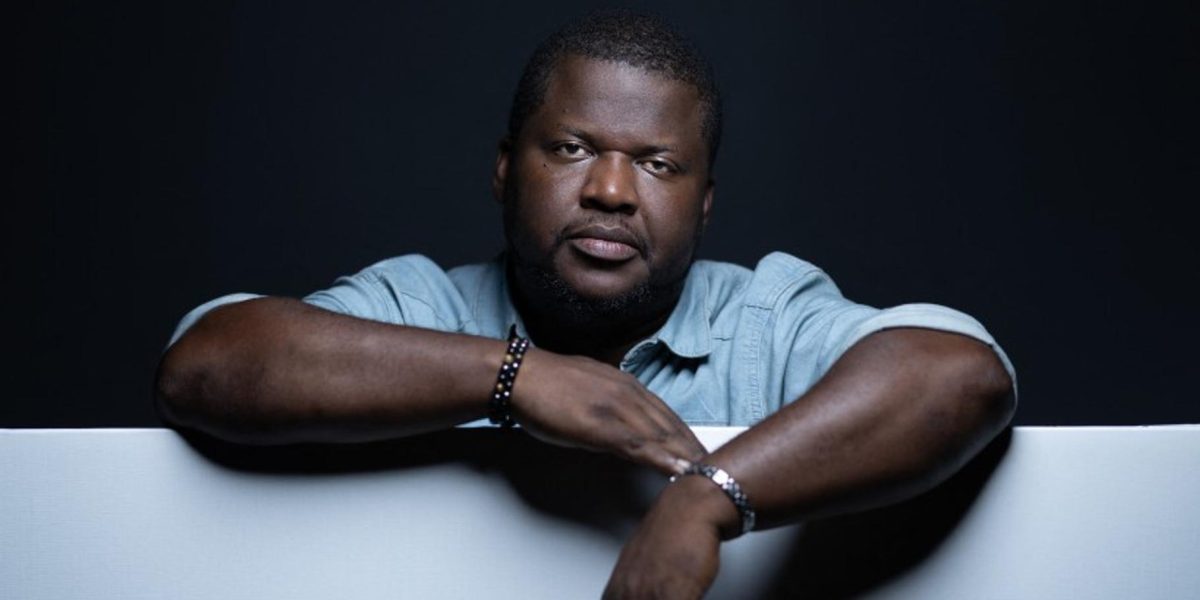
A single tweet has ignited a fierce literary controversy. Since an anonymous user claimed to have used an AI detection tool, social media has been consumed by one question: did Thélyson Orélien, the breakout star of this literary season, use artificial intelligence to write his novel? On Tuesday, September 22, his French publisher, Grasset, responded.
Publisher Dismisses Allegations as “Fake News”
Speaking to BFMTV, Grasset said it would not dignify what it characterized as “rumors.”
“We’re dealing with fake news,” the publisher stated. “It’s a conspiracy theory. These so-called AI-detection tools are themselves AI that hallucinate that the Bible was written artificially. How can anyone trust these tools?”
The publisher offered another argument: “Amazon offers dozens of novels written by AI. None of them succeed. None have any singularity. The exact opposite of Thélyson. No novel written that way has ever become a bestseller.”
The Tweet That Sparked the Storm
On Monday, September 21, an account created in June on X—followed by only a few thousand users—posted a tweet alleging that the novel was “almost entirely” written by AI. To scrutinize C’était ça ou mourir (It Was That or Die), the account, named “Balance ton Claude,” claimed to have used Pangram, an AI detection software.
“The probability that twenty passages from the same book (and there are far more than 20 flags in the novel) would be wrongly identified by Pangram as AI-generated is therefore 0.0041% to the power of 20, or 0.1802 × 10⁻⁸⁵%—that is, 0 followed by 85 zeros after the decimal point,” the user asserted. Notably, the account’s only follow on X is Pangram itself.
A Literary Phenomenon Under Scrutiny
A source close to the author questioned the motives behind the allegations, telling BFMTV: “We’ve heard this noise, these rumors. We wonder where they come from. Is it competitors trying to harm this young author who has been shortlisted for several literary prizes like the Renaudot? Is it because Thélyson is Black and Haitian?”
Since its release in August, C’était ça ou mourir has won unanimous praise from the press, including Le HuffPost, and from readers alike. According to a Datalib study published by Libération, Orélien’s debut novel ranks among the top sellers this literary season.
Among the final novels published under Olivier Nora’s leadership at Grasset before his highly publicized dismissal from the publishing house under Vincent Bolloré’s control, it is also a serious contender in the literary prize race. Awarded the Fnac Prize on Monday, it features in major shortlists, including the Goncourt, Médicis, and Fémina.
What Is C’était ça ou mourir About?
The novel tells the story of Jonas Dorléon, a history and geography teacher from Port-au-Prince, Haiti. One morning, he wakes up and hears a first “POW.” This time, he decides: he will flee the terror, violence, and chaos of the gangs.
Armed with nothing but a Carrefour plastic bag—containing a pair of underwear, a photo of his mother, his diploma, and a poetry collection—he hopes to reach Quebec, where a distant cousin awaits. The journey is far from easy and grows more dangerous, tragic, and hostile at every stage and every border.
Straddling the Dominican Republic, Mexico, Brazil, and Trump’s America—through jungle, snow, an overheated bus, and an online interface worthy of the “future of inhumanity”—his exodus is punctuated by humiliations. It evolves through faces and encounters, plunging readers into the hero’s psyche.
Grasset Stands by Its Author
The subject is political. The prose is precise and vivid. In conservative circles, it has landed less well—Valeurs Actuelles, for instance, has no doubt about what it calls “the tics of artificial writing.” Others point to the author’s alleged inability to defend his book.
“Thélyson expresses himself very well. He has worked in journalism,” Grasset insists.
The publisher added: “Above all, he has written poetry in recent years and is trying his hand at literary fiction with talent. He has been writing his entire life. He doesn’t need AI. We’ve also heard that a friend of his wrote the novel. But in that case, why wouldn’t this talented friend have signed the book under his own name?”
As of now, Pangram, which BFMTV also attempted to contact, has not responded. The software, which claims to be the most performant among its competitors in AI detection, does not constitute a reliable source, given its potential for error, its “hallucinations,” and its cultural biases.