Three women from the family and inner circle of Joël Le Scouarnec, the former surgeon described as France’s worst pedocriminal, have spoken publicly for the first time in a two-part documentary examining how decades of silence allowed him to continue offending with impunity.
“Les Cercles du silence” (“The Circles of Silence”) aired Tuesday at 9:10 p.m. on France 2, tracing the mechanisms that shielded Le Scouarnec from accountability for more than 30 years.
A Childhood Marked by Repeated Abuse
Sisters Priscilla and Aurore Jobard were raped and sexually assaulted by their uncle, their mother’s brother, between 1990 and 2000.
“In my memories, every time we went to visit them on holiday, there was an assault,” Priscilla says, her voice trembling. “The worst part is that as a child, you are incapable of defending yourself, so you wait. You keep playing video games while he does his thing.”
At age 9, she confided in her sister Aurore, five years her senior. Aurore long believed she was not affected. In reality, “it was traumatic amnesia speaking.” She would later discover her own name and photographs of herself in the surgeon’s “black notebooks” — computer files in which he recorded his crimes, uncovered when he was arrested in 2017. She was among the thousands of unbearable pages and hundreds of victims documented there.
After Priscilla raised the alarm, Aurore told their mother, who confronted her brother. He admitted the facts concerning Priscilla. The mother also informed the surgeon’s wife. At that point, “everything stopped. There would be no more assaults.”
Hundreds of Victims in the Operating Room
For them, at least. But Le Scouarnec continued to offend, particularly at the hospital where he worked as a visceral surgeon responsible, among other duties, for performing appendectomies on adolescents. He went on to claim hundreds of victims, most of them underage patients who were “in a state of sedation” at the time of the assaults.
In May 2025, a court sentenced him to 20 years of criminal imprisonment for nearly 300 rapes and sexual assaults. Since August, the Lorient prosecutor’s office has opened a judicial investigation into 10 additional rapes and 40 sexual assaults dating from 1987 to 2017.
“If people had been capable of speaking about their doubts, if Joël Le Scouarnec’s sister had been able to speak about her fears, we would not be here,” says Cyril Denvers, who directed the documentary with Christophe Offenstein.
The Two Circles of Complicity
Divided into two parts, the film draws on lawyers, journalists, experts and victims to demonstrate the systemic failures that allowed the predator to keep operating.
The first circle was medical. In 2005, Le Scouarnec was convicted of possessing child pornography, yet the Ordre des Médecins imposed no restriction on his practice. Denvers describes “people who turned their heads, who did not want to hear.”
The second circle was familial, shaped by what the director calls a “deep incestuous mechanism.”
Even as she acknowledges that her mother “tried knocking on many doors,” Priscilla Jobard, now 36, concedes that her mother “was faced with the fact that she did not really have the right to disrupt” the family equilibrium. “She would have been the person who destroyed everything, and that was impossible for her,” Priscilla says.
Alexandra Moricet, another niece of Le Scouarnec, carries the guilt of having been the predator’s first victim. She was 5 years old.
“Telling yourself that there are 300 victims behind you is complicated to accept. If I had been able to speak, those people would not have existed,” she confides.
A United Front Against Omertà
To “shed light on Joël Le Scouarnec’s crimes at the hospital,” Denvers says it was necessary to have “the complete demonstration” and to examine intrafamilial victims. He contacted the surgeon’s nieces as early as 2021, shortly after Le Scouarnec abandoned an appeal of an initial 15-year prison sentence for rape and sexual assault of four girls, two of them his nieces.
The three nieces, along with Stéphanie Bonnet, a family friend raped and assaulted between 1985 and the early 1990s, agreed to testify. Until then, only Alexandra Moricet had spoken out.
The director, long interested in subjects involving childhood and justice, organized the shoot at his home “in a small village in the Orne.” “We rented the village hall and did the interviews over a weekend. In the evenings, we had dinner together with the families to take our minds off things,” he recalls.
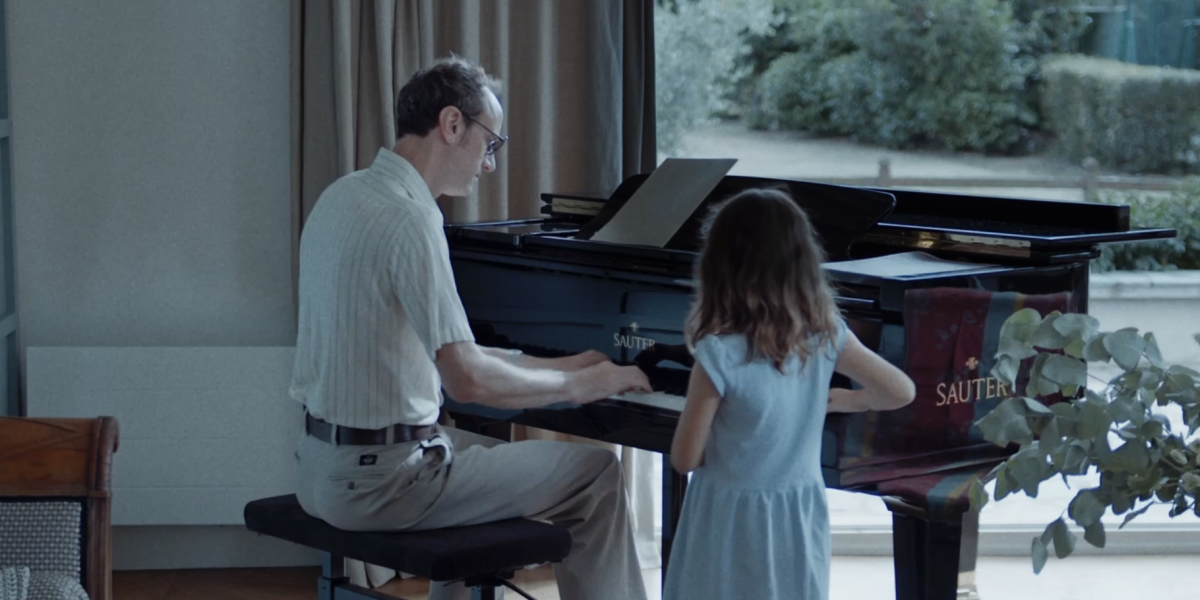
On screen, each woman testifies alone before the camera. But some shots show those not being interviewed sitting nearby, side by side, united.
“They move as a bloc. I had no choice: either they were not there, or all four of them were there,” Denvers explains. “I set up an angle to film them together, as a beautiful counterpoint of love and support while they delivered their pain, their questions, their anger, and broke the omertà.”
Statute of Limitations and Unanswered Questions
The facts concerning Alexandra Moricet and Stéphanie Bonnet fall under the statute of limitations. However, the existence of child pornography images allowed them to join the civil action at the May 2025 trial.
While the surgeon will be eligible to request a sentence adjustment in 2030, Denvers says he wanted to “recall the real question that remains unanswered”: “the enormous void concerning institutional prosecutions, at the level of decision-makers, caregivers, and the collective responsibility of the public hospital” that failed to remove the predator before his arrest.