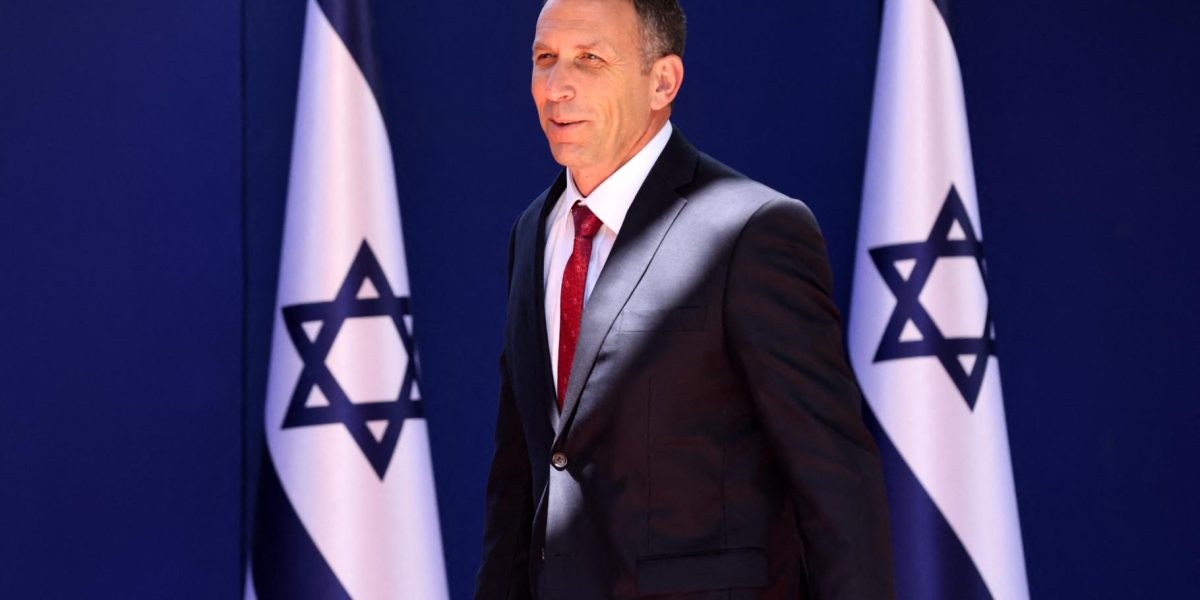
Israeli lawmakers elected Matan Kahana, a close ally of Prime Minister Benjamin Netanyahu’s political rival Gadi Eisenkot, as speaker of the Knesset on Tuesday, November 17, handing the outgoing premier a fresh setback three weeks after elections left neither camp with a majority.
The new speaker, 54, secured 66 votes in the 120-seat parliament, largely thanks to backing from Israel’s Arab parties, which have played a decisive role since their historic breakthrough in last month’s vote, where they won 19 seats.
A Strategic Post
The Knesset speaker does more than chair sessions. The role involves organizing parliamentary business and the power to fast-track certain bills — a significant lever for Eisenkot, who intends to roll back several measures adopted under Netanyahu, beginning with the judicial overhaul.
“A new chapter is opening for the Knesset,” Eisenkot said on X, promising that parliament would “fully and effectively play its role as a body overseeing” the government.
The same Arab support had earlier led President Isaac Herzog to task Eisenkot with trying to form the next government. The centrist has yet to assemble a coalition, but he has now won a first battle against Netanyahu before taking the reins of the country.
A Victory That Already Divides
The parliamentary win does not guarantee Eisenkot can form a government. Some of his potential allies still refuse to govern alongside the Arab factions, despite their support for his camp.
Their backing of Kahana also revived tensions in the Knesset. Allies of Netanyahu booed them during the vote, while Likud denounced “a dark day in the history of the Knesset,” condemning “the votes of supporters of terrorism.”
Faced with the tensions, Kahana sought to strike a unifying note. “The Knesset is the home of all Israeli citizens, and I will be a speaker for everyone, regardless of religion, race or sex,” he said in remarks after his victory.
Military Past and Political Career
A member of Eisenkot’s Yashar party, Kahana has a long military record. Like Netanyahu, he served in Sayeret Matkal, an elite Israeli army unit, before becoming a fighter pilot and reaching the rank of colonel.
A practicing Jew who entered politics in 2019, he drew the hostility of ultra-Orthodox parties by seeking to curb their influence over the Chief Rabbinate, which oversees aspects of religious life in Israel. He replaces Amir Ohana, a Netanyahu loyalist who had held the post since 2022.
- Kahana won 66 of 120 votes, with backing from Arab parties holding 19 seats.
- The speaker can organize parliamentary work and fast-track legislation.
- Likud branded the vote “a dark day in the history of the Knesset.”
- Kahana succeeds Netanyahu loyalist Amir Ohana, speaker since 2022.