A fragile diplomatic track between Washington and Tehran veered into uncertainty on Friday after Switzerland confirmed that planned high-level talks had collapsed, even as a far-right Israeli minister threatened a massive escalation in Lebanon and France moved to block any immediate relief from United Nations sanctions on Iran.
The cascade of diplomatic and military developments underscored the extreme volatility gripping the Middle East, with a nascent US-Iran memorandum of understanding facing immediate resistance from key allies and hardliners on all sides.
Swiss Summit Cancelled
The Swiss foreign ministry announced that talks between the United States and Iran scheduled for Friday at the Burgenstock mountaintop resort would not proceed. The cancellation came just hours after the White House confirmed that Vice President JD Vance had postponed his departure for the negotiations, which were intended to begin implementing a broader agreement to end the regional war.
“The logistics of these negotiations have never been simple or predictable. As of now the Vice President is not departing tonight,” a White House spokesperson said late Thursday, adding that Washington looked forward to beginning technical talks “as soon as possible.”
Strait of Hormuz Fee Waiver
In a sign that some technical channels remain open, Iran’s Persian Gulf Strait Authority (PGSA) announced it would waive planned fees for vessels transiting the Strait of Hormuz during a 60-day negotiation period. Ships must submit transit requests at least 48 hours before and coordinate routes due to mine-affected areas, the authority said. The waiver covers charges for security, safety, environmental services, and related insurance.
France Vows to Veto Sanctions Relief
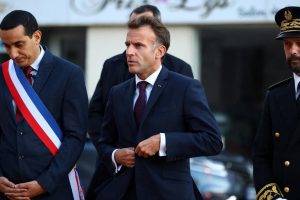
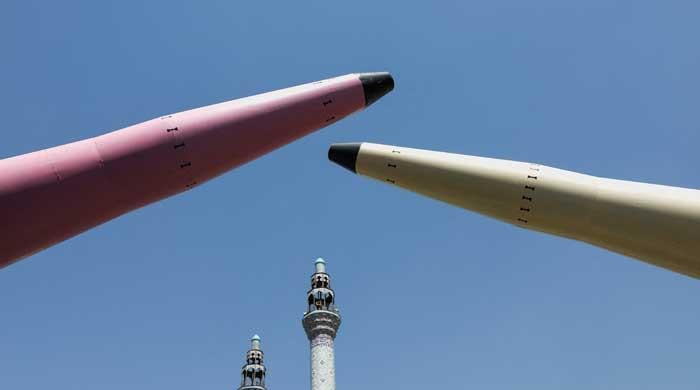
In a direct challenge to the diplomatic process, French Foreign Minister Jean-Noel Barrot declared that Paris would not approve the lifting of UN Security Council sanctions on Iran unless it was satisfied with the trajectory of nuclear talks. Barrot, whose country wields veto power on the council, demanded a “radical change of posture” from Tehran, specifically addressing its ballistic missile program and support for regional proxies.
“We need a radical change of posture by Iran,” Barrot said, adding that there would be no regional stability without resolving these core concerns.
Israeli Minister: ‘All of Lebanon Must Burn’
The most incendiary rhetoric came from Israeli National Security Minister Itamar Ben Gvir, who declared that “all of Lebanon must burn” following the military’s announcement that four Israeli soldiers had been killed there. “With all due respect to the Americans, Israel must make it clear to the entire world that the blood of our sons and the security of our citizens are not up for bargaining,” Ben Gvir said.
The Israeli military confirmed it continued overnight strikes on what it described as Hezbollah targets and infrastructure in several areas of southern Lebanon, citing repeated ceasefire violations by the Iran-backed group. Israel also stated it would not rule out attacks beyond a military control zone in the south, directly challenging terms of the US-Iran pact that called for respecting Lebanese sovereignty.
International Diplomatic ScrambleFrance demanded that Israel halt hostilities in Lebanon and called on Washington to exert pressure on its ally. Foreign Minister Barrot said Paris was still working to convene an international conference to mobilize support for the Lebanese army.
In a separate diplomatic track, Egypt’s foreign ministry announced that Foreign Minister Badr Abdelatty would host counterparts from Pakistan, Saudi Arabia, and Turkiye in the Mediterranean city of Alamein on Sunday for a quadrilateral meeting and joint press conference.
Funeral Diplomacy
istani Prime Minister Shehbaz Sharif confirmed that a delegation would attend the funeral ceremonies of late Iranian Supreme Leader Ayatollah Ali Khamenei, scheduled for July 3 and 4. Khamenei was killed in February during US-Israeli strikes, and the funeral is expected to be a significant moment of regional mourning and political signaling.