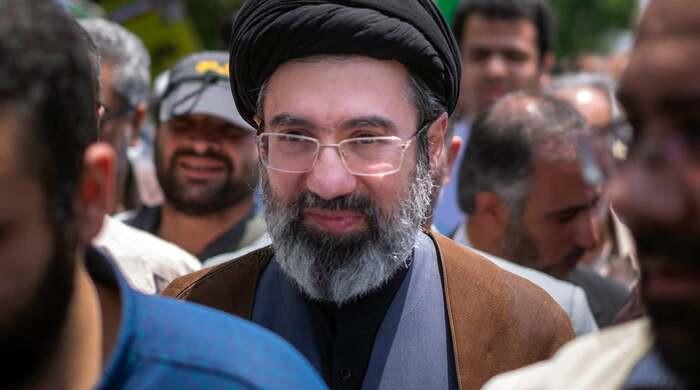
Mojtaba Khamenei, the 56-year-old son of the late Iranian Supreme Leader Ayatollah Ali Khamenei, has been appointed as the nation’s new supreme leader. The decision was announced by the Assembly of Experts, Iran’s top clerical body, in a statement released shortly after midnight on Monday. This transition follows the death of his father, who was killed in an airstrike attributed to U.S.-Israeli forces last week.
A Selection Based on “Hatred from the Enemy”
The appointment process highlighted a unique criterion. Ayatollah Mohsen Heidari Alekasir, a member of the council, stated in a video that the candidate was chosen based on the late leader’s guidance that Iran’s top figure should be “hated by the enemy.” This was underscored when U.S. President Donald Trump previously labeled Mojtaba an “unacceptable” choice, a point noted by Alekasir as a testament to the selection’s alignment with Khamenei’s wishes.
Background and Rise to Power
Mojtaba Khamenei, born in 1969 in Mashhad, has long been a influential behind-the-scenes figure. He served in the Iran-Iraq war and studied under conservative clerics in Qom, attaining the rank of Hojjatoleslam. Despite never holding a formal government position, he amassed significant power as his father’s “gatekeeper,” cultivating close ties with the Islamic Revolutionary Guard Corps (IRGC) and security forces.
His influence extends across Iran’s political and security apparatus, with strong support within the IRGC, particularly among younger generations. Analysts note that his opposition to engagement with the West and his role in advancing his father’s policies made him a pivotal, though rarely public, figure.
Challenges and International Stance
The new supreme leader inherits a nation at a crossroads. He faces potential domestic opposition from citizens who have previously mobilized in mass protests demanding greater freedoms. Internationally, his appointment is viewed with caution by Western powers concerned over Iran’s nuclear program, which Tehran insists is for civilian purposes only.
In 2019, the U.S. Treasury Department sanctioned Mojtaba, accusing him of representing the supreme leader’s office and working with IRGC elements to promote regional ambitions. His wife, Zahra Haddad-Adel, was also killed in the strikes that claimed his father’s life.
Regional Reactions and Future Implications
Israel issued a stark warning following the appointment, stating that “the hand of the State of Israel will continue to follow any successor and anyone who seeks to appoint a successor.” This underscores the heightened tensions in the region.
The Assembly of Experts, an 88-member body elected every eight years, has now overseen its second leadership transition since the 1979 revolution, the first being the selection of Ali Khamenei after Ayatollah Ruhollah Khomeini’s death in 1989.
As Mojtaba Khamenei steps into a role with ultimate authority over state matters, including foreign policy and nuclear decisions, his leadership will be closely watched both within Iran and on the global stage.