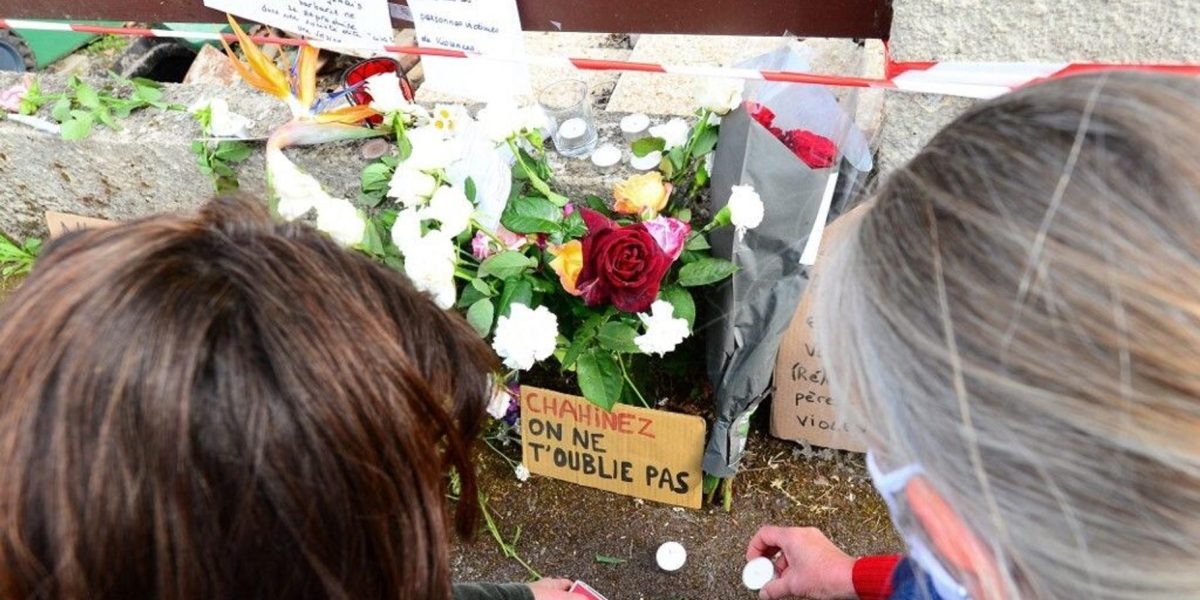
Mounir Boutaa, sentenced in 2025 to life imprisonment for the murder of his former wife Chahinez Daoud, who was burned alive in 2021 near Bordeaux, returned to court on Monday as his appeal trial opened before the Dordogne criminal court.
On May 4, 2021, after staking out his ex-wife near her home, Boutaa shot the 31-year-old victim in the legs with a rifle before dousing her in petrol and setting her alight. During the original trial, the prosecutor described the killing as “a murderous relentlessness intended to exterminate.”
Accused Denies Intent to Kill
At his first trial, the defendant insisted he had wanted to “scare her to death” and “punish her” — convinced she had been unfaithful, a claim never corroborated by any evidence in the investigation — but not to kill her. “It wasn’t me, it was my body, not my mind,” he told the court.
In a case that became emblematic of femicide proceedings for the civil parties, the sentence handed down at first instance against Boutaa, a 50-year-old French-Algerian mason, included a 22-year security period.
Defense Hinges on Question of Judgment
Psychiatric experts described Boutaa as “paranoid” with “narcissistic traits,” casting his partner as “the cause of all his ills” and depicting a man who had gradually tipped “into a psychotic pathology.”
During the investigation, they concluded that his judgment had been impaired at the time of the events, which could have capped his sentence at 30 years. But the prosecution, followed by the court, sought the maximum penalty citing his “dangerousness” and “inability to reintegrate.”
“We have never challenged the unspeakable nature of the acts he is accused of,” one of his lawyers told AFP before the hearing. “The question is how do you judge a person whose impaired judgment has been recognized?” added Anaïs Divot, who argued that the accused’s “psychiatric disorders must also be at the heart of the trial.” The appeal hearing runs until November 27.
Complaint Filed Before Killing but Poorly Recorded
In June 2020, Boutaa had already been convicted of domestic violence, with an order barring him from contacting his wife. Yet a month and a half before her death, Chahinez Daoud filed a fresh complaint against the man she was trying to leave.
The complaint was poorly recorded by an officer who had himself just been convicted of domestic violence — one of a series of “failures” uncovered by an administrative inquiry into the case, for which the victim’s family has launched proceedings against the state.
Five officials were sanctioned, and the case led the Interior Ministry to recommend the automatic dismissal of police officers and gendarmes definitively convicted of certain offences, including domestic violence.