Crude oil sank sharply on Friday, shedding 2% and heading for steep weekly losses, as the resumption of loadings at a key Saudi terminal and the departure of stranded tankers from the Strait of Hormuz eased immediate supply fears. The decline came even as a cargo vessel was hit by an unknown projectile near, underscoring the fragile security situation in the region.Brent crude futures dropped $1.47, or 1.95%, to settle at $73.79 a barrel. US West Texas Intermediate (WTI) crude fell $1.44, or 2%, to $70.48 a barrel. Both benchmarks are on track for weekly declines of roughly 8%.
Saudi Aramco Restarts Ras Tanura Loadings
Shipping data from LSEG confirmed that refining giant Saudi Aramco resumed oil loading at its Ras Tanura terminal in the Persian Gulf on Friday, ending a nearly four-month halt. Two Very Large Crude Carriers (VLCCs), each capable of loading 2 million barrels of oil, were observed taking on crude at the terminal, while another waited nearby.
“There is a general sell as the market reacts to the increased flows exiting the Strait of Hormuz and China not yet picking up crude,” said June Goh, senior oil market analyst at Spartaities.
Hormuz Traffic Hits Post-Conflict High
Data released Thursday showed that crude shipments through the Strait of Hormuz climbed this week to their highest level since the US-Israeli conflict with Iran erupted in February. The increase follows a ceasefire deal that reopened the critical waterway, and it has been amplified by concerns over how long the strait will remain accessible.
However, overall traffic remains a fraction of the pre-war daily average. Before February 28, approximately 125 ships transited the strait each day. ING analysts cautioned that much of the current rise reflects previously stranded vessels finally leaving the Persian Gulf.
“essel flows into the Gulf remain much more modest. It suggests that once stranded vessels have moved out, we could see a pullback in flows,” the analysts wrote in a note.
essel Attack Adds Tension
The price slide was briefly interrupted on Thursday when a cargo ship was struck by an unknown projectile near Oman. The incident prompted the UN’s shipping agency to suspend its voluntary evacuation scheme. Two US officials told Reuters that Iran fired on the vessel as it attempted to navigate the strait, while Iranian authorities warned that the security of ships passing outside designated Hormuz routes is not guaranteed.
Venezuela Earthquakes Stir Supply Worries
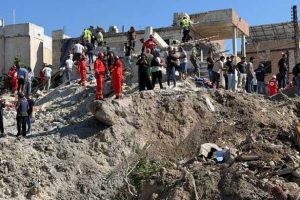
Adding to the complex supply picture, earthquakes that struck Venezuela on Thursday raised fresh concerns. Preliminary assessments by workers across the country’s vast oil, gas, and refining infrastructure indicated limited damage so far, as most major production zones, refineries, pipelines, and terminals are located far from the hardest-hit areas.
Still, a widespread lack of power has cast doubt on whether Venezuela can sustain oil output at its pre-earthquake level of close to 12 million barrels per day, sources said. The situation remains fluid as engineers continue detailed inspections.
The combination of returning Hormuz flows, cautious demand signals from China, and lingering geopolitical and natural disaster risks leaves the oil market in a state of heightened alert, with traders bracing for further volatility in the weeks ahead.