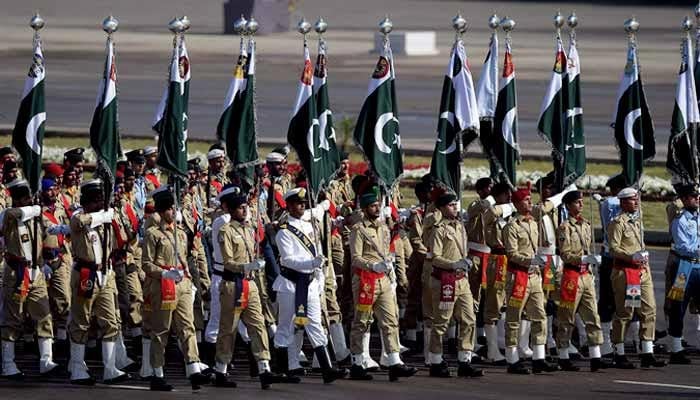
RAWALPINDI: The Pakistan Armed Forces issued a blistering rebuttal on Sunday, warning that any misadventure against the country would trigger consequences that would neither remain geographically confined nor be strategically palatable for New Delhi. The statement came in direct response to inflammatory remarks by Indian Army Chief Upendra Dwivedi, who provocatively suggested that Pakistan needed to decide if it wished to remain a part of geography and history.
The Inter-Services Public Relations (ISPR) rejected the statement, asserting that Pakistan is a globally significant, declared nuclear power and an indelible part of South Asia’s geography. The military’s media wing characterized the Indian leadership’s mindset as a “delusional and hallucinational belief system” driven by Hindutva ideology, which remains unable to reconcile with the peaceful existence of Pakistan even after eight decades.
Strategic Bankruptcy and Regional Instability
The ISPR did not mince words, stating that such a “hubristic, jingoistic and myopic mindset” has historically pushed South Asia towards wars and crises. The statement highlighted that threatening a sovereign nuclear state with elimination from geography was not strategic signalling but reflected a “bankruptcy of cognitive capacities, madness and warmongering.”
Pakistan’s military underscored that India is fully aware any attempt at geographic obliteration would be mutual and comprehensive. The statement emphasized that responsible nuclear states demonstrate restraint, maturity, and strategic sobriety, rather than resorting to language of “civilisational supremacy or national erasure.”
Accusations of State-Sponsored Terrorism
Turning the tables, the ISPR pointed to what it described as India’s historically documented record of being a source of regional instability. The military accused New Delhi of sponsoring terrorism, practicing transnational assassinations, and operating as a center for global disinformation campaigns.
The statement suggested that New Delhi’s aggressive posture stemmed less from confidence and more from frustration over its inability to harm Pakistan, a reality it claimed was exposed during “Marka-e-Haq.” The military warned the Indian leadership against pushing the region towards another crisis or war, adding that the consequences would be devastating for the entire region and beyond.
The ISPR concluded by urging India to reconcile with Pakistan’s significance and learn to coexist peacefully.