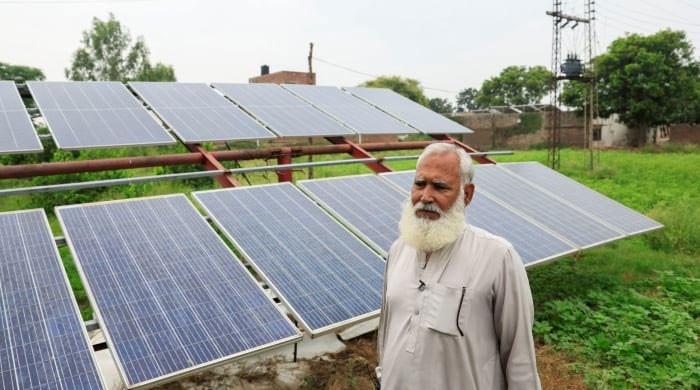
In a significant policy clarification, officials have confirmed that the vast majority of Pakistan’s existing rooftop solar “prosumers” will continue to benefit from the current net metering regime until the fiscal year 2030-31. This decision provides long-term certainty for an estimated 80-85% of current solar system owners who were approved during the 2024-25 financial year.
Two-Track System for Solar Energy
The energy landscape is now set to operate on a dual-track system. Existing prosumers under the old policy will maintain their right to sell surplus electricity back to the national grid at a rate of Rs25.32 per unit, protected by a seven-year contract. This arrangement has been a key driver in the adoption of rooftop solar across the country.
However, a pivotal shift is underway for new entrants. Consumers who install rooftop solar systems under the revised framework will be placed on a “net billing” mechanism. This new structure allows them to sell electricity to the grid at a significantly lower rate of Rs10-11 per unit under a five-year contract, while purchasing power from the grid at their standard, slab-based tariffs, which range from Rs34 to Rs60 per unit.
Addressing Grid Financial Strain
Officials justify the revised policy by pointing to substantial financial pressures on the national power system. Data reveals that the rapid expansion of rooftop solar contributed to a decline of 3.2 billion units in grid electricity sales in FY2024, leading to an estimated revenue loss of Rs101 billion for power distribution companies (DISCOs). This shortfall resulted in an average tariff increase of Rs0.90 per unit for other consumers.
Projections are even more stark. The Power Division warns that by FY2034, lost grid sales could skyrocket to 18.8 billion units, creating a Rs545 billion financial impact and potentially raising tariffs by Rs5–6 per unit for non-solar users.
The “Grid as a Battery” Conundrum
A core issue identified by policymakers is the use of the national grid as a de facto battery storage system for solar prosumers. “The grid is effectively being used as battery storage for solar consumers,” an energy official stated, noting that net metering users sell surplus power at high buyback rates while largely avoiding fixed system charges that support grid infrastructure.
The new net billing mechanism aims to rebalance this equation. Officials state it will allow new prosumers to recover their investment within three to five years—compared to an earlier 18-month period—while reducing the financial burden on grid-dependent consumers and compensating the grid for providing system support.
Explosive Solar Growth and Sector Distortions
The numbers underscore a solar revolution. On-grid rooftop solar capacity has exploded from a mere 5MW in 2017 to 6,975MW in 2026, with projections reaching 14,319MW by 2034. Meanwhile, off-grid solar capacity has already surpassed 13,000MW and is expected to hit 18,944MW by 2034.
This rapid growth, particularly in off-grid and hybrid systems, has had unintended consequences. Officials note it has inflated the number of protected electricity consumers from 11 million to 22 million, significantly increasing the government’s subsidy burden and creating market distortions.
A Multi-Trillion Rupee Impact
The financial rationale for the policy change is framed in staggering terms. Officials calculated that if the old net metering regime continued unchanged, the cumulative financial impact on the power system from 2025 to 2034 would have reached Rs4,360 billion. Under the revised net billing mechanism, this impact is now projected to be nearly halved, declining to Rs2,134 billion over the same period.
This strategic pivot aims to ensure the sustainable growth of solar energy in Pakistan by aligning consumer incentives with the long-term financial health of the national power infrastructure.