ISLAMABAD – Pakistan is maintaining close contact with United States leadership and actively pursuing a multi-pronged diplomatic strategy to reduce tensions between Washington and Tehran, the country’s Foreign Office announced on Wednesday.
Confidence from Both Sides
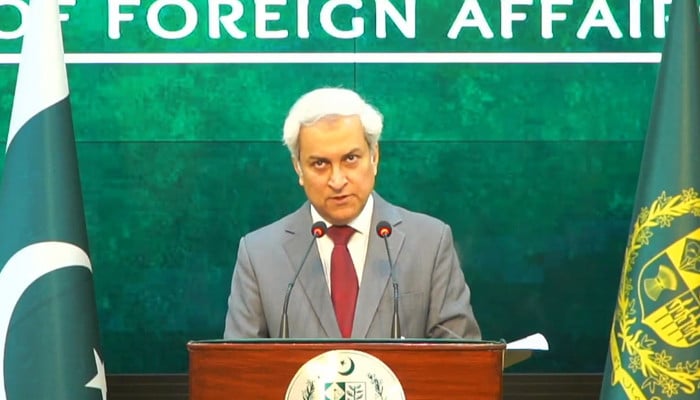
Foreign Office spokesperson Tahir Andrabi stated that both Iran and the United States have expressed confidence in Pakistan’s role and appreciated its facilitation efforts. “Pakistan is actively working to create a conducive environment for de-escalation and dialogue,” Andrabi told reporters during a weekly briefing in Islamabad. He emphasized that the objective is to pave the way for meaningful negotiations among relevant stakeholders.
The diplomatic push comes amid a conflict that began on February 28 involving the US, Israel, and Iran, with repercussions across the wider Middle East. The spokesperson noted the conflict’s serious economic consequences, particularly Iran’s effective blockade of oil and gas shipments through the Strait of Hormuz.
Regional Consultations and Peace Plan
Pakistan has recently hosted key regional ministers from Saudi Arabia, Turkiye, and Egypt, and has relayed messages between Washington and Tehran. Andrabi clarified that Pakistan is not exerting pressure on any party but is supporting dialogue and diplomacy.
Referring to a recent visit by Deputy Prime Minister Ishaq Dar to China, Andrabi said the joint five-point peace plan by China and Pakistan has received regional and global recognition. The plan has been shared with Iran, the US, and other stakeholders, with consultations ongoing.
Operational and Regional Developments
On the security front, Andrabi confirmed there has been no change in Operation Ghazab-lil-Haq, with actions against terrorists continuing. Separately, he confirmed Pakistan sent a delegation to Urumqi, China, for talks with Afghanistan, following recent cross-border tensions.
In a positive development for regional trade, the spokesperson noted that permission has been granted for 20 Pakistani-flagged vessels to transit, which he termed a constructive step for stability.
Addressing Regional Perceptions
Andrabi addressed several other points during the briefing:
- There is no clarity on Israel’s role or participation in any ongoing negotiation process.
- Discussions around a four-country consultative process should not be seen as an alliance, but as a means to enhance mutual cooperation.
- Pakistan’s diplomatic efforts are being recognized globally, with support noted from European leaders and others.
- He criticized India’s attempt to assign a separate sectarian identity to the Shia community, calling it a dangerous trend that fuels division.
“Despite challenges and obstacles, Pakistan will continue its efforts to promote facilitation and dialogue,” Andrabi concluded, stressing that the country’s goal remains a sustainable solution through diplomacy.