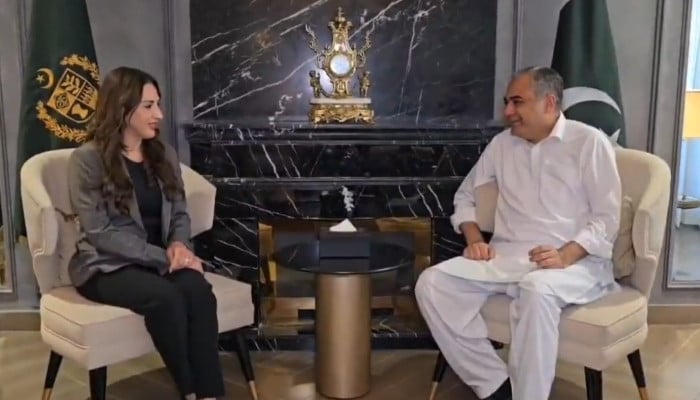
Pakistan’s Interior Minister Mohsin Naqvi met with US Charge d’Affaires Natalie Baker in Islamabad on Wednesday to coordinate diplomatic efforts ahead of a potential second round of US-Iran negotiations, as Islamabad continues to serve as the sole mediator between the two adversaries.
According to a statement from the interior ministry, the two officials exchanged detailed views on the latest regional developments and the importance of sustained diplomatic engagement to ensure stability. The meeting comes as Washington and Tehran weigh next steps following a fragile ceasefire brokered by Pakistan earlier this month.
Pakistan’s Leadership Fully Engaged
Naqvi told Baker that Prime Minister Shehbaz Sharif and Chief of Army Staff (COAS) Chief of Defence Forces (CDF) Field Marshal Asim Munir are making “full efforts at every level” to resolve the conflict. He stressed that diplomacy remains the only viable path toward a peaceful solution.
“It is hoped that both parties will give a chance to a diplomatic and peaceful solution,” Naqvi said during the meeting.
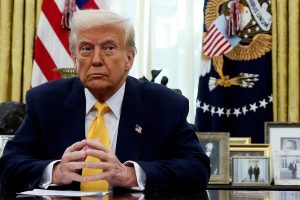
The interior minister also commended US President Donald Trump’s decision to extend the ceasefire, describing it as a “welcome development” that has significantly reduced tensions. He expressed hope for positive progress from the Iranian side in the coming days.
US Envoy Praises Pakistan’s Role
Baker acknowledged Pakistan’s constructive and responsible role in promoting regional peace and supporting conflict resolution efforts. The US diplomat’s remarks underscored Washington’s reliance on Islamabad as a trusted intermediary in the delicate negotiations.
The meeting was held as diplomatic channels remain active to facilitate dialogue and de-escalate hostilities between the United States and Iran.
Second Round Expected Within Days
The second round of US-Iran talks may take place as early as Friday, according to a report by the New York Post, citing President Trump. “It’s possible!” Trump told the Post by text message when asked about sources in Pakistan indicating that a second round was “expected in Islamabad within the next 36 to 72 hours.”
Trump on Tuesday extended a two-week truce in the war just as it was about to expire. The US president said he would maintain the truce to allow more time for the Pakistani-brokered peace talks. Iran welcomed Pakistan’s efforts but made no other comment on Trump’s announcement.
Naval Blockade Remains Sticking Point
Despite the ceasefire extension, tensions persist over the US naval blockade of Iranian maritime trade—a measure Tehran considers an act of war. Trump confirmed that the US Navy would continue the blockade, and Iran has vowed not to reopen the Strait of Hormuz as long as it remains in place.
“A complete ceasefire only has meaning if it is not violated through a naval blockade,” said Iranian parliament speaker Mohammad Bagher Ghalibaf, who led Tehran’s delegation in the first round of talks in Islamabad. “Reopening the Strait of Hormuz is not possible amid a blatant violation of the ceasefire.”
Background: A Historic Mediation
The Middle East conflict began on February 28, following a large-scale surprise attack on Iran by the United States and Israel, despite ongoing negotiations between Washington and Tehran at the time. The Pakistan-brokered ceasefire took effect on April 8, followed by the first round of talks that lasted 21 hours in Islamabad earlier this month.
That meeting marked the first direct encounter between American and Iranian officials in more than a decade and the most senior engagement since Iran’s 1979 Islamic Revolution. US Vice President JD Vance and Ghalibaf led their respective delegations to address a range of issues, including the Strait of Hormuz, Iran’s nuclear program, and international sanctions on Tehran.