Warm Exchange Amid High-Stakes Diplomacy
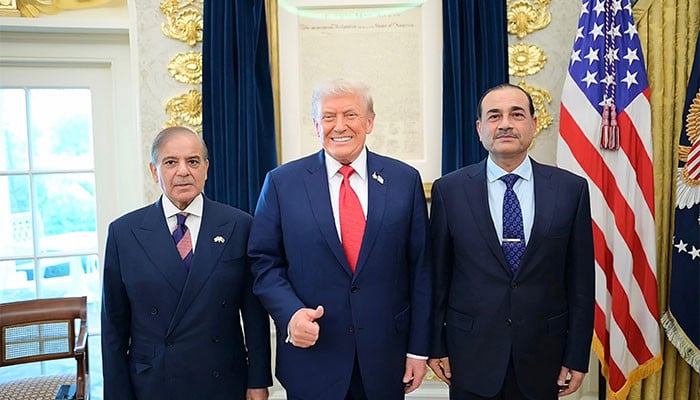
Prime Minister Shehbaz Sharif has expressed “deep and profound appreciation” for what he termed US President Donald Trump’s “kind and gracious” remarks, as the two leaders exchanged praise on social media. This public diplomacy underscores Pakistan’s pivotal role in mediating the protracted US-Iran conflict.
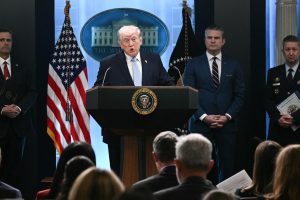
The exchange was triggered by President Trump’s post on Truth Social, where he thanked Pakistan and described its leadership, including PM Shehbaz and Chief of Defence Staff Field Marshal Syed Asim Munir, as “fantastic people.”
Breakthrough Optimism as Negotiators Set to Meet
The diplomatic warmth comes amid significant developments. President Trump told Axios that American and Iranian negotiators are likely to meet over the weekend, expressing confidence that a final deal could be reached within “a day or two.”
In a key revelation, Trump stated that if an agreement to end the war is signed in Islamabad, he might travel to the Pakistani capital. He added that Iran has agreed to “almost everything” on the negotiating table.
Strait of Hormuz Reopens as Talks Progress
Concurrently, Iranian Foreign Minister Abbas Araghchi announced that passage for all commercial vessels through the strategic Strait of Hormuz has been declared “completely open” for the remainder of the ceasefire period. Shipping will operate on coordinated routes set by Iran’s Ports and Maritime Organisation.
This move addresses a critical flashpoint, as the Strait is a major transit route for global energy supplies. Its effective blockade by Iran had been a central issue in the conflict.
The Grueling “Islamabad Talks”
The previous high-stakes meeting, held in Islamabad on April 11, 2026, lasted nearly 21 hours. It marked the first direct encounter between American and Iranian officials in over a decade and the most senior engagement since Iran’s 1979 Islamic Revolution.
US Vice President JD Vance and Iranian Parliamentary Speaker Mohammad Baqer Qalibaf led their respective delegations. While the talks ended without a formal agreement, officials viewed them as a crucial step in establishing direct Washington-Tehran communication channels.
The discussions covered a complex slate of issues, including:
- The status of the Strait of Hormuz
- Iran’s nuclear programme
- International sanctions on Tehran
Pakistan’s Central Mediating Role
Pakistan has positioned itself as a neutral broker in the conflict. Field Marshal Munir recently concluded a three-day visit to Iran, emphasizing dialogue and de-escalation. The public praise from President Trump signals a strengthening of US-Pakistan ties, largely credited to Islamabad’s diplomatic efforts.
As negotiators prepare for another potential round, the world watches to see if the groundwork laid in Islamabad will culminate in a historic peace deal and a possible presidential visit.