ISLAMABAD — Punjab Assembly Speaker Malik Muhammad Ahmad Khan has called on all political parties to engage in an open parliamentary debate on the creation of new provinces and the holding of referendums, warning that the public’s bond with the state is eroding amid unequal distribution of resources.
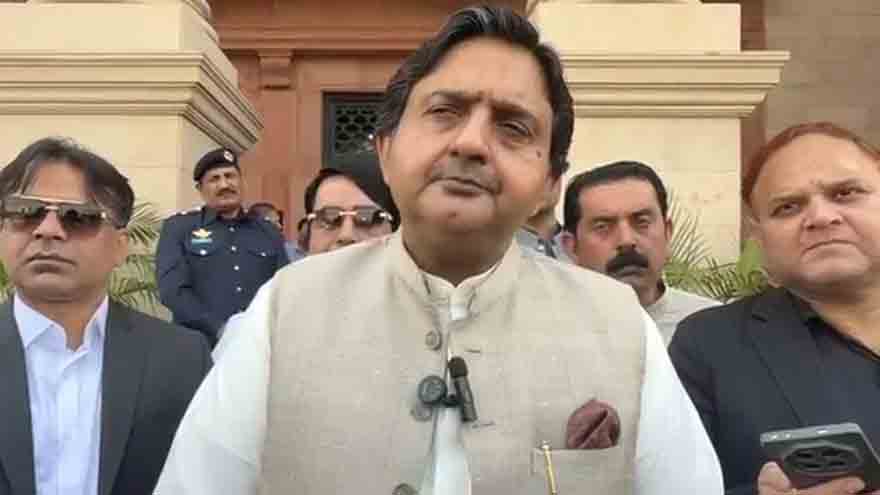
Speaking to media representatives in Lahore, Khan said the citizen-state connection is weakening while disparities in resource allocation fuel feelings of deprivation. He stressed that citizens must receive their legitimate share, arguing that the question of new provinces is not merely a matter of administrative costs but of public inclusion in the state and fair allocation of resources.
Referendums and Borders: Two Distinct Matters
The speaker drew a clear distinction between soliciting public opinion and altering provincial boundaries. He noted that the Constitution nowhere restricts seeking public consensus when modifying provincial borders, adding that parliament holds the authority to determine the specific questions and regions for a referendum.
Khan questioned why the National Assembly and Senate passed resolutions in 2012 regarding the division of Punjab, if altering provincial borders falls solely under the purview of provincial assemblies. He also demanded clarity on the Pakistan Peoples Party’s position, asking on what logic it opposes the division of Sindh while supporting the creation of new provinces in Punjab.
Opposition’s Constitutional Right
Affirming that raising the issue of new provinces in the Punjab Assembly is the constitutional right of the opposition, Khan said the matter should be deliberated on the floor of the house. He urged political parties to present their clear stances and underlying reasons to the public concerning the establishment of new provinces.
On the subject of referendums, Khan observed that while the last two referendums in the country occurred under dictatorial regimes, a present-day referendum would differ as it would originate through parliament. He highlighted that the concept has existed since the inception of the Constitution, which explicitly lays out the procedural framework for conducting one.
Parliament, Not Courts, the Right Forum
Khan maintained that parliament remains the sole appropriate forum for open discussions on referendums, arguing that such matters should not be resolved through the courts. Where constitutional interpretation becomes necessary, he said, a constitutional court is available — adding that courts should interpret the Constitution rather than rewrite it.
He explained that both direct democracy and representative democracy possess distinct importance and constitutional validity. If the Constitution has been misused in any way, he said, all such flaws should be purged from it, stating that while he is not offering final figures, the core objective remains ensuring the equitable provision of resources to the public.
Khan concluded that political differences between the federation and the provinces must be resolved within the constitutional framework, adding that Nawaz Sharif’s perspective on the matter carries decisive weight and that he is taking his time appropriately to address it.