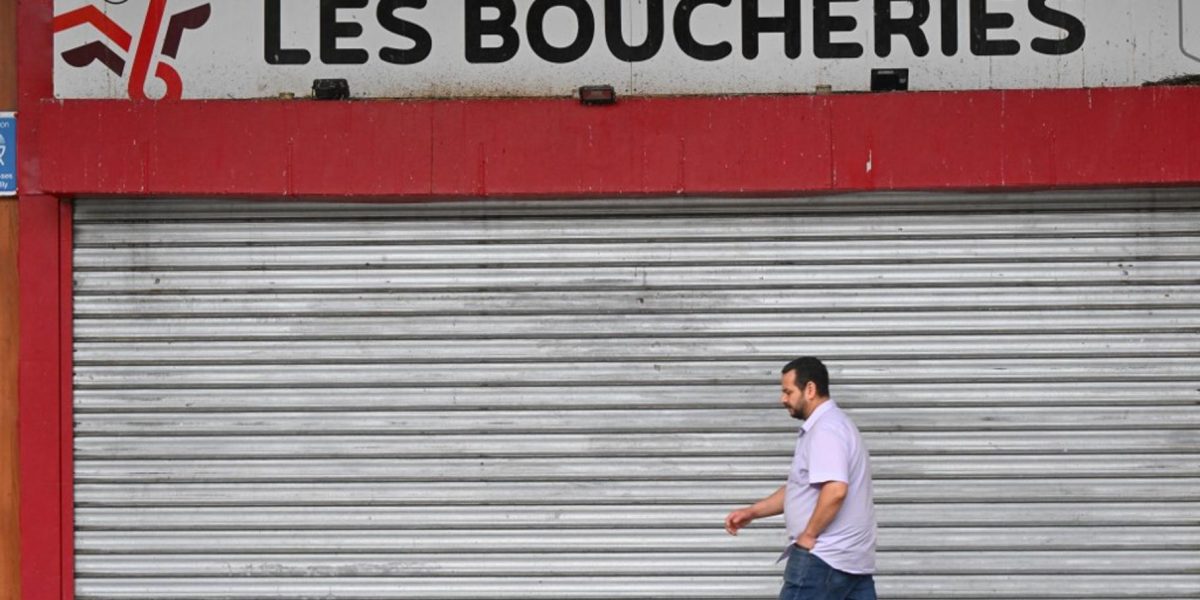
More than a year after a wave of foodborne E. coli infections struck the Aisne region of northern France, infecting around 30 people and claiming the life of an 11-year-old girl, six butchers have been charged in Paris and placed under judicial supervision, the Paris prosecutor’s office confirmed on Saturday, September 26.
Ten butchers were initially taken into custody, according to the prosecutor’s office, which was responding to a query from Agence France-Presse. Following questioning, six were charged as managers or employees with involuntary manslaughter, involuntary injury causing total incapacity for work of less than three months, endangering the lives of others, fraud posing a danger to human or animal health, handling stolen goods, and the illicit slaughter of an animal outside an approved abattoir. The charges were first reported by local newspaper L’Aisne nouvelle.
Judicial Supervision and Restrictions
All six have been placed under judicial supervision. They are barred from working as butchers or as butcher shop employees, except as salaried staff in small, medium, or large retail outlets — and only on condition that they do not handle raw meat. Additional obligations include a prohibition on contacting the other butchers who were taken into custody or charged.
Investigating judges from the Paris prosecutor’s public health unit have been leading the investigation since August 7, 2025.
Investigation Leads to Farm Near Saint-Quentin
According to L’Aisne nouvelle, the investigation also led authorities to a farm in the vicinity of Saint-Quentin. The agricultural operation, which had been closed for several months, is believed to have sold around 50 sheep during Eid. Some of those animals were reportedly slaughtered and butchered outside regulated channels — including in butcher shops and even at private homes, the newspaper reported.
In June 2025, a wave of foodborne infections caused by the bacterium Escherichia coli (E. coli) hit the Saint-Quentin area, with 32 cases recorded in total, according to the prosecutor’s office. An 11-year-old girl named Élise died on June 16, 2025, at the university hospital in Amiens. Several other children, ranging in age from 11 months to 12 years, were treated at hospitals in Saint-Quentin, Amiens, Lille, and Reims.
The outbreak prompted the preventive closure of six butcher shops, several of them halal, as authorities suspected a foodborne infection linked to meat. The Aisne prefecture reported “a formal biological link between the supply source and the contamination of the patients.”
Complaints Filed as Families Seek Answers
The Saint-Quentin prosecutor’s office quickly transferred the preliminary investigation to the Paris public health unit, citing “the number of victims” and “the technical nature of the investigations,” according to Paris prosecutor Laure Beccuau.
Several families of affected children have filed complaints. “The parents of the deceased child were able to be heard by the investigating judges in September 2025,” the prosecutor’s office said, adding that “civil parties who wish to do so may also be received, after the judges have reviewed all case files and medical evidence, so that useful answers can be provided to them.”
A heavy climate descended on the Saint-Quentin region in June 2025, with residents describing themselves as “shocked.” “Everyone is afraid,” Mylaine Guillard, the mother of a young girl, told AFP at the time.
Understanding E. coli Risks
Certain strains of E. coli — most often those that produce shiga toxins — can cause infections. In the majority of cases, these are not serious, manifesting primarily as stomach pain and diarrhea. In rare cases, however, they can lead to complications, particularly in young children and the elderly.
The infection can progress to hemolytic uremic syndrome (HUS), which typically results in acute kidney failure and severe blood disorders, with possible outcomes including coma or death. Several children affected in the Aisne region developed HUS.