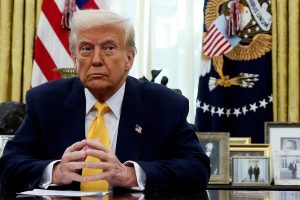
Spanish Prime Minister Pedro Sánchez has urged global leaders to hold social media platform owners legally accountable for the content published on their platforms. Speaking at the World Economic Forum in Davos, Sánchez criticized a “small group of tech millionaires” for seeking not only economic dominance but also political influence. Drawing inspiration from Donald Trump’s famous slogan, Sánchez declared, “We need to make social media great again.”
In his address, Sánchez launched a scathing critique of social media giants, accusing them of poisoning democracy. He argued that hate speech is more profitable, which is why these platforms actively promote such content. The Spanish leader proposed three key measures to be presented at the European Union Council. First, he called for mandatory user identification on social media to enable law enforcement to identify individuals involved in crimes such as hate speech or cyberbullying. Second, he demanded that companies open their algorithmic “black boxes” to regulators to determine whether their systems amplify hateful content. Third, Sánchez insisted that platform owners bear legal responsibility for activities on their platforms.
Comparing social media platforms to restaurants, Sánchez stated that just as a restaurant owner is liable if customers are poisoned, social media owners should be held accountable for poisoning public discourse. He specifically referenced tech billionaires like Elon Musk and Mark Zuckerberg, whose platforms, he claimed, thrive on promoting divisive and hateful content. Sánchez warned that companies operating in the European Union must reform their policies or face legal challenges.
The Prime Minister acknowledged that social media initially played a vital role in advancing democracy and freedom but has since become a tool for spreading hatred and division. He highlighted alarming statistics, noting that fake news is shared 70% more than real news, and nearly one-third of accounts are bots. Sánchez emphasized that the solution is not to shut down social media but to reform it, transforming it back into a space for constructive dialogue.
Sánchez also warned that the “small group of tech millionaires” is not content with economic power alone but is actively seeking political control. He cited Peter Thiel, the founder of PayPal, who has openly questioned the compatibility of freedom and democracy, suggesting that democracy should be abolished.
The Spanish leader called on the European Union to establish clear regulations to make social media platforms safer. “We can win this battle because we are better, we are more, and we have done it before,” he asserted.
It remains to be seen whether Sánchez’s proposals will gain traction and whether there is sufficient support within the European Union to implement such measures. His remarks, however, have reignited the debate over the role and responsibility of social media in shaping public discourse and democracy.