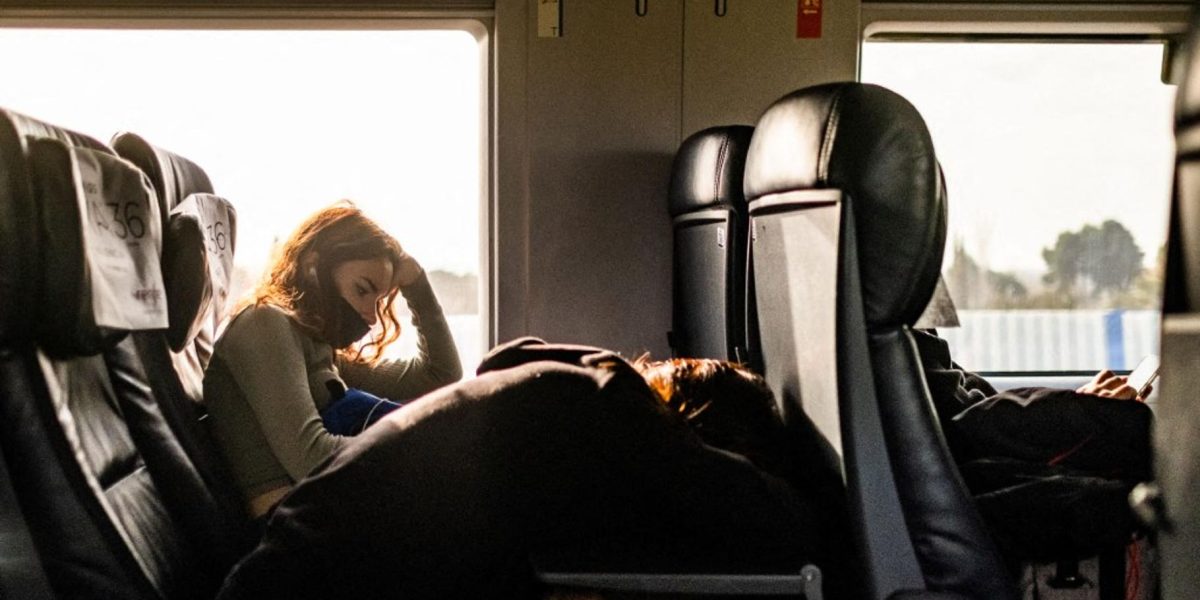
Is choosing a train over a plane a waste of time? For a growing community of travel enthusiasts and content creators, the answer is a resounding no. They argue that the journey itself is not a barrier to the holiday, but its very commencement.
Reframing Travel Time as “Me Time”
Olivier Nguyen, known online as Otoon, has built an audience of nearly 200,000 on TikTok by documenting epic rail journeys, including traveling from Paris to Japan by train. “The vacation starts when you get on the train!” he insists. This philosophy is about shifting one’s relationship with time. “Watching the landscapes roll by and change is an activity in itself,” says the 27-year-old vlogger.
For trips exceeding six hours across Europe, experts recommend intentional preparation that goes beyond snacks and water. “The ideal is to plan activities: take that book you haven’t had time to read, do a manual activity—some people knit, for example,” suggests Alisée Pierrot, co-founder of Mollow, a media outlet specializing in train, walking, and bicycle travel.
The Unique Advantages of Rail
Train travel offers distinct comforts compared to air travel, facilitating a more relaxed experience. “You can much more easily play a board game if you’re in a group, or move around if you’re with children,” Pierrot notes. While mobile connectivity can be variable, it is often sufficient for downloading a podcast for entertainment or education.
Thibault Constant, creator of the YouTube channel SimplyRailway, highlights the escapism rail provides: “On board, you have time for yourself. In a world where everything is always going faster, it’s an escape that only this mode of transport can offer.”
Perhaps most significantly, trains foster social interaction. “You can have real interactions with other travelers, especially on a night train,” Pierrot adds, contrasting it with the typical silence of a flight. Otoon confirms this, having spent several days with a Russian travel companion on the Trans-Siberian Railway despite the language barrier. “It’s a great way to meet and get to know people; they are usually very welcoming.”
Embracing the Journey with Strategic Stops
For long trips, seasoned travelers strongly recommend using connections to break up the journey. “The best thing is to take the time to stop along the way. You can spend a few hours in a European city you would never have visited otherwise,” explains Pierrot. She illustrates: “You can eat at a restaurant in Milan before boarding a sleeper for Puglia. It allows you to have several journeys within the journey.”
Thibault Constant advises taking no more than two trains in a single day. “By making an intermediate stop of a few hours, you visit an extra country and are more rested for what follows,” he says, noting it also reduces the stress of tight connections. “It makes an enormous difference.”
Working Remotely and Future Trends
For those concerned about travel eating into vacation days, the train itself can become a mobile office. “On the train, there is Wi-Fi, which usually allows you to work remotely under good conditions,” notes Constant.
A forward-looking trend is the concept of “responsible travel time” (TTR). “A few companies offer their employees one or two additional days off for people who travel using soft mobility means,” explains Pierrot. While such policies are not yet widespread, the current best solution remains to board with a good book and let the rhythm of the rails set the pace for your adventure.