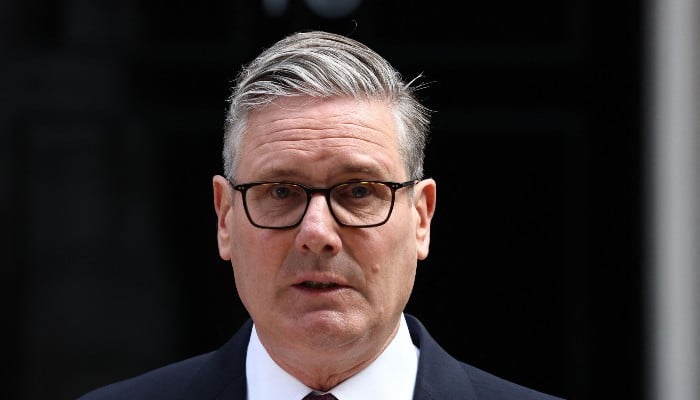
METAESC: Prime Minister Keir Starmer announced his resignation, paving the way for a new Labour leader by September and marking Britain’s seventh prime minister in 10 years amid deep political turmoil.
Prime Minister Keir Starmer announced his resignation on Monday, confirming he will step aside for a new leader to be in place by the time parliament returns in September. The decision marks a stunning political collapse less than two years after a landslide victory and sets the stage for Britain to install its seventh prime minister in 10 years.
Speaking outside 10 Downing Street, a visibly emotional Starmer conceded that his party had lost faith in his ability to lead them into the next general election. “The question my party is asking now is whether I am best placed to lead us into the next general election. I have heard the answer of my parliamentary party to question, and I accept that answer with good grace,” said, his voice cracking as he paid tribute to his wife and children.
A Swift and Decisive Fall
The pressure on Starmer, which had been simmering for months, reached a breaking point after Andy Burnham, the Greater Manchester mayor, decisively won a parliamentary by-election on Friday. Burnham defeated a candidate from Nigel Farage’s Reform party, which has led national opinion polls for over a year. That victory galvanized Labour lawmakers, who view Burnham—a career politician known for his communication skills—as the party’s best hope to reverse a dramatic slide in support.
Starmer’s personal popularity ratings had sunk to historic lows for a British leader, leaving the party directionless and increasingly anxious about its electoral prospects. Despite initially vowing to fight any leadership challenge, the prime minister’s position became untenable over the weekend.
Nominations for his successor will open on July 9, with Burnham emerging as the clear frontrunner. Starmer pledged to give his successor full support and ensure a smooth handover, staying in office until the next person is elected.
Market Stability, Political Uncertainty
The pound and British government bonds remained steady in the immediate aftermath of the announcement, as investors had widely anticipated the move. However, the transition is fraught with risk. Beyond broad calls for fundamental change and lowering the cost of living, Burnham has yet to articulate a clear approach to foreign affairs, the economy, or defence.
his predecessor, Burnham could find himself with little room to maneuver. Britain already shoulders the highest borrowing costs in the Group of Seven wealthy nations, constrained by high debt, anaemic economic growth, and the urgent need to invest in areas like defence. Investors remain divided on whether Burnham, who previously suggested Britain needed to move “beyond this thing of being in hock to the bond markets,” will prioritize market reassurance. He has since claimed he was misrepresented.
“In our view, a Burnhamership would inherit a precarious fiscal situation with few tools to deliver meaningful change,” economists at Citibank noted on Friday.
A Decade of Political Turmoil
Whoever replaces Starmer will become the seventh prime minister since the Brexit vote to leave the European Union, which took place exactly 10 years ago this week. This level of turnover, the highest in Britain in nearly two centuries, underscores a profound struggle to maintain voter support amid successive failures to improve living standards, public services, and tackle illegal immigration.
The political advisory group Eurasia had suggested the best outcome could be for Starmer to announce his departure for September, allowing him to attend a UK-European Union reset summit in July and giving Burnham time to prepare for government. That scenario now appears to be unfolding, though the path ahead remains deeply uncertain for a nation weary of political chaos.