As the Asia Cup final looms, Pakistan faces a formidable challenge against a confident Indian side, aiming to defy expectations and upset their arch-rivals. Widely considered underdogs, Pakistan has an opportunity to rewrite a script that many, including Indian captain Suryakumar Yadav, believed would see India march unchallenged to glory. Yadav, often referred to as ‘SKY’, has even publicly dismissed Pakistan as true rivals.
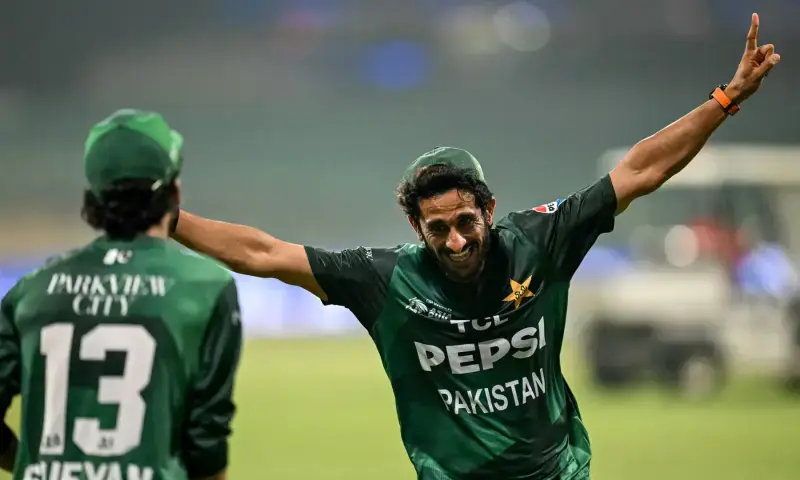
The road to the final has been marked by a minor trilogy of contests between the two teams, with the initial two encounters proving one-sided and, at times, ill-tempered. Exchanges between players, including Pakistan’s Haris Rauf and India’s Suryakumar Yadav, led to fines, hinting at a final that is unlikely to be free of competitive tension. This underlying ‘needle,’ however, might just play into Pakistan’s hands, as they showed greater competitiveness in the Super Fours game when the political rivalry intensified.
India’s cricketing dominance in the tournament has largely been built on their formidable batting line-up, spearheaded by the world’s top-rated T20 batsman, Abhishek Sharma. Sharma has been a ‘purist’s delight,’ hitting cleanly and giving India unstoppable momentum in previous games against Pakistan, particularly against their opening bowlers.
Despite India’s batting prowess, one of Pakistan’s biggest positives throughout the tournament has been the re-emergence of its strike bowlers. Shaheen Shah Afridi, in particular, has begun to recapture his former form, reminding spectators of the formidable bowler he once was. While Shaheen has a historically poor record against India, his confidence is high, and dismissing Sharma early could be a pivotal moment, shifting the mental dynamic of the match. This added pressure is a welcome challenge for Afridi, as he looks to reclaim his status as one of the world’s premier fast bowlers, even showcasing an aggressive batting style reminiscent of the legendary Wasim Akram.
However, Pakistan’s success in the final will heavily depend on the performance of its top order. With the exception of Sahibzada Farhan, the team’s main hitters have been inconsistent and below par, lacking the quality needed to build substantial totals. While the collective batting form of their all-rounders, such as Saim Ayub and Mohammad Nawaz, has been sufficient against lesser teams, it will be insufficient against India without a significant contribution from the top order.
This reliance on all-rounders, a preference of coach Mike Hesson, points to a deeper issue. Despite being ranked above other teams in this Asia Cup (barring India), Pakistan’s inconsistent batting raises concerns for the upcoming T20 World Cup in February, where they will face five higher-ranked teams. The absence of any Pakistani player in the top 20 international T20 batting rankings underscores the challenge, prompting calls for the reconsideration of experienced players like Babar Azam and Mohammed Rizwan, or a deeper look into the next generation of young batsmen.
On the bowling front, Pakistan is developing a more competitive attack, boasting wicket-takers like Shaheen, Haris, and Abrar Ahmed. However, questions linger over the roles of Faheem Ashraf, Mohammad Nawaz, and Saim Ayub. While Saim Ayub’s vital wickets offer promise, there are critical decisions to be made, particularly regarding Salman Ali Agha, whose suitability as a T20 international cricketer is being questioned despite his value in Test and 50-over formats.
For coach Mike Hesson, who has a track record of success with New Zealand and in franchise cricket, the complex and often unpredictable world of Pakistan’s international cricket presents a significant challenge, especially with current selection choices and dismal batting performances. While an Asia Cup win would be a tremendous boost against the odds, the underlying issues within Pakistan’s T20 structure cannot be ignored. Today, however, is about the present. Salman’s team stands poised to confront Suryakumar Yadav’s confident Indian side, not just to win a trophy, but to prove what a ‘non-rivalry’ truly looks like and to restore their pride.