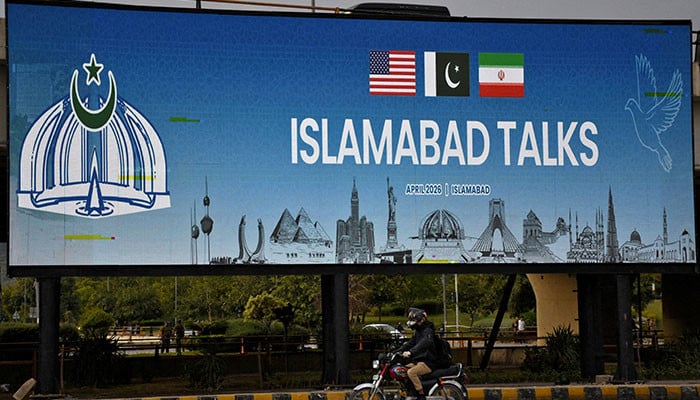
ISLAMABAD – In a significant development for regional stability, the United States and Iran have signaled a mutual willingness to resume high-level peace negotiations, with Islamabad expected to host the critical dialogue later this week. This comes just days after a first round of historic, direct talks concluded without a formal agreement, leaving a fragile ceasefire in place.
A Venue for Diplomacy
Fresh diplomatic overtures from both Washington and Tehran have solidified Pakistan’s role as a neutral mediator. According to reports from Reuters and statements from officials, a proposal has been shared with both capitals to send delegations back to the negotiating table in Islamabad, with the weekend eyed as a potential timeframe. Iranian officials have explicitly stated that Pakistan remains their preferred venue for further discussions.
High-Stakes Engagement
The initial round of talks, held on April 11, 2026, was a landmark event. It represented the first direct meeting between American and Iranian officials in over a decade and the most senior engagement since Iran’s 1979 Islamic Revolution. The closed-door, trilateral discussions lasted nearly 21 hours, underscoring the complexity of the issues at hand, which include regional security, maritime freedom, and the terms of a lasting ceasefire.
Despite the intensive dialogue, the talks ended inconclusively. Tensions subsequently flared, with the US conducting military actions against Iranian maritime movements and Tehran issuing warnings of retaliation against regional shipping and Gulf infrastructure.
Leadership Signals Readiness
Key figures from both sides have publicly expressed openness to continuing the process. US President Donald Trump told the New York Post that talks could resume in Pakistan “within the next two days,” praising Pakistan’s Chief of Defence Forces, Field Marshal Asim Munir, for facilitating the discussions. “He’s fantastic, and therefore it’s more likely that we go back there [Pakistan],” Trump stated.
On the Iranian side, officials confirmed to Geo News their readiness for further talks, pending American reciprocation. A senior Pakistani official also confirmed that diplomatic channels with Iran remain active and that Tehran has signaled a willingness to proceed.
Pakistan’s Pivotal Role
Prime Minister Shehbaz Sharif informed the federal cabinet that Pakistan’s diplomatic efforts were instrumental in bringing the two long-time adversaries to the table for their first high-level face-to-face meeting. He emphasized that while the first round did not yield a breakthrough, Pakistan’s mediation helped sustain a two-week ceasefire, and diplomatic efforts to bridge differences are ongoing.
“Pakistan played a key role in bringing the two sides to the negotiating table,” PM Sharif said, highlighting the country’s sustained engagement.
Background of the Conflict
The current crisis began on February 28, 2026, with a joint US-Israeli bombing campaign against Iran. The conflict rapidly escalated as Iran moved to disrupt traffic in the strategic Strait of Hormuz and launched attacks on Israeli and US targets across the Middle East. The war has triggered global financial market disruptions and resulted in thousands of civilian casualties, primarily in Iran and Lebanon.
As the world watches, the planned resumption of talks in Islamabad offers a crucial window for de-escalation and a potential path toward a more stable regional order.