The fragile diplomatic landscape in the Middle East grew more volatile on Saturday as Iran issued a stark warning to international powers, asserting that nations co-sponsoring a US-led resolution at the United Nations would share direct responsibility for any future military escalation by Washington. The declaration came amid a flurry of developments signaling both the deepening humanitarian toll of the conflict and the global economic shockwaves emanating from the Strait of Hormuz.
Diplomatic Firestorm at the United Nations
In a sharply worded statement, Iran’s mission to the UN accused the United States of leveraging support for a “politically motivated and one-sided” draft resolution to justify “ongoing unlawful actions” and potential new strikes. The mission warned that co-sponsoring states would not be shielded from accountability by diplomatic maneuvering.
“Should the U.S. trigger any new escalation, all co-sponsoring States will share international responsibility alongside Washington for the consequences,” the statement read, adding that providing political cover would be viewed as “facilitating, enabling, and legitimising US aggression.”
Strait of Hormuz: Economic Lifeline Under Siege
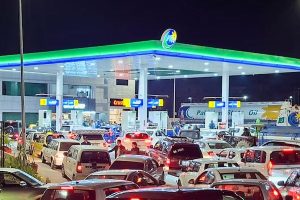
The economic consequences of the conflict are becoming starkly apparent. Iraq’s new oil minister, Basim Mohammed, revealed that the country exported a mere 10 million barrels of oil through the Strait of Hormuz in April, a catastrophic drop from the pre-war monthly average of 93 million barrels. In a desperate pivot, Iraq is now working to increase exports through the Kirkuk–Ceyhan pipeline, currently handling 200,000 barrels per day, with plans to reach 500,000.
Iran’s Ambassador to the UN, Amir Saeid Iravani, laid the blame for the global energy disruption squarely on the “initiators” of the war. Speaking at an ECOSOC session, he stated that instability in energy markets was “rooted in US-Israeli military escalation and attacks on Iran’s energy infrastructure.” Iravani maintained that Iran would restore stability to the critical waterway only if “aggression ends and the maritime blockade is lifted.”
Humanitarian Toll Mounts in Tehran
On the ground, the human cost continues to climb. Tehran’s municipal government released devastating casualty figures, reporting that US-Israeli attacks have killed at least 1,260 people and injured more than 2,800 in the capital alone. City officials documented at least 650 impact incidents, which damaged approximately 51,000 residential housing units and over 10,700 vehicles.
Broader Regional Fallout and International Reactions
The conflict’s shockwaves are being felt across diplomatic, sporting, and security spheres:
- Iranian President Thanks Pope: President Masoud Pezeshkian thanked Pope Leo for a “moral stance” against the US strikes, which he claims were carried out under false pretenses. Pezeshkian also condemned reported remarks attributed to Donald Trump about “destroying the historical civilisation of Iran” as “dangerous and shameless.”
- World Cup Uncertainty: FIFA Secretary-General Mattias Grafstrom is set to meet Iranian FA officials in Istanbul to offer “reassurance” over the team’s participation in the upcoming World Cup, scheduled to be played in the United States.
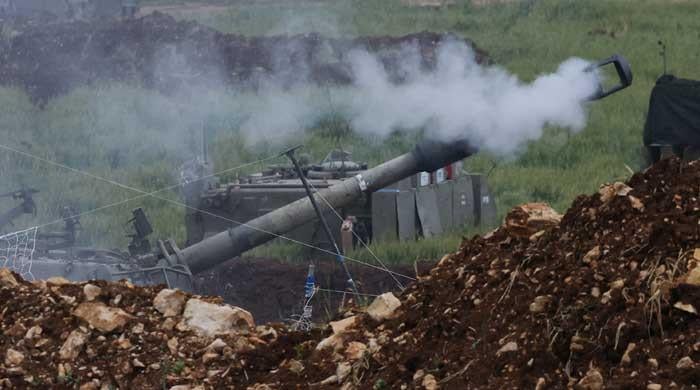
- Lebanon Front Active: Israeli warplanes and artillery struck multiple towns in southern Lebanon, including Yohmor al-Shaqif and Kfar Tebnit, signaling continued pressure on Iran-backed Hezbollah.
- US Alleges Terror Plot: US authorities detailed charges against Mohammad Baqer Saad Dawood Al-Saadi, a commander in the Iran-backed Kataeb Hezbollah militia, for allegedly directing a campaign of attacks against Jewish targets in Europe and North America in retaliation for the war.
In a separate diplomatic channel, UAE Foreign Minister Abdullah bin Zayed Al Nahyan met with Reform UK leader Nigel Farage and British Foreign Secretary David Lammy in Britain. The Emirati foreign ministry stated the talks covered the “repercussions of the unprovoked Iranian terrorist attacks targeting the UAE,” underscoring the complex web of regional alliances and threats.