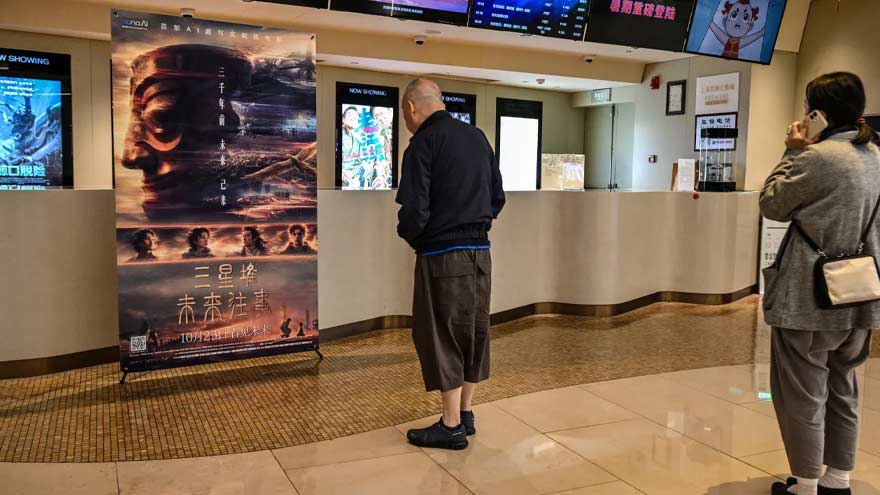
The curtain rose Friday on China’s first fully AI-generated feature film, but the audience has yet to fill the seats. Sanxingdui: Future Past, a sci-fi thriller with more than 10,000 screenings scheduled nationwide, is facing advance ticket sales so modest they amount to a rounding error against its production budget.
A Fraction of the Cost
Presale revenue stood at just 80,000 yuan (about $11,980) as of Friday morning, according to the ticketing platform Maoyan, which forecasts total box-office takings below 150,000 yuan. With tickets priced between 20 and 90 yuan, that translates to a few thousand seats sold at most.
Bona Film Group, the production company behind the film, said nearly 100 people worked for more than two years on the project, which cost upwards of 10 million yuan ($1.5 million). Every performer, every voice and every backdrop was generated by artificial intelligence.
A Pioneer’s Defense
Jiang Defu, Bona’s chief executive, acknowledged the tepid reception but framed the release as a boundary-pushing first step. “We are the first to try it, the first to get a theatrical release permit, and the first to be tested by the audience,” he told the Chinese film-industry outlet Yuli. “I think that is not easy at all.”
The film explores what humanity means in a future shaped by AI — a theme that resonated less with viewers than with its makers.
Preview Audience Unconvinced
Iris Yang attended a free preview screening on Thursday reserved for acquaintances of the production team and industry workers. She said the film’s quality would not have persuaded her to buy a ticket.
“If AI generation can match the theatrical experience of Avatar, I think I would be willing to pay for it,” she said, referring to the Hollywood franchise celebrated for its animation.
Her reaction echoes a broader reluctance online. “If it’s free to watch on streaming platforms, it could become legendary. But paying to watch? People are not going to accept it at this stage,” one Weibo user wrote.
Short-Form Success, Feature-Length Doubt
AI-generated video has flourished in China, the world’s second-largest economy. On Douyin, the Chinese counterpart of TikTok, AI-made short dramas drew more than 200 billion views in September alone.
But that appetite has not carried over to the big screen. “The audience won’t automatically pay for the tickets just because it’s an AI-generated film,” independent AI director Zhang Jun told AFP.
Hollywood Watches Closely
The Chinese release comes as AI encroaches on cinema worldwide. In Hollywood, the technology’s rise has stoked fears of job losses among film workers. An AI-generated sci-fi feature, Gods Don’t Give Gifts, is set for a US release on December 4, while a virtual actor named Tilly Norwood — whose interviews have gone viral and intensified concerns over employment — is slated to star in an upcoming film titled Misaligned.
For now, the box-office verdict from Chinese moviegoers suggests that technological novelty alone may not be enough to sell a ticket.