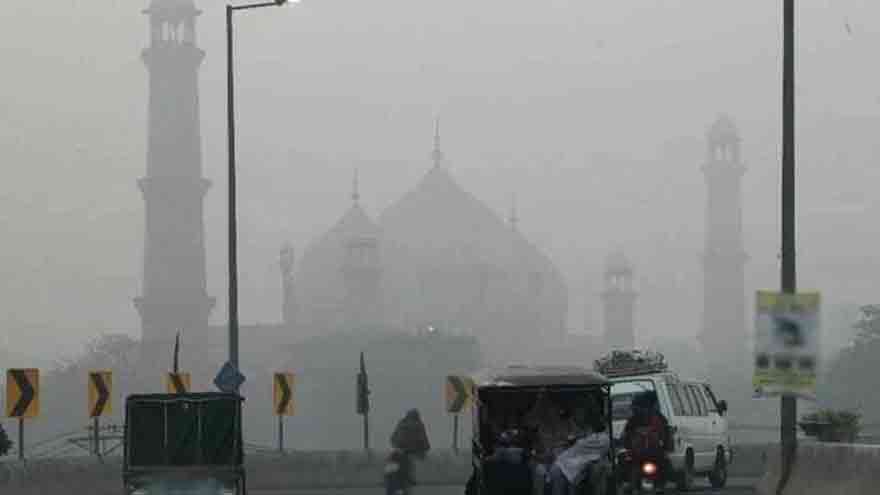
Lahore has once again claimed the unwelcome title of the world’s most polluted major city, with air quality deteriorating to hazardous levels and triggering grave concerns over public health.
According to an international environmental monitoring website, the provincial capital recorded an Air Quality Index (AQI) of 451, placing it firmly at the top of the global list. India’s capital, New Delhi, ranked second with an AQI of 224 — less than half of Lahore’s reading.
Neighbourhoods Record Extreme Pollution Levels
Several areas of Lahore reported exceptionally high pollution concentrations, with some neighbourhoods far exceeding the citywide average:
- Gulberg recorded an AQI of 758
- Allama Iqbal Town registered 752
- Syed Maratib Ali Road stood at 613
These figures place local readings well into the hazardous category, exposing residents to serious health risks including respiratory illness, cardiovascular strain and eye irritation.
Punjab’s Smog Crisis Spreads Beyond Lahore
The air pollution emergency is not confined to the provincial capital. Other major cities across Punjab are also grappling with alarming air quality.
Multan recorded a staggering AQI of 902, while Gujranwala reported 726 and Faisalabad registered 389. The widespread nature of the crisis underscores the regional scale of the smog problem, which has persisted despite ongoing anti-smog measures by authorities.
Rain Forecast Offers Hope — and a Chill
The Meteorological Department has forecast a possibility of rainfall over the next two days, offering a potential reprieve from the choking smog. Showers could help disperse pollutants and reduce the intensity of the haze across the region.
However, the expected rainfall is also likely to usher in colder weather, with temperatures in Lahore projected to drop. The combination of falling temperatures and lingering pollution may complicate conditions for residents in the days ahead.
Health Risks Mount as Authorities Struggle
Despite sustained efforts to curb smog — including restrictions on industrial emissions and vehicular traffic — hazardous air quality continues to affect large swathes of Lahore. Residents remain exposed to dangerous levels of particulate matter, with health experts warning of both immediate and long-term consequences.
The recurring pollution crisis has prompted repeated calls for stronger enforcement and coordinated regional action, as the city’s ranking atop global pollution charts becomes an increasingly familiar — and troubling — distinction.