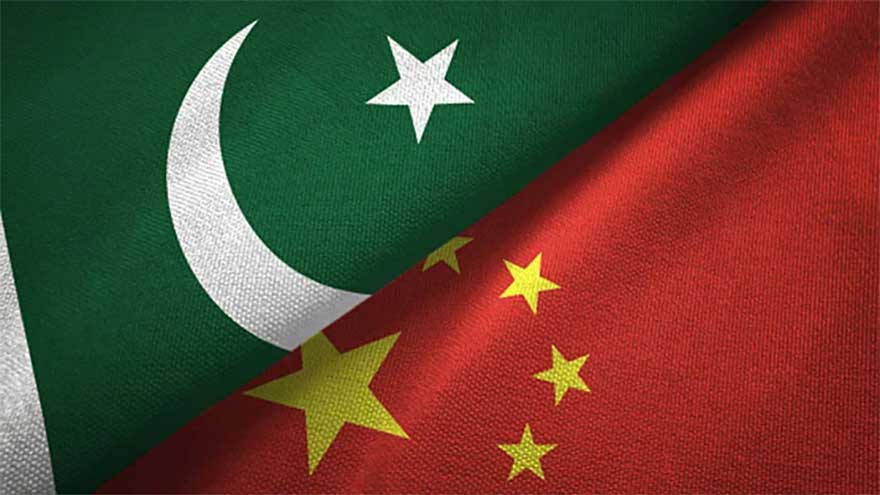
BEIJING — A Pakistani astronaut will fly aboard China’s Shenzhou-24 mission as a payload specialist, completing a short orbital flight before returning to Earth on the Shenzhou-23 spacecraft, China’s Foreign Ministry announced at a regular press briefing in Beijing.
The announcement marks the first time a foreign astronaut will join a Chinese crewed spaceflight, a milestone officials on both sides are framing as the crowning achievement of a partnership spanning seven and a half decades.
First Joint Chinese-Foreign Crewed Mission
Foreign Ministry spokesman Guo Jiakun told reporters that the mission represents an unprecedented step for China’s manned space programme and a significant moment for bilateral ties.
“We stand ready to work with the Pakistani side to carry forward our traditional friendship, deepen cooperation in space and other fields, and bring bilateral relations to new heights,” Guo said.
He described China and Pakistan as all-weather strategic cooperative partners and said the joint flight is “yet another key outcome of bilateral cooperation as we mark the 75th anniversary of China-Pakistan diplomatic ties.”
Peaceful Use of Outer Space
Guo emphasised that the mission reflects Beijing’s broader vision for international space collaboration, casting exploration as a shared human endeavour rather than a purely national pursuit.
“Exploration of the vast universe and peaceful use of outer space are humanity’s shared pursuit and bear on the welfare of all peoples,” he said.
The spokesman added that China advocates the peaceful use of outer space, takes part in active international space cooperation, and promotes the building of a community with a shared future in the domain of outer space.
Crew Selection Still Under Wraps
The identity of the Pakistani crew member has not been publicly released. However, astronauts Muhammad Zeeshan Ali and Khurram Daud were previously selected to undergo training in China, positioning them as the leading candidates for the historic flight.
The mission will see the Pakistani specialist conduct a short-duration stay in orbit aboard the Tiangong space station before returning aboard the Shenzhou-23 vehicle.
China’s Expanding Space Ambitions
The joint mission comes as Beijing accelerates its space programme, having invested heavily in recent years to close the gap with its main rival, the United States. China aims to land astronauts on the Moon by 2030.
Pakistan, for its part, is a natural partner for such ventures. The two countries routinely tout their decades-long “all-weather” friendship, and China serves as Pakistan’s largest trading partner and a major foreign investor.
The flight also underscores a deepening technological dimension to a relationship long anchored in economic and strategic cooperation, extending the partnership from infrastructure and trade into orbit.