DHAKA — In a ceremony that broke with decades of tradition, Tarique Rahman was sworn in as the Prime Minister of Bangladesh on Tuesday, cementing a dramatic political comeback for the Bangladesh Nationalist Party (BNP) after a nearly 20-year absence from power.
A Landslide Mandate and a Symbolic Venue
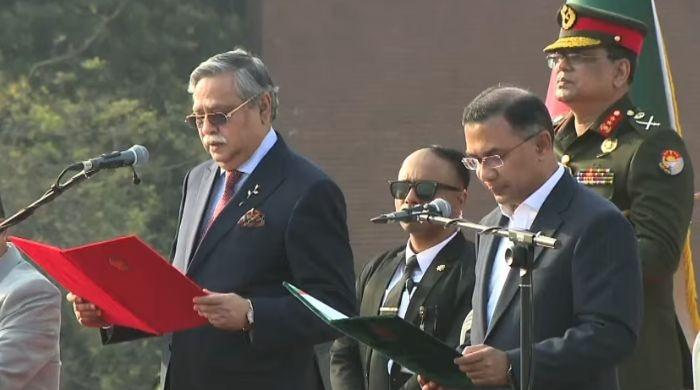
The swearing-in was held under the open sky at the South Plaza of the Jatiya Sangsad Bhaban, the national parliament building, instead of the presidential palace. President Mohammed Shahabuddin administered the oath of office to Rahman and his new cabinet before an audience of diplomats, military officials, and foreign representatives.
This shift in venue underscored the transformative nature of an election that saw the BNP secure a commanding two-thirds majority in parliament. The victory marks a decisive rejection of the political establishment that has ruled since Sheikh Hasina’s government was toppled by a Gen Z-led uprising in 2024.
Inheriting a Nation at a Crossroads
Rahman, 60, assumes leadership of a nation facing profound challenges. The son of former Prime Minister Khaleda Zia and the late President Ziaur Rahman, he returns from 17 years of self-imposed exile to a country in need of economic revival and political healing.
His immediate tasks include:
- Restoring political stability and investor confidence.
- Reviving key export industries, notably the garment sector.
- Managing a parliament where the previously banned Jamaat-e-Islami, now an ally, will form the opposition with a record 68 seats.
The Awami League, the party of former leader Sheikh Hasina, was banned from contesting the election.
A Call for Calm and a Turbulent Past
In his first public remarks following the election, Prime Minister Rahman struck a conciliatory tone, urging supporters to avoid retaliation. “Peace, law and order must be maintained at any cost,” he stated. “We will not tolerate any kind of chaos.”
His political ascent caps a long and controversial journey. Critics have long pointed to corruption allegations, which he denies, as a stain on his record. Yet, his return to Bangladesh last year, shortly before his mother’s death, galvanized the BNP base and reshaped the electoral landscape.
The nation was governed by an interim administration led by Nobel laureate Muhammad Yunus in the turbulent period leading up to the vote. Now, with the formal transfer of power complete, the world watches to see if Rahman can unite a fractured nation and deliver on the promise of change that propelled him to office.