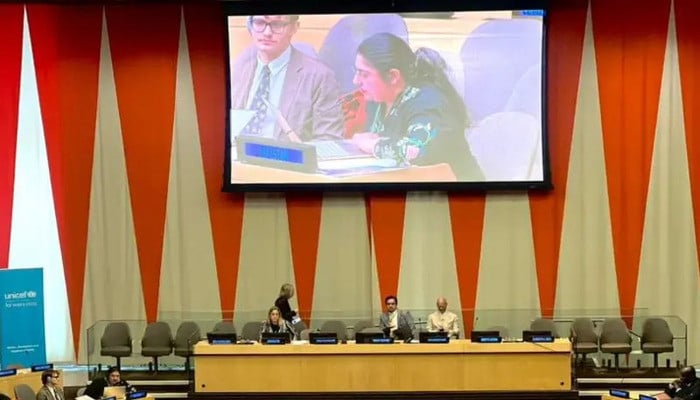
Pakistan has issued a sharp rebuke of India at the United Nations, accusing its neighbor of undermining a critical water-sharing pact and attempting to politicize the issue with unfounded terrorism allegations. The confrontation occurred during a high-level UN event marking World Water Day.
Treaty Put “In Abeyance” Over Terrorism Claims
The diplomatic clash unfolded after an Indian representative stated that New Delhi would continue to keep the 1960 Indus Waters Treaty (IWT) “in abeyance.” India conditioned the treaty’s revival on Pakistan taking what it termed “credible and irreversible action” against terrorism. The Indian side also argued that technological and environmental changes necessitated revisions to the decades-old agreement.
Pakistan’s Forceful Right of Reply
Exercising her right of reply, Pakistan’s Second Secretary to the UN, Aleena Majeed, categorically rejected the Indian assertions. She emphasized that the IWT has survived multiple wars and crises, and no provision within it permits unilateral suspension.
“India’s unilateral move last April to place the treaty in abeyance marks a grave departure from its legal and historical legacy,” Majeed stated. She warned that such actions amount to the “weaponization of water” for political gain, jeopardizing the livelihoods of millions dependent on the Indus river system.
Legal Grounds and Counter-Allegations
Majeed cited a 2025 supplemental award from a Court of Arbitration, which she said reaffirmed the treaty remains in full force with binding dispute mechanisms. She urged India to resume full implementation immediately.
The Pakistani envoy also turned the terrorism allegations back on India, calling them “entirely baseless.”
“India’s attempts to deflect attention… cannot conceal its record of sponsoring terrorism across its borders, perpetrating state violence in occupied Jammu and Kashmir, and conducting alleged state-backed operations abroad,” Majeed asserted.
Commitment to the Treaty
Reiterating Pakistan’s official stance, Majeed said the country remains committed to international law and the faithful implementation of its treaty obligations. She firmly rejected all attempts to weaponize water, framing the issue as one of legal integrity and regional stability.
The exchange highlights the deepening tensions between the nuclear-armed rivals, with a foundational water-sharing agreement now at the center of a fierce diplomatic and legal battle.