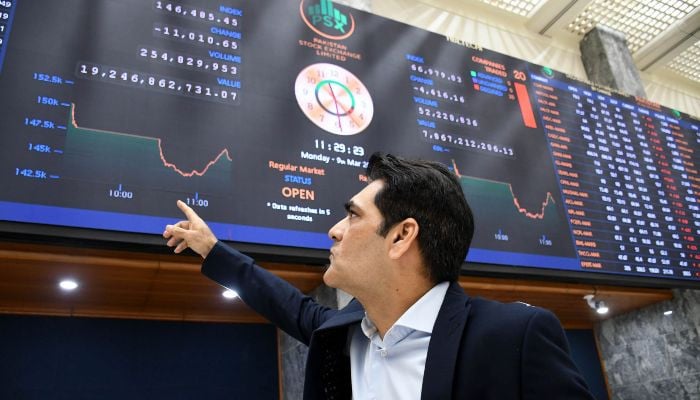
The Pakistan Stock Exchange (PSX) surged on Friday, propelled by a wave of global optimism over a potential US-Iran agreement and a concurrent slide in international oil prices. The bullish momentum swept across the trading floor, with the benchmark KSE-100 Index shattering barriers and climbing deep into positive territory, even as investors kept a cautious eye on the imminent federal budget presentation.
A Session of Soaring Confidence
During a volatile yet decisively upward session, the KSE-100 Index touched an intraday high of 171,692.23, representing a staggering gain of 1,.63 points, or 1.17%. The index also recorded a low of 170,946.54, still reflecting a robust increase of 1,242.94 points, or 0.73%, from the previous close of 169,703.60p>
Market analysts attributed the dramatic uptick to a purely sentiment-driven play. “Trump’s statement that strikes are being delayed as the deal is near drives the sentiment positive. Lower oil prices increase the stock market on a daily basis,” said AAH Soomro, an independent investment and economic analyst. He added a crucial caveat: “Today’s budget is very important for the long-term direction.”
Global Ripples from a Geopolitical Thaw
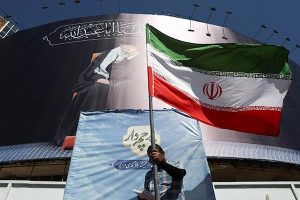
The local rally was a direct echo of a broader Asian market surge. Stocks across the continent gained ground after US President Donald Trump withdrew his threat of further strikes on Iran and suggested a deal could be signed within days. Trump stated that talks had been “brought to the highest level of Iranian leadership and approved,” adding he had “cancelled the scheduled strikes and bombings against Iran this evening.”
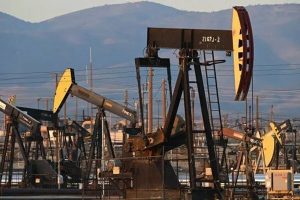
This pivot fuelled a global stock market rally and pushed oil prices to two-month lows. Brent crude futures dipped 1.8% to $88.76 per barrel, further buoying energy-import-dependent economies like Pakistan. Regional markets responded in kind, with MSCI’s broadest index of Asia-Pacific shares outside Japan jumping 3.7%, South Korea’s KOSPI surging 7.8%, and Japan’s Nikkei rising 3.6%.
However, a note of uncertainty persisted. Iran’s Foreign Ministry spokesperson, Esmaeil Baqaei, tempered expectations by stating Tehran “had not reached a final conclusion on the agreement,” noting that new US demands had complicated the finalisation of the text.
The Budget: A Pivotal Moment for Long-Term Direction
While geopolitical reprieve lifted immediate sentiment, the market’s longer-term trajectory hinges on the federal budget for FY2026-27, presented in the National Assembly on Friday afternoon. Finance Minister Senator Muhammad Aurangzeb unveiled the financial blueprint with an estimated outlay of around Rs17.5 trillion.
Key budget figures indicate a tax revenue target of Rs15.267 trillion, with a massive Rs7.824 trillion earmarked for debt servicing. The proposed defence allocation is expected to stand at Rs3 trillion, and the government plans to collect Rs1.727 trillion through the petroleum levy. Ahead of the presentation, Prime Minister Shehbaz Sharif summoned a federal cabinet meeting to approve the proposed budget.
The budget presentation follows the release of the Pakistan Economic Survey for FY2025-26, which painted a mixed picture. Finance Minister Aurangzeb noted that GDP growth reached 3.7% against a target of 4.2%. On a positive note, per capita income rose to $1,901 from1,751, and the size of the economy in dollar terms expanded to $452 billion from $408 billion a year earlier.
The previous session had also closed modestly higher, with the KSE-100 Index gaining 276.16 points to settle at 169,703.60, setting the stage for Friday’s explosive performance.