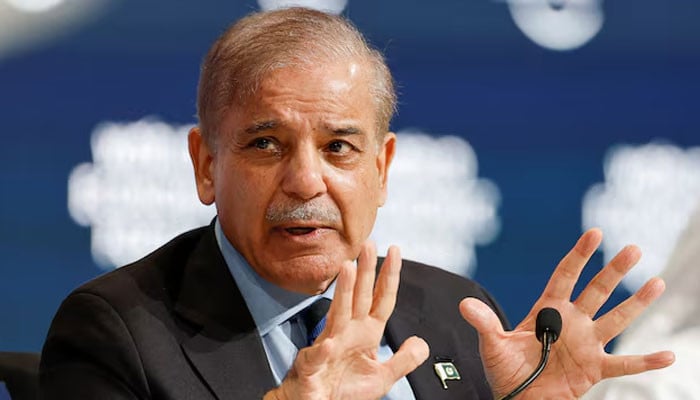
Prime Minister Shehbaz Sharif announced on Friday that a final, agreed-upon text for a peace deal between the United States and Iran has been reached, marking a significant breakthrough in months of mediation led by Islamabad. The development comes despite a fierce information war and conflicting accounts of the proposed terms.
“We can confirm that a final, agreed-upon text of the peace deal has been reached and Pakistan is now working closely with both sides to finalise the next steps,” Prime Minister Shehbaz wrote on his official X account, tagging the American and Iranian presidents and other senior leaders. “Peace has never been as close as it is now.”
The premier directly addressed efforts to derail the process, stating that Islamabad was “fully aware of an incessant misinformation campaign being waged by those who to sabotage the peace deal.”
Conflicting Narratives and Leaked Terms
The prime minister’s statement followed remarks by Iranian Foreign Minister Abbas Araghchi, who insisted a deal had never been closer but urged media to refrain from speculating on its contents. Araqchi promised full public disclosure once the agreement is finalized, calling it Tehran’s responsible and transparent approach.
However, leaked outlines of the proposed memorandum described by Western, Pakistani, and Iranian sources appeared to heavily favor Iran, drawing immediate backlash from US President Donald Trump. The reports suggested Tehran would receive billions of dollars in unfrozen assets and sanctions waivers on oil exports in return for reopening the Strait of Hormuz, which Iran shut earlier this year.
Trump forcefully rejected the leaked details. “The terms that Iran leaked out to the Fake News have NOTHING to do with the terms that were agreed to, in writing,” Trump wrote on his Truth Social platform. In a notable twist, he subsequently reposted Araqchi’s own message that a memorandum had never been closer.
Disputed Nuclear and Financial Provisions
Sources told Reuters that the proposed text sets aside discussion of Iran’s nuclear program for a 60-day of talks on a final settlement, while also shelving longstanding demands for curbs on Iran’s missile program. Critically, multiple versions of the text reviewed by Reuters made no mention of Iran’s stockpile of highly enriched uranium, with sources saying the demand had been explicitly excluded for now.
A senior US official presented a starkly different account, insisting the uranium stockpile “will be destroyed and removed” and that Iran’s nuclear program would be dismantled. “None of their money is released until they perform. Strait of Hormuz will be open. No Iran funding of terrorist groups,” the official said. “This is what they have agreed to. This is a performance-based deal.”
Vice President JD Vance reinforced this position, stating on X that Iran would receive no cash for merely signing a deal, and that economic benefits would only flow upon verified compliance.
Israel Excluded as Signing Looms
A key unresolved issue remains the language on ceasing hostilities in Lebanon, where Iran has demanded that Israel end its campaign against Hezbollah. A Western source indicated that if this can be agreed, the memorandum could be signed as soon as Sunday by Vice President Vance and Iran’s parliament speaker, Mohammad Baqer Qalibaf, with Geneva seen as the likeliest venue.
Despite jointly launching military operations with the United States, Israel has been excluded from the negotiations. Prime Minister Benjamin Netanyahu stated his country would not be party to the memorandum. An Israeli defense official said Israel would not withdraw from Lebanese territory and expects any deal to maintain the current Lebanon ceasefire, preserving Israel’s freedom to act against perceived threats.