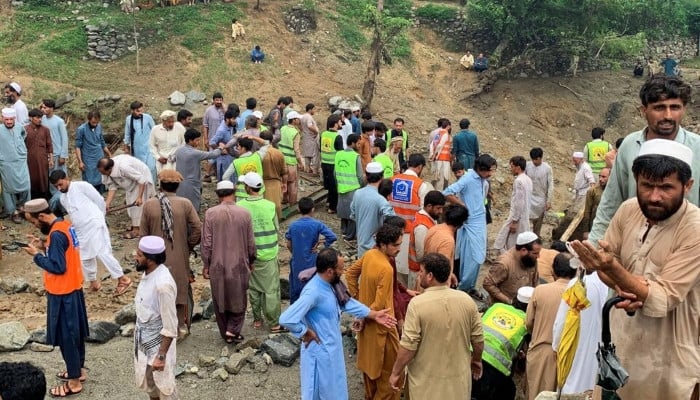
At least seven people have lost their lives and 33 others have sustained injuries after a wave of violent storms, characterized by powerful winds, lightning, and torrential rainfall, swept through multiple districts of Khyber Pakhtunkhwa province over the past 24 hours. The Provincial Disaster Management Authority confirmed the casualties on Sunday, as emergency responders worked to clear debris and assist affected communities.
The fatalities, which include two children, four men, and one woman, were reported in the districts of Bannu, Shangla, and Mansehra. According to a preliminary damage assessment report from the PDMA, the deaths occurred primarily when walls and roofs of residential structures collapsed under the force of the severe weather. The storms, which lashed the region with unexpected intensity, have left a trail of destruction, with rescue teams still evaluating the full extent of the damage.
Weather Alert Issued as Threat of Flooding Looms
In the wake of the disaster, the Pakistan Meteorological Department has forecast further rainfall for upper Khyber Pakhtunkhwa, Gilgit-Baltistan, and Kashmir on Sunday, while most other parts of the country are expected to remain hot and dry. The PDMA has responded by issuing a high alert for several vulnerable districts, including Swat, Upper Dir, Kohistan, and Buner.
Authorities have specifically warned that a sharp rise in temperatures expected after June 15 could accelerate snowmelt, significantly increasing the risk of flash flooding in mountainous areas. District administrations have been directed to maintain active emergency protocols in sensitive zones and to advise tourists and travelers to exercise extreme caution.
The PDMA has urged the public to stay away from rivers, streams, and rain-fed nullahs during periods of heavy rainfall. In case of any emergency, citizens can contact the PDMA helpline at 1700 for immediate assistance.
Repeat of a Deadly Pattern
This latest weather-related tragedy comes less than two weeks after a similar incident struck the province. On June 3, the PDMA reported that two people died and 31 others—including seven women and eight children—were injured in rain and wind-related incidents. The recurring pattern of structural collapses due to severe weather underscores the vulnerability of housing infrastructure in the region.
The back-to-back disasters highlight the escalating challenge posed by extreme weather events in Pakistan. As rescue and relief operations continue, provincial authorities are facing renewed pressure to enforce stricter building codes and improve early warning systems to mitigate the human cost of such storms.