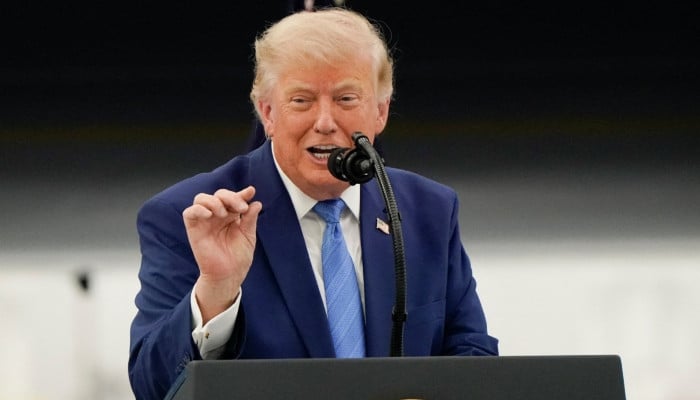
US President Donald Trump issued a stark ultimatum to Tehran on Sunday, threatening a new round of military strikes if Iran does not immediately restrain its allied militias in Lebanon. The warning came as Israeli forces continued to bomb Hezbollah positions despite a newly established ceasefire, and as American and Iranian delegations sat down for technical negotiations in Switzerland.
“Iran must immediately stop their highly paid PROXIES in Lebanon from causing trouble,” Trump wrote on his Truth Social platform. “If they don’t, we’ll hit Iran very hard again, just like we did last week, only harder!!!”
Strait of Hormuz Remains a Pressure Point
The escalating rhetoric is unfolding against a backdrop of severe economic leverage. Iran’s Tasnim news agency, citing a source close to the negotiating team, reported that the Strait of Hormuz would remain closed. The critical oil transit route was shut down by the Iranian military, with the source stating it would not reopen as long as the ceasefire in Lebanon was not respected and until waivers permitting the sale of Iranian oil were issued.
Violence Erupts Despite Ceasefire
The fragile truce between Israel and Hezbollah appeared to be unravelling within hours of taking effect. Lebanese state media reported that Israeli strikes killed at least 20 people on Saturday. Israel’s Defence Minister Israel Katz defended the operations, stating there were no restrictions on troops acting to eliminate threats, with soldiers remaining in positions inside a security zone. The Israeli military described the attacks as a response to projectiles fired by Iran-backed group at its forces in southern Lebanon.
Iranian officials have indicated that the situation in Lebanon is now the central focus of the peace talks with the United States. The negotiations follow a framework agreement signed by Washington and Tehran to halt a bilateral war that erupted at the end of February, a conflict that has inflamed regional tensions.
Pakistan-Mediated Talks Begin in Switzerland
In Switzerland, technical-level discussions commenced with Pakistan serving as the primary mediator. The US delegation, led by Vice President JD Vance and including special envoys Steve Witkoff and Jared Kushner, met with Prime Minister Shehbaz Sharif and Field Marshal Asim Munir before the talks. The Iranian team, headed by Parliament Speaker Mohammad Bagher Ghalibaf and Foreign Minister Abbas Araghchi, held separate meetings with the Pakistani side.
Standing alongside leaders from Pakistan and Qatar, Vice President Vance expressed optimism for “additional progress in the coming hours” and praised the mediatory role played by Islamabad. “Pakistan’s role has been appreciated around the world,” Vance said, adding that the US desired to build on the current momentum.
Vance emphasized that Washington wanted Iran to play a positive role in peace efforts, noting that peace in the Middle East remained a priority. He also voiced concern over the violence in Lebanon, stating that President Trump was working to reduce tensions. “The technical negotiations may not solve every disagreement, but it will allow us to sit together as teams for the first time in history,” Vance said, reiterating Trump’s commitment to a full regional ceasefire.