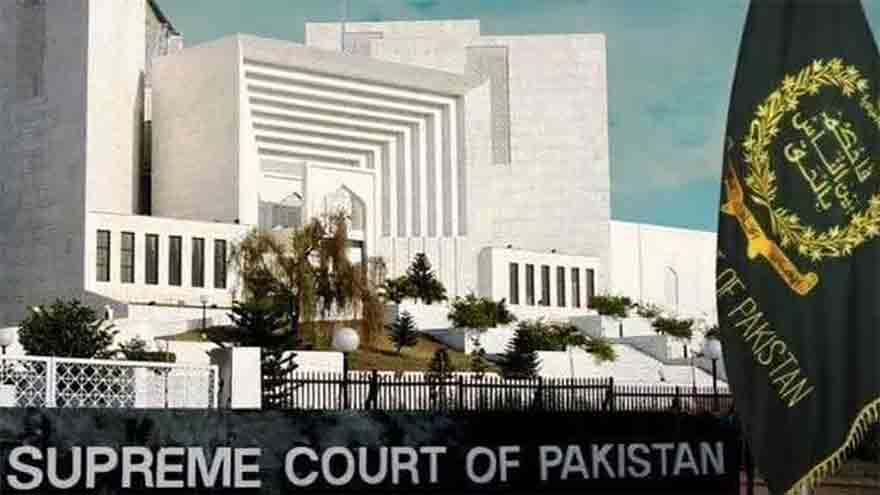
ISLAMABAD — In a strongly worded ruling that reinforces constitutional protections for women, the Supreme Court of Pakistan has upheld the death sentence of a man convicted of murdering his ex-wife just 48 hours after she legally obtained a divorce.
A three-member bench, led by Justice Muhammad Hashim Khan Kakar, dismissed the appeal of convict Waseem Abbas and affirmed the capital punishment handed down by lower courts. The court declared that violence against a woman exercising her legal right to divorce constitutes an attack on the Constitution itself.
Constitutional Shield for Women’s Rights
The Supreme Court’s four-page detailed judgment emphasized that Articles 9, 14, and 25 of the Constitution guarantee women complete protection, security, and equal rights. The bench stated that killing a woman for demanding her legal rights is “open rebellion and brutality against the law.”
“The Constitution of Pakistan has given a woman the right to seek divorce,” the judgment read. “Violence against her is an attack on the Constitution, and the law will deal strictly with those who torture a woman seeking divorce.”
Premeditated Murder Without Concession
The court noted that the perpetrator does not deserve any concession in such a cold-blooded and premeditated murder. It further ruled that the testimony of relatives cannot be rejected simply because the crime occurred within domestic boundaries, a common challenge in family violence cases.
Forensic evidence proved decisive. The court highlighted that the match between the shell casing and the pistol recovered from the crime scene constituted indisputable proof of guilt. The bench found no flaw in the decisions of the trial court or the Lahore High Court.
Case Background: A Life Cut Short for Seeking Freedom
The tragic events unfolded on October 11, 2020. Shahnaz Bibi had successfully obtained a legal divorce decree from a family court. Less than two days later, her ex-husband Waseem Abbas entered her home and shot her dead.
The trial court sentenced Abbas to death along with a 10-year prison term. The Lahore High Court subsequently upheld the death sentence, leading to the final appeal before the Supreme Court.
A Precedent Against Domestic Violence
Legal experts view this ruling as a significant precedent in Pakistan’s ongoing struggle against domestic violence and honor-based crimes. By explicitly linking a woman’s right to divorce with constitutional protections, the Supreme Court has sent a clear message that such killings will be treated with the utmost severity.
The decision reinforces that domestic settings do not shield perpetrators from the full force of the law, and that forensic evidence will carry substantial weight in securing convictions for crimes against women.