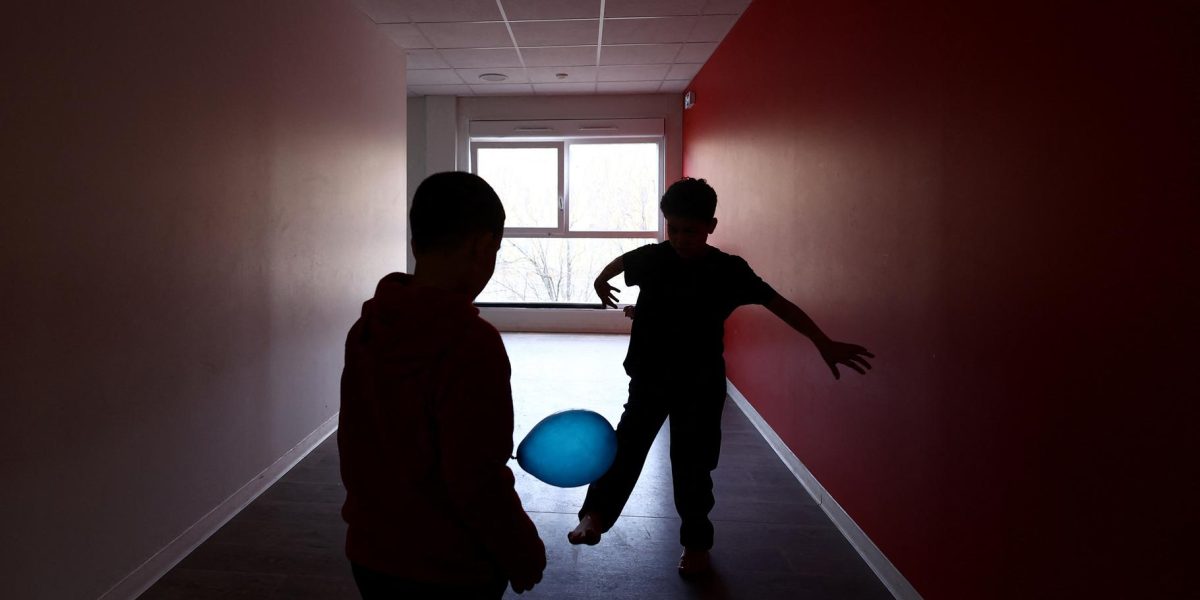
The number of children living on the streets in France continues to climb, according to a stark new report released just days before the start of the school year. UNICEF and the Fédération des acteurs de la solidarité (FAS) have sounded the alarm over what they describe as the failure of successive governments to honor a pledge that no child would be left without shelter.
In the eighth edition of their annual “Children on the Streets” barometer, published on Wednesday, the two organizations said that at least 2,355 children—including 514 under the age of three—were left without a housing solution after their parents called the national emergency hotline 115 during the first week of August. This marks a 9% increase compared to the same period last year and a staggering 42% rise since 2022.
A Broken Promise
The report highlights a troubling gap between political rhetoric and lived reality. In 2022, the French government renewed its goal of achieving “zero children on the streets.” Yet the number of minors without stable accommodation has only grown since then.
UNICEF and FAS also caution that the true scale of the crisis is likely far worse than the official figures suggest. Many parents are unable to reach the 115 emergency line or give up trying altogether. Unaccompanied minors without shelter, as well as families living in squats or informal settlements, are not included in the count.
Deadly Consequences
The human toll is devastating. In 2025 alone, 14 children under the age of four and 12 teenagers between 15 and 18 died while living on the streets, according to data collected by the collective Les Morts de la Rue.
The two organizations point to the chronic saturation of emergency housing systems as a key driver of rising youth homelessness. With shelters operating at full capacity, vulnerable families are increasingly turned away with nowhere else to go.
A Call for Political Will
Despite the grim statistics, Adeline Hazan, president of UNICEF France, and Pascal Brice, president of FAS, insist that the trend can be reversed. They are calling for an immediate increase in the number of emergency shelter places and the implementation of a multi-year policy that moves families “from the street to housing.” Such a policy, they argue, must be backed by sufficient funding to guarantee dignified living conditions for all children and their parents.
The two leaders are also directing their message toward candidates in the upcoming presidential election. “No project for France can ignore the reality of children living on the streets,” they wrote. “The fight against homelessness is above all a question of political will. We can and must act.”
As the new school year begins, thousands of children will be returning to classrooms from cars, emergency shelters, or the street itself—a reality that UNICEF and FAS say should be a national priority, not an afterthought.