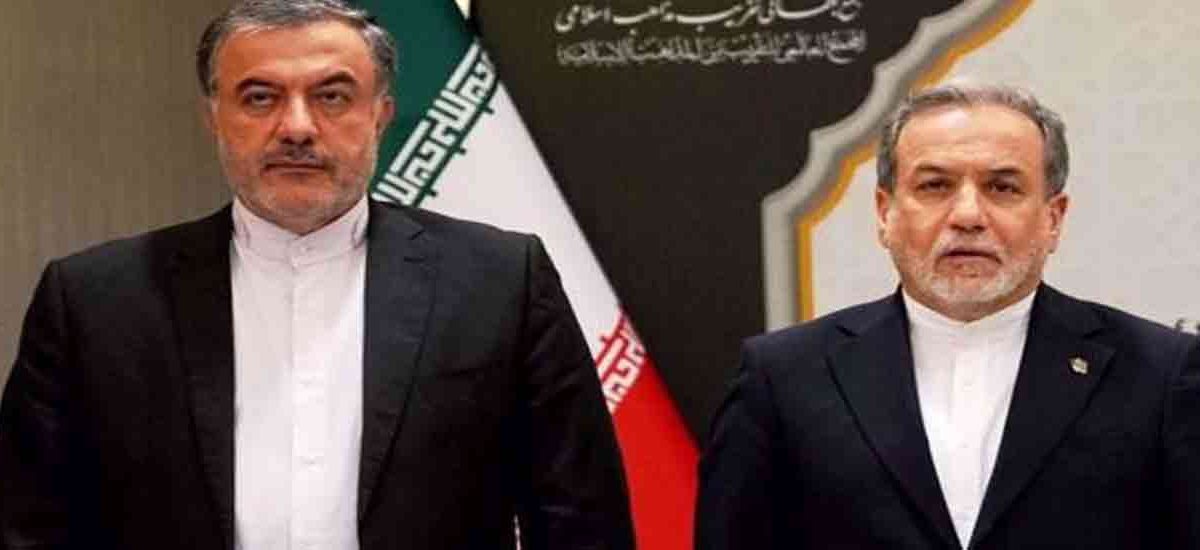
TEHRAN/DUBAI: Iran will fight “fire with fire” and make no compromise on its national security, Foreign Minister Abbas Araghchi declared Saturday, as the six-month war with the United States and Israel continued to choke the strategic Strait of Hormuz and batter Iran’s economy.
Speaking at the 40th International Islamic Unity Conference in Tehran, Araghchi accused Iran’s adversaries of attempting to fracture the country after failing to break its unity through military force. “Our enemies believed that their defeat in the previous war had failed to undermine the unity of the Iranian people,” he said. “Therefore, they began plotting to create divisions within the country.”
Strait of Hormuz: A Maritime Standoff
The United Nations maritime agency reported that approximately 400 vessels remain stranded in and around the Strait of Hormuz and the wider Gulf region, with roughly 6,000 sailors aboard. Arsenio Dominguez, Secretary-General of the International Maritime Organization, called the situation “unresolved” and urged UN member states and the shipping industry to intensify political efforts to restore freedom of navigation in the waterway through which a fifth of global oil supplies normally flows.
Iran’s Revolutionary Guards Corps Navy rejected US claims that the strait was open and fully de-mined, describing such statements as attempts to manipulate oil prices and conceal American failures. The Guards said restrictions would continue until US military actions against Iran end and relevant commitments are implemented.
Washington Denies Talks, Tightens Sanctions
White House deputy press secretary Anna Kelly told Al Jazeera that no discussions with Iran are ongoing or scheduled. “There are no talks or conversations going on, or scheduled, with the Islamic Republic of Iran,” Kelly said, while confirming that Washington’s naval blockade and economic campaign—termed “Operation Economic Outcast”—remain “in full force and effect.”
The US Treasury Department issued fresh Iran-related sanctions Friday, targeting one Hong Kong-based entity and one individual linked to Iran’s Bank Melli. Washington also moved to restrict the UAE branches of Egypt’s Banque Misr from accessing the American financial system over alleged dealings with Tehran—a measure Egypt’s central bank said was limited to dollar transactions with correspondent banks.
Economic Toll Mounts as Diplomacy Stalls
Iranian leaders are increasingly acknowledging the war’s economic devastation. President Masoud Pezeshkian reported that foreign trade has shrunk 35% due to American sanctions and the naval blockade, while annual inflation hit 66% last month. Supreme Leader Ayatollah Mojtaba Khamenei—who succeeded his father, Ayatollah Ali Khamenei, after the latter was killed in the February 28 strikes—called on the government to “seriously address the chain of economic and livelihood challenges.”
In a televised interview Friday night, Pezeshkian nonetheless insisted that “domestic and international experts unanimously view Iran as the true winner of the Islamabad Understanding,” the preliminary agreement reached in June that has since collapsed amid renewed fighting over Hormuz.
Regional Fallout and International Reactions
The conflict has rippled beyond Iran’s borders. Israeli forces launched attacks on the outskirts of a southern Lebanese village Saturday, while a Lebanese source told Al Jazeera Arabic that Israel is seeking to delay negotiations with Lebanon ahead of its October elections.
China’s Foreign Ministry reiterated that dialogue remains “the only viable way out” of the US-Iran conflict and condemned what it called illegal and unilateral American sanctions. Pakistan’s Deputy Prime Minister Ishaq Dar discussed the evolving regional situation in separate calls with the foreign ministers of Turkey and Saudi Arabia.
Iran’s Foreign Ministry denounced the latest US sanctions campaign as “tantamount to state terrorism,” accusing Washington of weaponizing the dollar to coerce other nations into supporting interventionist policies that violate international law.
Diplomacy’s Narrow Window
Despite the impasse, Araghchi left a narrow opening for renewed diplomacy. After what he described as “creative discussions” with Qatar’s prime minister, the Iranian foreign minister posted on X that “putting diplomacy back on track isn’t impossible.”
The path forward, he said, “hinges on U.S. understanding of one simple fact: pressure doesn’t work. The U.S. should build trust, speak respectfully, acknowledge our rights, and uphold commitments.”
With no talks scheduled, hundreds of ships stranded, and both sides vowing to escalate rather than retreat, the war’s seventh month appears poised to bring more confrontation than compromise.