North Korean leader Kim Jong Un has dismissed his defense minister, No Kwang Chol, as part of a broad reorganization of the country’s military command, state media announced Sunday. The move signals a significant realignment at the top of Pyongyang’s armed forces amid rising regional tensions and deepening ties with Russia.
No Kwang Chol was also removed from the central leadership of the ruling Workers’ Party during a meeting chaired by Kim Jong Un on Saturday, according to the official Korean Central News Agency (KCNA). He has been reassigned as first vice director of the munitions department, a notable demotion from his previous role overseeing the nation’s defense apparatus.
New Appointments Reflect Strategic Priorities
Kim Son Gi, director of the army’s General Political Bureau, will replace No Kwang Chol as defense minister. Meanwhile, Pak Jong Chon, a senior adviser to the ministry, has been elevated to vice chairman of the Central Military Commission of the Workers’ Party — a key body overseeing military policy.
Other appointments include Om Ju Ho, political commissar of the air force, and Yu Kwang U, director of the army’s security bureau, who have been named members of the party’s Central Committee and its Political Bureau, respectively. The reshuffle underscores Kim Jong Un’s ongoing efforts to consolidate control over the military and reward loyalists within the armed forces.
Growing Military Ambitions and Russian Alignment
The leadership overhaul comes as nuclear-armed North Korea increasingly showcases its expanding military capabilities. Pyongyang has conducted a series of weapons tests in recent months, including new multiple rocket launchers and artillery systems, with Kim personally supervising several launches.
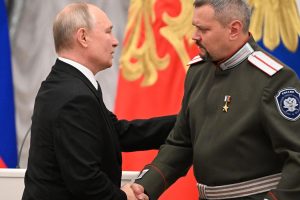
The reorganization also unfolds against the backdrop of Pyongyang’s deepening alignment with Moscow. North Korea and Russia signed a defense pact in 2024, and thousands of North Korean soldiers have reportedly fought alongside Russian forces against Ukraine in the Kursk region. Analysts say Pyongyang’s involvement in the conflict has yielded economic and military benefits, as well as valuable battlefield experience.
Honors for Defense Scientists
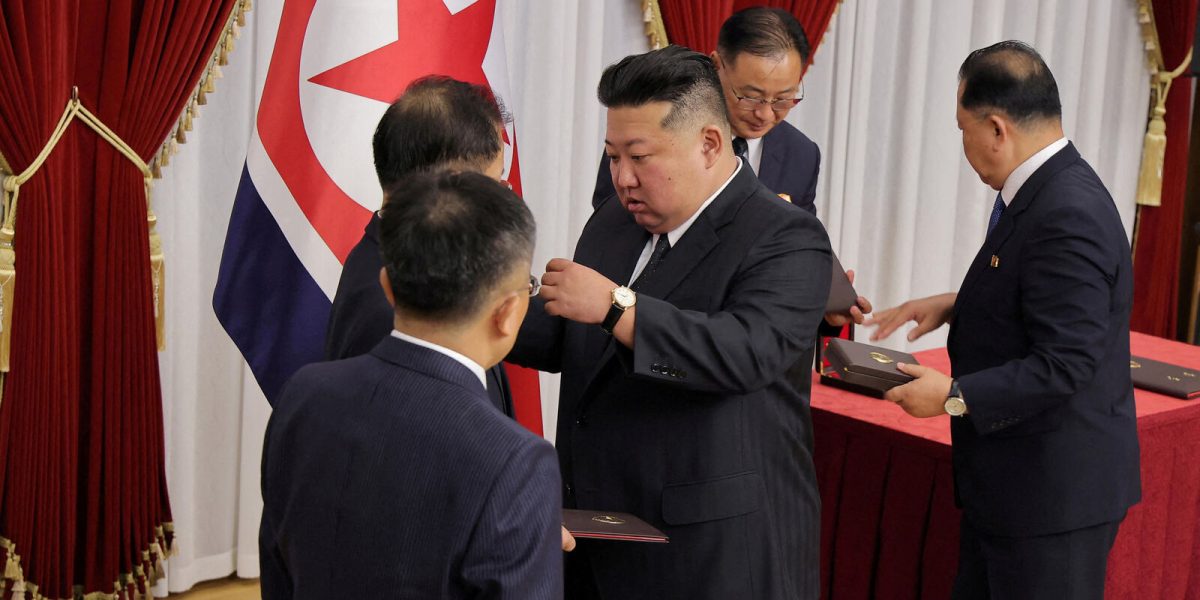
In a separate KCNA report, Kim Jong Un praised scientists, researchers, and officials for advancements in defense technology, granting them national honors. The agency said they were recognized for contributing to “solving scientific and technical problems of vital importance in the development of new combat weapons systems.”
The reshuffle comes just over a week after the conclusion of annual joint military exercises between South Korea and the United States, which Pyongyang has long condemned as rehearsals for invasion. Those drills were scaled back under former U.S. President Donald Trump, who met Kim three times during his first term.
Nuclear Arsenal as a ‘Life Insurance’
North and South Korea remain technically at war since their 1950-1953 conflict ended in an armistice rather than a peace treaty. In 2023, North Korea enshrined its irreversible status as a nuclear power in its constitution, a principle proclaimed by Kim Jong Un a year earlier. The country faces heavy international sanctions over its atomic weapons and ballistic missile programs.
Pyongyang views its nuclear arsenal — estimated at several dozen warheads — as a “life insurance” against any attempt at invasion or regime change. That conviction has been reinforced by recent U.S. military actions against Iran and Venezuela, according to North Korean state media narratives.
Strategic Implications
The military leadership changes are likely aimed at strengthening internal discipline and accelerating weapons development programs. By promoting figures closely associated with missile and defense technology, Kim Jong Un appears to be prioritizing the modernization of North Korea’s conventional and strategic forces.
- No Kwang Chol demoted to munitions department first vice director
- Kim Son Gi appointed as new defense minister
- Pak Jong Chon elevated to vice chairman of Central Military Commission
- Reshuffle follows reduced U.S.-South Korea joint exercises
- Comes amid deepening military cooperation with Russia
The reorganization reflects Kim’s broader strategy of rewarding loyalty while ensuring that key military institutions remain firmly under his personal control. As North Korea continues to expand its weapons capabilities and strengthen ties with Moscow, the international community watches closely for signs of further provocations or diplomatic shifts.