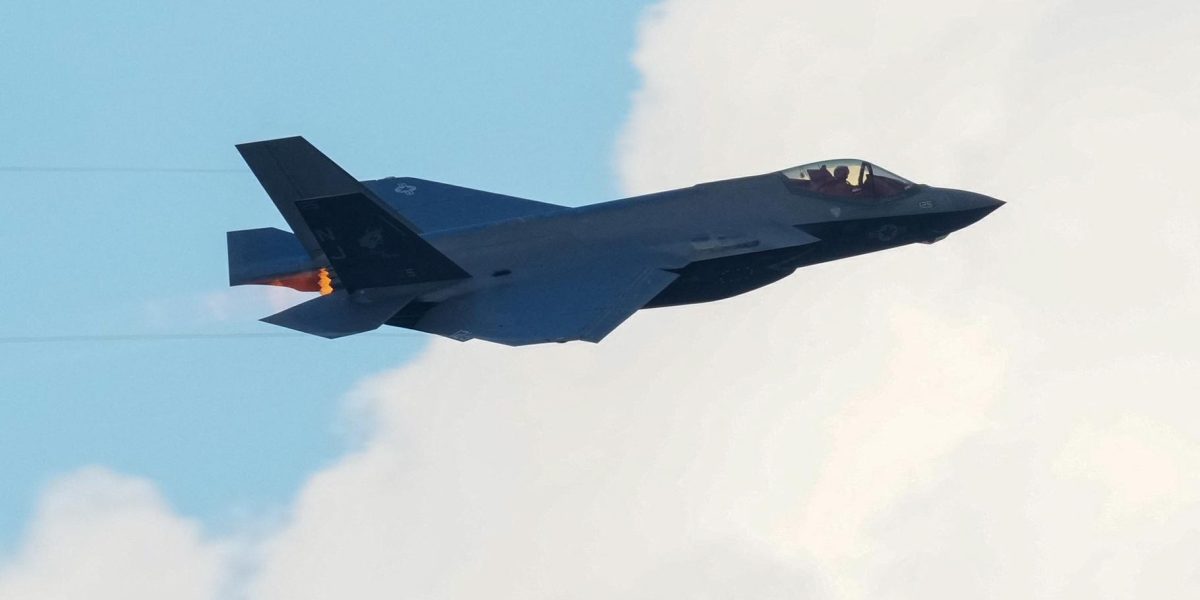
The United States government has approved a massive $24.3 billion arms deal to supply Saudi Arabia with 48 F-35 stealth fighter jets, marking a significant escalation in military support for Riyadh amid ongoing regional conflicts in the Middle East.
As required by US law, the State Department formally notified Congress of the proposed sale on Thursday, September 17. The deal now requires approval from US legislators, where it faces potential opposition over concerns that the advanced fighter jet technology could be compromised by Chinese intelligence.
Strengthening Strategic Ties
The State Department defended the proposed sale, stating it would enhance Saudi Arabia’s ability to deter current and future threats by consolidating its national defense and improving interoperability with US forces.
Saudi Arabia welcomed the announcement, with its embassy in Washington emphasizing that the proposed F-35 sale demonstrates the strength and durability of the strategic partnership between the two nations, as well as the steady progress of their defense cooperation.
Riyadh has long sought to acquire the F-35, but Israel — the only country in the region currently operating these aircraft — had previously expressed strong reservations. The State Department noted that the sale would increase the number of operational aircraft available to Saudi Arabia and bolster its air-to-air and air-to-ground self-defense capabilities.
However, according to the State Department, the sale “will not alter the military balance in the region,” in accordance with the long-standing US policy that Israel must maintain a military advantage over its potential regional adversaries. Actual delivery of the aircraft is expected to span several years.
Ongoing Regional Conflict
The contract is the latest in a series of major arms purchases by Saudi Arabia this year, set against the backdrop of a Middle East conflict triggered by US-Israeli strikes against Iran launched in February.
Since then, Saudi Arabia has been drawn into the conflict. Regularly targeted by Iran, the kingdom has also faced an offensive since July from Iranian-backed Houthi forces in Yemen, placing Riyadh — the world’s leading crude oil exporter — under significant pressure.
According to a US official, an American military unit is working to strengthen intelligence sharing with Saudi Arabia in response to Houthi attacks.
In early September, the State Department announced it had approved the sale of more than 10,000 bombs to Riyadh, worth $5 billion. However, Washington has not committed to direct intervention against the Houthis.
Concerns Over Technology Leakage
The F-35 sale is far from unanimous in the United States. The New York Times reported this week that US intelligence analysts have raised the possibility that Beijing could acquire F-35 technology through its partnerships with Riyadh.
“The Trump administration should not proceed with its plan to sell F-35 fighter jets to Saudi Arabia when our own intelligence services warn us that this could put the crown jewels of American military technology within reach of the Chinese Communist Party,” warned Democratic Representative Raja Krishnamoorthi, a member of the House Intelligence Committee.
To date, the United States has only authorized the sale of the F-35 — an ultra-sophisticated stealth combat aircraft — to its closest allies, including several European NATO member states and Israel.
Key Implications
- The $24.3 billion deal covers 48 F-35 stealth fighter jets for Saudi Arabia
- Congress must approve the sale, with opposition expected over China security concerns
- The sale is part of a broader series of Saudi arms purchases amid Middle East tensions
- US policy maintains Israel must retain a military advantage in the region